


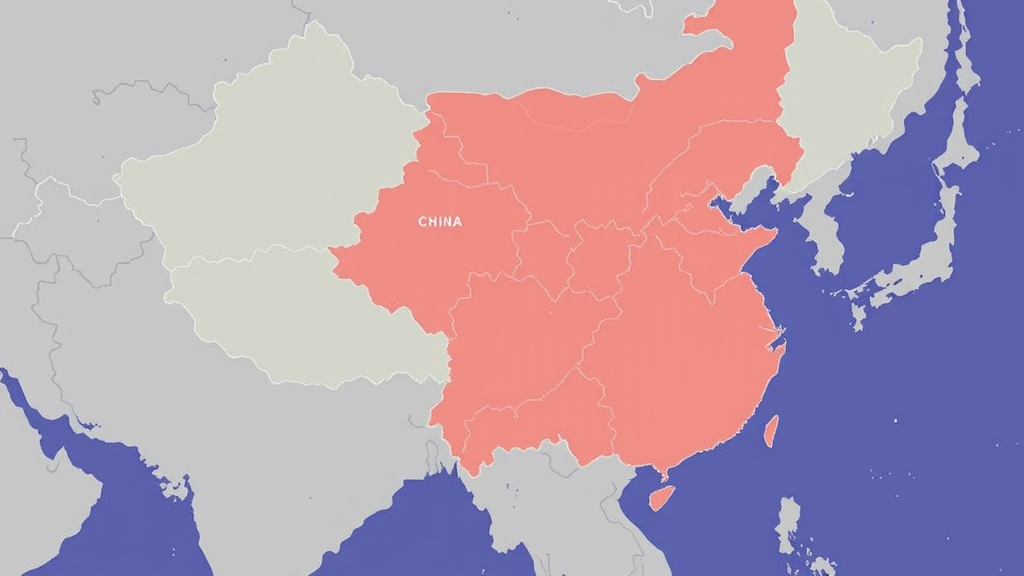
Governing a country of 1.4 billion people has often been compared, in a famous Chinese aphorism, to cooking small fish: handle it too much and it falls apart. A new study takes that ancient metaphor seriously as a scientific proposition, asking how China’s central government manages its largest and most consequential provincial jurisdictions without either crushing their dynamism or losing control of them. The research, published in the journal Global Public Policy and Governance, examines more than four decades of provincial economic and leadership data to reveal a governance model the authors describe as “delicate”—one that weaves decentralisation and centralisation together in a shifting, multidimensional balance rather than choosing between them.
The study, conducted by Yijia Jing of Fudan University’s Institute for Global Public Policy, Wenxue Fan of the Henan Academy of Social Sciences, and Ping Zhang of Fudan University’s School of International Relations and Public Affairs, addresses a phenomenon that is increasingly global in scope. Around the world, the rise of what political scientists call Mega Local Jurisdictions—provinces, states, and metropolitan regions whose populations and economies rival those of mid-sized nations—has strained national intergovernmental systems everywhere. These enormous subnational units generate the vitality, administrative competence, and policy innovation that national economies depend on, yet their sheer scale gives them the leverage to demand concessions, resist directives, and widen regional inequalities. Governments must simultaneously encourage their initiative and restrain their autonomy, a tension that no federal or unitary constitution fully resolves.
China offers arguably the most extreme laboratory for studying this dilemma. Its provincial-level jurisdictions are demographically and economically comparable to large countries: Guangdong alone has a population exceeding that of most European nations, and a handful of coastal provinces generate the bulk of national GDP and exports. After 1978, the reform era deliberately devolved fiscal authority, economic decision-making, and policy experimentation to the provinces, unleashing the competitive growth machine that transformed the Chinese economy. Yet China remains a unitary one-party state in which provincial leaders serve at the pleasure of the centre, creating an unusual combination of deep economic decentralisation and persistent political centralisation. The researchers argue that this combination is not an inconsistency to be explained away but the operating principle of the system itself.
To test that argument, the team analysed provincial economic and leadership data spanning 1978 to 2021, drawing on national statistical yearbooks, fiscal records, marketisation indices compiled by the National Economic Research Institute, and detailed records of provincial leadership appointments and careers. The analysis compared mega provinces—the largest jurisdictions by population, economic output, and strategic significance—with smaller provinces across two dimensions: the degree of central empowerment they received and the intensity of central control they experienced. The data allowed the researchers to track how fiscal arrangements, policy privileges, and personnel decisions differed systematically between the two groups over the entire reform period.
The findings are striking. Contrary to the intuition that China’s largest provinces would enjoy the greatest freedom, the study found that central empowerment and central control over mega provinces were both stronger than for other provinces, in economic and political arenas alike. The centre gave its biggest jurisdictions more economic incentives—greater fiscal discretion, more policy experimentation rights, and stronger development privileges—precisely because their performance carried outsized weight in national growth. But it simultaneously applied more political control, tightening oversight of their leadership teams and ensuring that the officials who ran them were closely monitored and reliably aligned. Power and leash, in other words, grew together rather than trading off.
Within that pattern, the study identified a structural compromise at the heart of how mega provinces are governed: their leaders receive more economic room to operate but accept more political discipline in exchange. Provincial officials in the largest jurisdictions were subject to sharper performance expectations and closer personnel scrutiny than their counterparts elsewhere, reflecting the well-documented role of promotion tournaments and cadre evaluation in aligning local incentives with national goals. This trade-off, the authors argue, is what converts potential regional rivals into reliable engines of national development. The centre’s strategy is therefore not simply to decentralise or centralise, but to calibrate the two instruments against each other, adjusting economic incentives and political constraints in tandem as conditions change.
That calibration, the researchers contend, is what makes the governance “delicate” rather than merely mixed. The balance between empowering and controlling the mega provinces is dynamic and multifaceted, shifting across policy domains and historical periods. During the high-growth decades, economic decentralisation deepened as the centre rewarded provincial performance; as disparities widened and the risks of localism grew, political centralisation tightened to preserve conformity and shared development. The interweaving of the two ensures that neither the vitality of the largest jurisdictions nor the coherence of the national system is sacrificed to the other. The analogy to cooking small fish captures the required precision: excessive stirring breaks the fish, but neglect burns it, and the skilful cook knows how little handling suffices.
The study’s implications extend well beyond China. Mega local jurisdictions are now a worldwide trend, from India’s large states and Brazil’s state governments to the megacity regions of Latin America, Europe, and Southeast Asia, and every national system faces the same dual pressure of affording vitality and ensuring equity. China’s experience suggests that the conventional dichotomy between decentralised and centralised governance is too crude for these cases. Effective management of very large jurisdictions may require deliberately interlocking the two logics—granting economic autonomy in proportion to political accountability—rather than oscillating between devolution and recentralisation. The Chinese model, the authors caution, is shaped by its distinctive institutional context and cannot be transplanted wholesale, but the underlying principle of calibrated, mutually reinforcing instruments offers a comparative benchmark for other multi-level systems.
The research was supported by major grants from the National Natural Science Foundation of China, and its empirical foundation—covering the full arc of reform from Deng Xiaoping’s early experiments to the recentralising turn of the past decade—provides one of the most systematic quantitative portraits yet of how the world’s largest unitary state manages its most powerful subnational units. As mega-regions continue to grow everywhere and national governments grapple with the balance between regional dynamism and national cohesion, the Chinese finding that control and empowerment rise together offers a provocative answer to one of comparative governance’s oldest questions. In the art of governing big countries, it appears, the delicate touch matters more than the firm grip or the free hand—and knowing exactly how much of each to apply is what separates a working system from a broken one.
Subject of Research: Central-local governance of mega local jurisdictions in China, examining how decentralisation and centralisation are interwoven to balance provincial vitality with national control.
Article Title: Governing a big country is like cooking small fish: exploring delicate governance of mega local jurisdictions in China
Article References: Jing, Y., Fan, W., & Zhang, P. (2026). Governing a big country is like cooking small fish: exploring delicate governance of mega local jurisdictions in China. Global Public Policy and Governance, 6(1), 23-42. https://doi.org/10.1007/s43508-026-00143-1
Image Credits: AI Generated
DOI: 10.1007/s43508-026-00143-1
Keywords: Mega Local Jurisdictions, China, decentralisation, centralisation, intergovernmental relations, delicate governance, provincial governance, fiscal decentralization, central-provincial relations, public policy, governance, Governing
Cite Scienmag News
Courtney Benton. (September 23, 2026). China’s Mega Provinces Reveal a Delicate Balance of Power and Control. Scienmag. https://scienmag.com/chinas-mega-provinces-reveal-a-delicate-balance-of-power-and-control/
Courtney Benton. "China’s Mega Provinces Reveal a Delicate Balance of Power and Control." Scienmag, 23 September 2026, https://scienmag.com/chinas-mega-provinces-reveal-a-delicate-balance-of-power-and-control/. Accessed 23 September 2026.
Courtney Benton. "China’s Mega Provinces Reveal a Delicate Balance of Power and Control." Scienmag. September 23, 2026. https://scienmag.com/chinas-mega-provinces-reveal-a-delicate-balance-of-power-and-control/


