


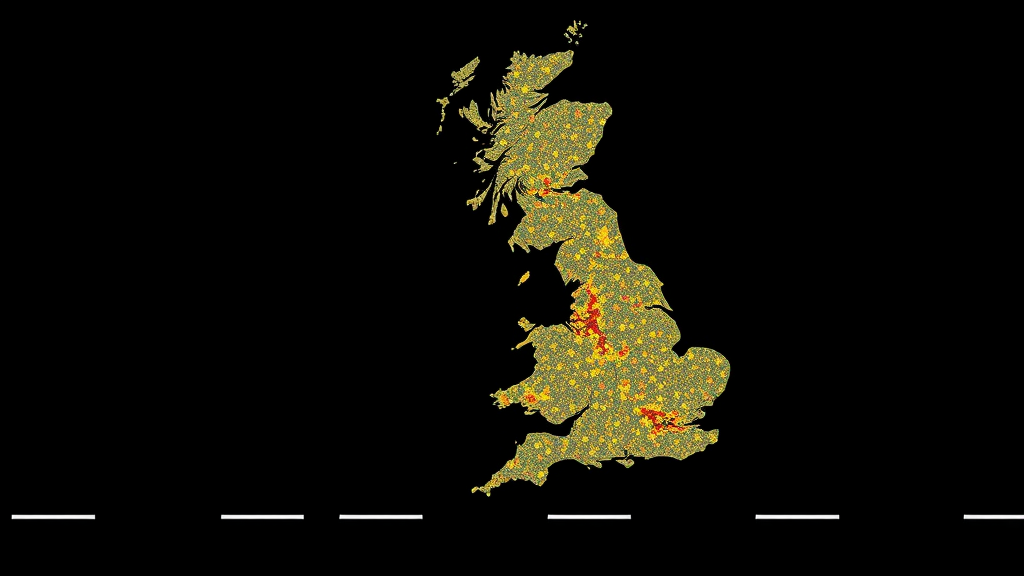
International student mobility has long been described as one of the most globalised flows of people in the modern world, with hundreds of thousands of students crossing borders each year in pursuit of degrees, research opportunities and careers. The United Kingdom has historically stood among the top destinations in this global marketplace, competing with the United States, Australia, Canada and a growing roster of continental European universities. Yet a new study published in Nature Communications suggests that the picture of an ever-widening, globally distributed student population arriving on British campuses may be misleading. Using machine learning models trained on decades of international flow data, the researchers find evidence of what they describe as a concentration paradox: even as the overall number of countries sending students to the United Kingdom appears to grow, the underlying dynamics of mobility push flows toward an increasingly narrow set of origin nations.
The research team approached the problem as one of forecasting rather than simple description. Instead of merely counting enrolments, they built predictive models capable of estimating how student flows between country pairs would evolve over time, drawing on historical mobility records alongside a broad set of economic, demographic and political variables. Machine learning methods were chosen deliberately for this task because the relationships that shape student decisions are notoriously nonlinear. Exchange rates, visa policies, university rankings, labour-market conditions and geopolitical events all interact in ways that classical linear statistical models struggle to capture. By letting flexible algorithms learn patterns directly from the data, the researchers could compare projected flows against observed outcomes and test whether the system was trending toward diversification or consolidation.
The technical setup behind the study reflects a wider shift in how social scientists handle large-scale mobility data. The models were trained and validated on split samples of historical flows, allowing the researchers to assess out-of-sample accuracy before generating forward-looking projections. Feature importance and sensitivity analyses were used to identify which variables carried the most predictive weight, a step that matters because forecasting models can otherwise behave as opaque black boxes. The authors report that their machine learning approach produced forecasts that tracked observed mobility patterns more closely than conventional benchmark methods, giving them sufficient confidence to use the projections as a genuine diagnostic tool rather than a speculative exercise. That diagnostic, in turn, is what surfaced the paradox at the heart of the paper.
The paradox itself is subtle but consequential. On the surface, international student populations in the United Kingdom look more diverse than ever, with enrolments recorded from well over a hundred countries and universities proudly citing the breadth of their global intake. But when the researchers examined the distribution of flows and their projected trajectories, they found that a comparatively small number of origin countries account for a disproportionately large share of students, and that the forecasts suggest this share is likely to persist or even grow. In other words, the apparent diversification of the student body masks a deeper structural concentration: the mobility system may be widening at its margins while tightening at its core. Countries that dominate today are forecast to remain dominant, and disruptions that affect a single large origin market can therefore ripple through the entire sector.
This finding matters because concentration and fragility are close cousins. Universities in the United Kingdom, like those in Australia and Canada, have become increasingly dependent on international fee income to cross-subsidise research and domestic teaching. If a handful of countries supply the majority of that income, then policy shifts in those countries, or in the United Kingdom’s own immigration regime, can translate into abrupt financial shocks. The study’s forecasting framework effectively functions as an early-warning instrument: by simulating how flows respond to changes in key drivers, it allows analysts to explore scenarios in which visa restrictions, currency movements or diplomatic tensions alter the composition of incoming cohorts. The concentration paradox implies that such scenarios deserve more attention than a naive reading of headline diversity figures would suggest.
The machine learning results also speak to a long-running debate in the migration and higher-education literature about whether international student flows are self-correcting or path-dependent. Classical gravity models of migration treat flows as the product of size and distance effects, with adjustments occurring relatively smoothly as conditions change. The new findings lend weight to a different view, one in which established corridors of mobility reinforce themselves through diaspora networks, alumni pipelines, recruitment infrastructure and institutional partnerships. Once a corridor between a major origin country and the United Kingdom becomes entrenched, it generates its own momentum, making it harder for new corridors to reach comparable scale. Path dependence of this kind is precisely the sort of dynamic that machine learning models, with their capacity to capture threshold effects and interactions, are well placed to detect.
For policymakers in the United Kingdom, the implications are twofold. First, the concentration paradox challenges the assumption that growth in international recruitment is inherently a story of broadening global reach. Sector strategies that celebrate the number of sending countries may be measuring breadth where the real risk lies in depth. Second, the forecasting approach offers a template for evidence-based planning. If government departments and university administrators can integrate predictive models of this kind into their planning cycles, they may be better positioned to anticipate shifts in demand, diversify recruitment in a targeted way, and design immigration policy that accounts for the concentration of dependency rather than its average appearance. The authors frame their work as a contribution to both methodology and policy, arguing that accurate forecasting is a precondition for managing a sector in which demand can change faster than institutional capacity.
The study also carries lessons for other destination countries facing similar dynamics. The mechanisms that produce concentration, including network effects, brand recognition and the agglomeration of support services for particular student communities, are not unique to the United Kingdom. Any country that recruits internationally at scale is likely to exhibit some version of the same pattern, and the methodological toolkit demonstrated in the paper, combining machine learning forecasts with distributional analysis of flows, can be applied wherever suitable longitudinal data exist. As more governments publish granular mobility statistics and as data infrastructure improves, comparative studies could establish whether the United Kingdom’s concentration paradox is exceptional or simply the sharpest observed instance of a global tendency.
Limitations acknowledged in the work are familiar to anyone who has followed the application of machine learning to social systems. Forecasting models inherit the assumptions and blind spots of their training data; sudden policy ruptures, pandemics or conflicts can produce regime changes that no historical pattern anticipates. The authors are careful to present their projections as scenario-informed estimates rather than certainties, and they emphasise that the value of the models lies in illuminating structural tendencies, such as concentration and path dependence, that persist across a range of plausible futures. Even under this cautious reading, the central message stands: the geography of international student mobility to the United Kingdom is more concentrated than it appears, and understanding that concentration is essential to the sector’s resilience.
As universities navigate an era of funding pressure, immigration debate and intensifying global competition, the study offers a reminder that headline statistics can obscure the deeper architecture of the systems they describe. Machine learning, applied rigorously and interpreted carefully, is proving capable of revealing that hidden architecture. In the case of British higher education, what it reveals is a mobility landscape that looks wide but runs deep, channelling the ambitions of students from around the world through a surprisingly narrow set of corridors, and leaving the sector’s future tied to dynamics in a handful of countries whose choices will shape British campuses for years to come.
Subject of Research: Machine learning forecasting of international student mobility flows to the United Kingdom and the concentration of origin countries
Article Title: Machine learning forecasts suggest a concentration paradox in international student mobility to the United Kingdom
Article References: Machine learning forecasts suggest a concentration paradox in international student mobility to the United Kingdom. (n.d.). https://doi.org/10.1038/s41467-026-77425-z
Image Credits: AI Generated
DOI: 10.1038/s41467-026-77425-z
Keywords: machine learning, international student mobility, United Kingdom, higher education, forecasting, concentration paradox, student migration, Nature Communications, university funding, visa policy, origin countries, predictive modelling
Cite Scienmag News
Teresa Odom. (September 23, 2026). Machine Learning Reveals a Surprising Concentration Paradox in UK Student Mobility. Scienmag. https://scienmag.com/machine-learning-reveals-a-surprising-concentration-paradox-in-uk-student-mobility/
Teresa Odom. "Machine Learning Reveals a Surprising Concentration Paradox in UK Student Mobility." Scienmag, 23 September 2026, https://scienmag.com/machine-learning-reveals-a-surprising-concentration-paradox-in-uk-student-mobility/. Accessed 23 September 2026.
Teresa Odom. "Machine Learning Reveals a Surprising Concentration Paradox in UK Student Mobility." Scienmag. September 23, 2026. https://scienmag.com/machine-learning-reveals-a-surprising-concentration-paradox-in-uk-student-mobility/


