


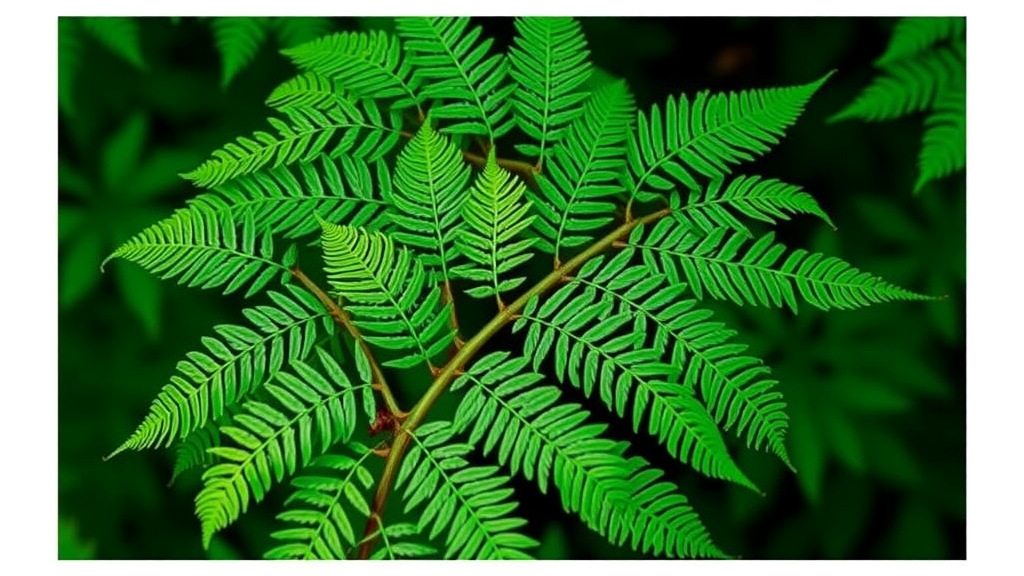
Influenza A(H1N1) remains one of the most persistent threats to global public health, responsible for seasonal epidemics and, on occasion, devastating pandemics. Current management of the virus relies on annual vaccination programs and a short list of antiviral drugs, foremost among them the neuraminidase inhibitor oseltamivir. Yet the emergence and spread of resistant viral strains continues to erode the reliability of these frontline tools, prompting virologists around the world to search for alternative and complementary strategies to contain infection. A new laboratory study from Iranian researchers now offers a tantalizing glimpse of one such alternative drawn not from synthetic chemistry but from the botanical world: the maidenhair fern, Adiantum capillus-veneris L., a plant long used in traditional medicine for treating respiratory ailments.
In a study published in BMC Complementary Medicine and Therapies, a team led by Fahime Edalat, Fatemeh Jahedi, Neda Pirbonyeh and Afagh Moattari of Shiraz University of Medical Sciences, working with colleagues at Tehran University of Medical Sciences, Ardakan University and Tarbiat Modares University, systematically evaluated the antiviral activity of an aqueous-alcoholic extract of Adiantum capillus-veneris against influenza A(H1N1) in cell culture. The research was conceived against a backdrop of increasing concern about antiviral resistance and a growing interest in herbal medicines that combine anti-inflammatory and antioxidant properties with potential direct antiviral effects. Although A. capillus-veneris has a long history of folk use for respiratory complaints, its potential to inhibit influenza viruses had never been rigorously tested, making the new work the first detailed in vitro characterization of its anti-influenza activity.
The team adopted a carefully staged experimental design to disentangle the different ways in which a botanical extract might interfere with viral infection. The first step was to establish the safety profile of the extract for the host cells. Using Madin-Darby Canine Kidney cells, the standard laboratory substrate for influenza research, the investigators applied the MTT assay, a colorimetric test that measures metabolic activity and therefore cell viability, to determine the 50 percent cytotoxic concentration, or CC50, of the extract. This value defines the dose at which the extract harms half of the host cells and thus sets the ceiling for any antiviral testing. The extract exhibited a CC50 of approximately 1 milligram per milliliter, a result the researchers describe as indicating moderate cytotoxicity. Armed with this safety threshold, they could then probe concentrations well below the toxic limit for genuine antiviral effects.
To explore how the extract might interact with the viral life cycle, the researchers introduced it at three distinct stages relative to infection. In the pre-treatment scenario, cells were exposed to the extract before the virus arrived, testing whether the plant preparation could prime the cellular environment or block viral attachment in some way. In the co-treatment scenario, extract and virus were applied simultaneously, probing interactions during the earliest steps of infection such as binding and entry. In the post-treatment scenario, the extract was added after viral inoculation, asking whether it could suppress replication once the virus had already gained entry to the cells. For comparison, oseltamivir was tested separately, added one hour after viral inoculation, replicating its clinical role as a post-exposure inhibitor of viral spread.
The readouts were equally comprehensive. Cytopathic effects, the visible damage that influenza inflicts on infected cell monolayers, were monitored 48 to 72 hours after inoculation. Viral titers were then quantified using three independent methods: the hemagglutination assay, which measures the ability of viral particles to agglutinate red blood cells; quantitative real-time PCR, which tracks viral RNA load; and the TCID50 assay, which calculates the tissue culture infectious dose, a functional measure of how much infectious virus remains. Together these assays provided a multi-angle view of viral burden, reducing the risk that a single methodological artifact could be mistaken for a true antiviral effect.
The results were striking. In the TCID50 assays, the extract demonstrated strong antiviral activity across concentrations ranging from 0.02 to 0.5 milligrams per milliliter, all comfortably below the cytotoxic threshold. The most impressive finding came from the pre-treatment arm: at a concentration of just 0.1 milligrams per milliliter, extract administered before infection reduced viral load by 99.9 percent, a reduction of three orders of magnitude in infectious virus. Meanwhile, at 0.5 milligrams per milliliter, the extract suppressed viral replication when applied during the infection window itself. The fact that pre-treatment produced the most dramatic suppression suggests that the extract may interfere with early events in the viral life cycle, perhaps by altering host cell surface receptors, blocking viral binding or entry, or inducing intracellular states less hospitable to the virus. The researchers caution, however, that the precise molecular stage at which the inhibition occurs remains to be determined.
Perhaps the most clinically relevant discovery, though, emerged when the extract was tested in combination with oseltamivir. When oseltamivir at concentrations of 0.5 and 0.05 milligrams per milliliter was paired with the extract at 0.5, 0.1 and 0.05 milligrams per milliliter, the combination produced a synergistic effect against influenza A(H1N1), delivering suppression that clearly surpassed what oseltamivir alone could achieve. Synergy of this kind is a significant observation for several reasons. First, it suggests that the extract and the neuraminidase inhibitor act on different aspects of the viral life cycle or on complementary molecular targets, since compounds competing for the same target typically show additive rather than synergistic effects. Second, combination approaches can lower the effective dose of each agent, potentially reducing side effects and, critically, slowing the emergence of drug-resistant viral variants, which thrive under monotherapy pressure. If the in vitro findings can be extended in animal models and eventually in clinical settings, an extract-based adjunct to standard antiviral therapy could offer a valuable hedge against oseltamivir resistance.
The biological plausibility of such effects is grounded in what is already known about Adiantum capillus-veneris. The fern, found across temperate and tropical regions, has featured in traditional medical systems as a remedy for coughs, bronchitis and other respiratory conditions. Previous phytochemical and pharmacological studies have attributed anti-inflammatory and antioxidant properties to its preparations, characteristics that could modulate the host environment in ways unfavorable to viral replication. The new study adds a direct antiviral dimension to this picture, although the authors emphasize that the specific chemical constituents responsible for the observed activity have not yet been identified. Flavonoids, phenolic acids and triterpenoids are common candidates in fern extracts, but confirming the active molecules will require bioassay-guided fractionation, a process of progressively separating and testing extract components to pinpoint the compounds carrying the antiviral punch.
The researchers are candid about the limits of their work. The experiments were conducted entirely in vitro, in a cell culture system that cannot capture the complexity of a living host, including immune responses, pharmacokinetics, metabolism and tissue distribution. The moderate cytotoxicity profile, with a CC50 close to the antiviral concentrations used, means that any future therapeutic application will require careful optimization of dose, formulation and potentially the isolation of active compounds to improve the therapeutic window. The study was performed in accordance with the Declaration of Helsinki and approved by the Ethics Committee of Shiraz University of Medical Sciences, and it was funded by Shiraz University of Medical Sciences. The authors also disclosed that they used ChatGPT for assistance with English language editing while retaining full responsibility for the scientific content, data analysis, interpretation and conclusions.
Looking forward, the research team recommends two priorities: identifying the specific active components of the extract and determining the exact stage of viral replication at which inhibition occurs. Both are essential steps on the long road from cell culture to clinic. If a discrete molecule can be isolated, characterized and shown to inhibit influenza A(H1N1) at achievable, non-toxic concentrations, it could become a lead compound for drug development or a standardized herbal medicine candidate. Even short of that, the demonstration that a traditional fern remedy can achieve a 99.9 percent reduction in viral load in pre-treated cells, and can synergize with a widely used antiviral drug, adds weight to the growing argument that ethnobotanical knowledge remains a rich and underexplored reservoir of antiviral potential. As influenza continues to mutate and evade single-target drugs, the maidenhair fern, a humble plant steeping in a laboratory beaker in Shiraz, may yet contribute something unexpected to the arsenal against one of humanity’s oldest viral adversaries.
Subject of Research: Antiviral activity of Adiantum capillus-veneris L. plant extract against influenza A(H1N1) in vitro
Article Title: Unveiling the antiviral activity of Adiantum capillus-veneris L. against influenza A(H1N1)
Article References: Edalat, F., Jahedi, F., Taghiabadi, Z., Letafati, A., Pirbonyeh, N., Pourghanbari, G., Shatizadeh Malekshahi, S., & Moattari, A. (2026). Unveiling the antiviral activity of Adiantum capillus-veneris L. against influenza A(H1N1). BMC Complementary Medicine and Therapies. https://doi.org/10.1186/s12906-026-05584-z
Image Credits: AI Generated
DOI: 10.1186/s12906-026-05584-z
Keywords: influenza A(H1N1), Adiantum capillus-veneris, antiviral activity, herbal extract, oseltamivir, TCID50, MDCK cells, real-time PCR, hemagglutination assay, cytotoxicity, synergy, natural remedies
Cite Scienmag News
Ophelia Keating. (September 22, 2026). Maidenhair Fern Extract Shows Potent Antiviral Activity Against Influenza A(H1N1). Scienmag. https://scienmag.com/maidenhair-fern-extract-shows-potent-antiviral-activity-against-influenza-ah1n1/
Ophelia Keating. "Maidenhair Fern Extract Shows Potent Antiviral Activity Against Influenza A(H1N1)." Scienmag, 22 September 2026, https://scienmag.com/maidenhair-fern-extract-shows-potent-antiviral-activity-against-influenza-ah1n1/. Accessed 22 September 2026.
Ophelia Keating. "Maidenhair Fern Extract Shows Potent Antiviral Activity Against Influenza A(H1N1)." Scienmag. September 22, 2026. https://scienmag.com/maidenhair-fern-extract-shows-potent-antiviral-activity-against-influenza-ah1n1/


