


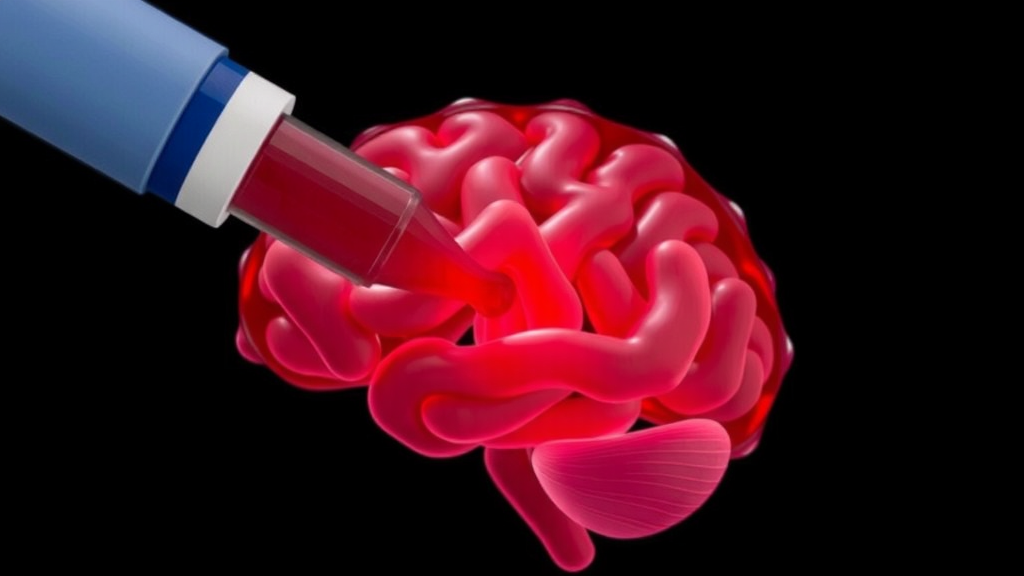
When a brain aneurysm ruptures, blood floods the narrow spaces surrounding the brain, triggering one of the most devastating forms of stroke known to medicine. Aneurysmal subarachnoid hemorrhage strikes suddenly, often in midlife, and roughly one in four patients who survive the initial catastrophe never regain independent function. For decades, clinicians have relied on clinical grading scales and CT-based scoring systems to estimate who will recover and who will not, yet these tools leave a frustrating amount of uncertainty at the bedside. Now, a large retrospective study published in Neurocritical Care suggests that a routine blood test, interpreted through the lens of machine learning, could meaningfully sharpen those early predictions. The research, led by Yanze Wu, Ping Hu, and colleagues at Nanchang University in China, demonstrates that admission levels of D-dimer, a fibrin degradation product routinely measured in emergency departments, carry independent prognostic weight and interact in a biologically plausible way with the sheer volume of blood spilled inside the skull.
D-dimer is far from a new player in stroke medicine. The molecule appears whenever the body forms a clot and then dissolves it, so elevated concentrations signal active coagulation and fibrinolysis. Previous studies had already linked high D-dimer levels after aneurysmal subarachnoid hemorrhage to poor outcomes, but the mechanism driving that early surge remained contested. Was the marker simply reflecting the size of the hemorrhage itself, or was it tracking deeper disturbances of hemostasis, systemic inflammation, or secondary complications such as delayed cerebral ischemia? Disentangling these possibilities requires detailed imaging data and sophisticated statistical modeling, both of which the Nanchang team brought to bear. Their study drew on the PROSAH-MPC cohort, a single-center database of 473 patients treated at the Second Affiliated Hospital of Nanchang University, each of whom had complete clinical, radiological, and laboratory records from the moment of admission.
The centerpiece of the analysis was a quantitative variable that few centers routinely measure: total bleeding volume. Using deep learning-based segmentation of non-contrast CT scans, the researchers computed the absolute volume of subarachnoid blood for every patient, an approach they had validated in earlier work. Rather than grading hemorrhage on the coarse modified Fisher scale, which lumps patients into broad categories, total bleeding volume offers a continuous, patient-specific measure of the initial insult. When the team stratified patients by admission D-dimer quartiles, a clear gradient emerged. Patients in the highest quartile were substantially more likely to suffer an unfavorable outcome, defined as a modified Rankin scale score of 3 to 6 at twelve months, meaning moderate to severe disability or death. Across the entire cohort, 125 patients, or 26.4 percent, experienced such unfavorable outcomes.
The statistical backbone of the study was multivariable logistic regression, adjusted for the standard confounders that muddy any observational analysis. Even after accounting for age, clinical severity as measured by the Hunt–Hess grade, radiological severity on the modified Fisher score, and other clinical variables, elevated admission D-dimer remained independently associated with poor functional outcome, with an adjusted odds ratio of 1.08 per unit increase and a 95 percent confidence interval of 1.02 to 1.16. That effect size may look modest, but in a condition where every percentage point of prognostic accuracy matters, the signal is clinically meaningful. More striking was the discovery of a statistically significant interaction between D-dimer and total bleeding volume, with a P value for interaction of 0.032. In plain terms, the prognostic impact of the blood marker depended on how much blood was actually present in the subarachnoid spaces, and vice versa.
This interaction finding is where the study moves beyond simple biomarker association and begins to touch on mechanism. One leading hypothesis, advanced by the authors in light of prior literature, is that large volumes of subarachnoid blood elevate intracranial pressure and physically stress the delicate neurovascular environment, while simultaneously releasing procoagulant and fibrinolytic products that drive D-dimer upward. The blood clot burden and the fibrin turnover it provokes may thus represent two faces of the same pathological process. An alternative interpretation is that acute microthrombosis within cortical vessels, a phenomenon increasingly documented after subarachnoid hemorrhage, generates both the biochemical signature and much of the delayed ischemic damage that destroys neurons in the days after the bleed. The new data cannot definitively adjudicate between these mechanisms, but they establish that the two variables are not redundant: each captures prognostic information the other misses.
To formalize these relationships into a practical prediction tool, the team turned to machine learning. Using the Boruta algorithm, an established wrapper method for feature selection that compares each candidate variable against randomized shadow features, they identified five top-ranked predictors: admission D-dimer, total bleeding volume, age, Hunt–Hess grade, and the modified Fisher score. Seven different machine learning architectures were then trained to predict twelve-month functional outcome. A composite of D-dimer, total bleeding volume, and Hunt–Hess grade achieved an area under the receiver operating characteristic curve of 0.867, outperforming any single variable alone, with D-dimer alone reaching 0.735, total bleeding volume 0.783, and the Hunt–Hess grade 0.833. Among the full algorithmic models, XGBoost, a gradient-boosted decision tree method celebrated for its performance on tabular clinical data, achieved the highest discriminative power with an AUC of 0.904 on the held-out internal test set.
What elevates this work above many machine learning studies in medicine is its commitment to interpretability. Black-box predictions are notoriously hard to trust in the intensive care unit, where clinicians must justify every decision. The researchers therefore applied SHapley Additive exPlanations, or SHAP, a technique rooted in cooperative game theory that assigns each feature a quantified contribution to every individual prediction. The SHAP analysis confirmed that D-dimer and total bleeding volume were among the dominant contributors to the model’s output, alongside the established severity scales. Crucially, SHAP interaction plots revealed a synergistic adverse effect: at higher D-dimer concentrations, increasing total bleeding volume pushed predictions steeply toward poor outcome, visually mirroring the statistical interaction term from the regression analysis. For individual patients, force plots showed exactly which variables drove a given forecast, offering clinicians a transparent rationale rather than an inscrutable score.
The clinical implications are tantalizing but must be tempered by the study’s design. As a retrospective, single-center cohort, the findings require external validation before admission D-dimer can be woven into formal prognostic scores or triage protocols. The study also complied with the STROBE reporting guidelines and used structured approaches such as the CHARMS checklist for prediction model appraisal, along with E-value sensitivity analyses to probe unmeasured confounding, all of which strengthen confidence in the internal validity. Nonetheless, the appeal of the approach lies in its practicality: D-dimer is already measured in virtually every emergency department in the world, costs pennies, and returns results within minutes. If combined with automated CT segmentation pipelines that are rapidly maturing, a bedside risk estimate could plausibly be generated within the first hour of hospital arrival, precisely the window when decisions about transfer, aneurysm securing, and blood pressure management are made.
For patients and families, the difference between a 70 percent and a 90 percent accurate prognosis on day one can shape everything from the intensity of neurocritical care to the timing of family conversations. For researchers, the study adds to a growing body of evidence that hemostatic activation is not an epiphenomenon of aneurysmal subarachnoid hemorrhage but a central axis of injury, one that intersects with bleeding volume, intracranial pressure, and delayed cerebral ischemia. Whether interventions targeting coagulation or fibrinolysis could one day improve outcomes remains an open question, and the authors are careful not to overclaim therapeutic implications. What their work does establish, with unusual statistical rigor and computational transparency, is that the humble fibrin fragment measured on admission encodes genuine, quantifiable information about a patient’s twelve-month trajectory. In a disease where early brain injury unfolds within hours, that information, delivered through interpretable machine learning models, may prove to be exactly the early warning system neurointensivists have been seeking.
Subject of Research: Prognostic value of admission D-dimer and total bleeding volume in aneurysmal subarachnoid hemorrhage using interpretable machine learning.
Article Title: Prognostic Value of Admission D-dimer Levels and Total Bleeding Volume in Aneurysmal Subarachnoid Hemorrhage: A Retrospective Cohort Study with Machine Learning-Based Modeling
Article References: Wu, Y., Hu, P., Yang, X., Liao, Q., Chen, Z., Zhang, S., Xiao, B., Lv, S., Wu, M., Yan, T., Zhu, X., Ye, M., & Tu, W. (2026). Prognostic Value of Admission D-dimer Levels and Total Bleeding Volume in Aneurysmal Subarachnoid Hemorrhage: A Retrospective Cohort Study with Machine Learning-Based Modeling. Neurocritical Care. https://doi.org/10.1007/s12028-026-02558-4
Image Credits: AI Generated
DOI: 10.1007/s12028-026-02558-4
Keywords: aneurysmal subarachnoid hemorrhage, D-dimer, total bleeding volume, machine learning, XGBoost, SHAP, prognosis, biomarkers, neurocritical care, stroke, CT imaging, functional outcomes
Cite Scienmag News
Cassandra Pierce. (September 21, 2026). Simple Blood Clot Marker and AI Models Predict Recovery After Brain Bleed. Scienmag. https://scienmag.com/simple-blood-clot-marker-and-ai-models-predict-recovery-after-brain-bleed/
Cassandra Pierce. "Simple Blood Clot Marker and AI Models Predict Recovery After Brain Bleed." Scienmag, 21 September 2026, https://scienmag.com/simple-blood-clot-marker-and-ai-models-predict-recovery-after-brain-bleed/. Accessed 21 September 2026.
Cassandra Pierce. "Simple Blood Clot Marker and AI Models Predict Recovery After Brain Bleed." Scienmag. September 21, 2026. https://scienmag.com/simple-blood-clot-marker-and-ai-models-predict-recovery-after-brain-bleed/


