


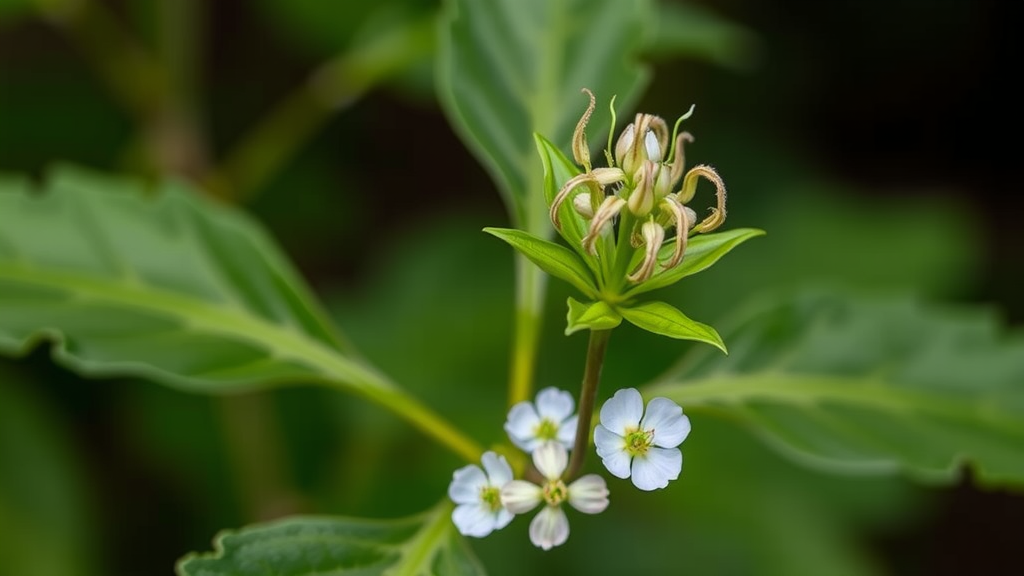
A humble weed that grows across the wastelands and roadside ditches of India is drawing renewed attention from pharmaceutical scientists, thanks to a sweeping new review that catalogs decades of evidence pointing to its remarkable medicinal range. Leucas aspera, known in Ayurvedic tradition as Dronapushpi, is a small herbaceous plant in the mint family that has long been used to treat fevers, coughs, skin infections, snakebites, and digestive complaints. A comprehensive review published in Discover Chemistry by Maneesha Pathak, Vaibhav Gaba, and Bhuwan Chandra Joshi systematically compiles the botanical, phytochemical, pharmacological, and toxicological literature on this species, and the picture that emerges is of a plant whose therapeutic promise has, until now, remained largely confined to the laboratory.
The review describes L. aspera as an annual herb reaching 15 to 60 centimeters in height, distributed widely across tropical and subtropical Asia, including India, Bangladesh, Nepal, Malaysia, and Mauritius. Its taxonomic classification places it in the Lamiaceae family alongside mint and basil, and its vernacular names across Indian languages reflect deep cultural familiarity. The plant blooms white, sessile, zygomorphic flowers from August to September, and every part, from roots to seeds, has found a place in traditional healing. In Ayurveda and Siddha medicine, the whole plant is used as a carminative, antipyretic, antiseptic, anti-inflammatory, and anti-snake venom agent, treating conditions ranging from jaundice and dyspepsia to rheumatism and respiratory ailments.
What gives the plant its versatility is an unusually rich phytochemical inventory. The review identifies roughly sixty chemical compounds spanning multiple structural classes, including flavonoids, alkaloids, terpenoids, glycosides, sterols, phenolic compounds, and fatty acids. Notable constituents include the triterpenoids ursolic acid and oleanolic acid, the diterpenes leucasperones A and B and leucasperols A and B, isopimarane glycosides known as leucasperosides A, B, and C, and the oleanane-type triterpenoid lactone leucolactone isolated from the roots. Seed oil contains linoleic, oleic, palmitic, stearic, and linolenic acids, while leaf volatiles are dominated by alpha-farnesene, alpha-thujene, and menthol. Lignans such as nectandrin B and macelignan, along with long-chain aliphatic ketones and alcohols, round out a chemical repertoire that rivals many cultivated medicinal species.
The pharmacological evidence assembled by the authors is striking in its breadth. Antimicrobial studies show that dichloromethane leaf extracts inhibit pathogens including Staphylococcus aureus, Escherichia coli, Pseudomonas aeruginosa, and Candida albicans at minimum inhibitory concentrations between 75 and 425 micrograms per milliliter, while methanolic whole-plant extracts, rich in flavonoids and phenolics, produce broad inhibition zones against both Gram-positive and Gram-negative bacteria. Antioxidant assays reveal that leaf flavonoids scavenge DPPH radicals with an IC50 of just 9.25 micrograms per milliliter, outperforming the reference compound gallic acid at equivalent doses. Perhaps most intriguingly, recent work has used the plant’s phytochemicals as reducing and stabilizing agents to biosynthesize chitosan-zinc oxide nanocomposites, which achieved up to 88.19 percent ABTS radical scavenging, a result attributed to synergistic interactions between the nanoparticle surfaces, chitosan functional groups, and the plant’s phenolic compounds.
Anti-inflammatory findings are similarly compelling. Extracts of the whole plant reduced cytokine production in mouse macrophage cells by 24 to 39 percent, suppressing interleukin-1 beta, a key pro-inflammatory mediator, and aqueous leaf extracts inhibited heat-induced red blood cell membrane denaturation by 73.25 percent at 100 micrograms per milliliter, nearly matching the standard drug diclofenac. In diabetes models, aqueous leaf extracts lowered blood glucose in streptozotocin-induced diabetic rats to 98.35 milligrams per deciliter at 400 milligrams per kilogram, outperforming the reference drug glibenclamide in some comparisons, while methanolic extracts reduced serum glucose by up to 42.10 percent in glucose-loaded mice. Researchers attribute these effects partly to the substantial quantities of oleanolic and ursolic acid found throughout the genus.
The review also documents hepatoprotective activity across several liver injury models, with extracts protecting against damage induced by paracetamol, carbon tetrachloride, lead acetate, and d-galactosamine by normalizing liver enzymes, reducing lipid peroxidation, and elevating antioxidant defenses such as glutathione peroxidase and catalase. Cytotoxicity studies against breast cancer cell lines showed that flavonoid and alkaloid fractions inhibited MCF-7 cell growth with IC50 values of 247.56 and 236.45 micrograms per milliliter respectively, while dichloromethane and ethyl acetate extracts suppressed proliferation in triple-negative MDA-MB-231 cells at concentrations as low as 3 to 5 micrograms per milliliter, suggesting potential as a source of leads against aggressive cancers.
Beyond these headline activities, the plant demonstrated analgesic effects across six pain models in mice, with a 700 milligrams per kilogram dose reducing responses by up to 84.74 percent, alongside verified anthelmintic, antipyretic, anti-ulcer, anti-asthmatic, anti-psoriatic, and anti-obesity properties. One of the more striking findings concerns snakebite: a triterpenoid isolated from the methanolic extract, 1-hydroxytetratriacontane-4-one, showed potent antidote activity against spectacled cobra venom in mice, and chitosan-based nanoparticles loaded with the plant extract neutralized Indian cobra venom toxicity. As a larvicide, the isolated compound catechin killed mosquito larvae, and silver nanoparticles synthesized from leaf extracts showed strong activity against the dengue vector Aedes aegypti, positioning the weed as an inexpensive bioresource for vector control.
Safety data support the plant’s traditional standing. Acute and sub-acute toxicity studies conducted under OECD guidelines 423 and 425 found no lethality or adverse behavioral changes at doses up to 2,000 milligrams per kilogram across multiple extract types and animal models, establishing median lethal doses above that threshold. The plant has already entered commercial use in homeopathic preparations, notably L. aspera 30CH dilutions marketed for asthma, cough, jaundice, dysentery, and intermittent fevers, and mother tinctures valued for their antipyretic and antimicrobial qualities. Its nutraceutical profile, marked by favorable mineral content and negligible heavy metal contamination, further suggests applications in functional foods, while its essential oils show promise as eco-friendly biopesticides.
Yet the review’s authors are candid about the gaps that separate preclinical enthusiasm from clinical reality. Most pharmacological data derive from in vitro experiments and animal studies, human trials are scarce, and variations in plant parts, extraction methods, and experimental protocols complicate comparisons across studies. Chronic toxicity, reproductive safety, genotoxicity, pharmacokinetics, and herb-drug interactions remain essentially uncharacterized, and many studies use crude extracts without adequate phytochemical standardization. Overexploitation also threatens wild populations, prompting calls for tissue culture conservation, transgenic development, and metabolite enhancement. The authors argue that the path forward lies in isolating novel bioactive compounds, standardizing formulations, applying nanotechnology-based delivery systems, and ultimately conducting randomized clinical trials. If those steps succeed, a weed once dismissed from the margins of wastelands may yet earn a place in the modern pharmacopoeia.
Subject of Research: Phytochemistry, pharmacological activities, and clinical applications of the medicinal plant Leucas aspera
Article Title: A comprehensive review of the phytochemistry, pharmacological activities and clinical applications of Leucas aspera
Article References: Pathak, M., Gaba, V., & Joshi, B. C. (2026). A comprehensive review of the phytochemistry, pharmacological activities and clinical applications of Leucas aspera. Discover Chemistry, 3(1), Article 525. https://doi.org/10.1007/s44371-026-00971-4
Image Credits: AI Generated
DOI: 10.1007/s44371-026-00971-4
Keywords: Leucas aspera, phytochemistry, pharmacological activities, Dronapushpi, Ayurveda, antimicrobial, anti-inflammatory, antidiabetic, hepatoprotective, snake venom, larvicidal, natural products
Cite Scienmag News
Bethany Barker. (September 21, 2026). Traditional Indian Herb Leucas aspera Shows Potent Drug Potential in Major Scientific Review. Scienmag. https://scienmag.com/traditional-indian-herb-leucas-aspera-shows-potent-drug-potential-in-major-scientific-review/
Bethany Barker. "Traditional Indian Herb Leucas aspera Shows Potent Drug Potential in Major Scientific Review." Scienmag, 21 September 2026, https://scienmag.com/traditional-indian-herb-leucas-aspera-shows-potent-drug-potential-in-major-scientific-review/. Accessed 21 September 2026.
Bethany Barker. "Traditional Indian Herb Leucas aspera Shows Potent Drug Potential in Major Scientific Review." Scienmag. September 21, 2026. https://scienmag.com/traditional-indian-herb-leucas-aspera-shows-potent-drug-potential-in-major-scientific-review/


