


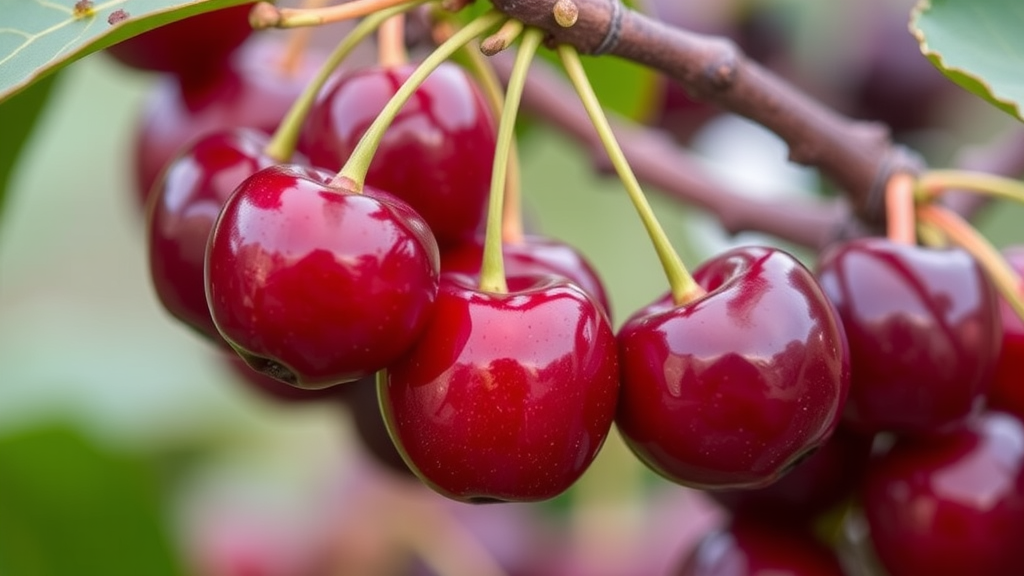
A single trace element, applied as a simple foliar spray at just the right moments of fruit development, can transform the nutritional profile of one of China’s most promising underutilized fruits, according to new research published in the journal Plant and Soil. The study, conducted by a team at Shanxi Agricultural University in collaboration with Universiti Teknologi Malaysia, demonstrates that spraying sodium selenite onto Chinese dwarf cherry (Cerasus humilis) trees significantly boosts the fruit’s selenium content, antioxidant capacity, and levels of health-promoting flavonoids and anthocyanins. The findings offer a practical, low-cost strategy for selenium biofortification of a fruit that is already prized for its dense concentration of bioactive compounds, while also revealing, through transcriptome analysis, the genetic machinery that selenium recruits to rewire the fruit’s secondary metabolism.
Selenium occupies a curious position in plant biology. It is not considered an essential element for higher plants, yet it functions as a cofactor for a suite of antioxidant enzymes, including the glutathione peroxidases, and it participates in secondary metabolism, stress responses, and the ripening process. For humans, the picture is clearer: selenium is an essential micronutrient, and deficiency affects an estimated one billion people worldwide, with consequences ranging from compromised immune function to increased oxidative stress. Because dietary selenium intake depends heavily on the selenium content of soils where crops are grown, agronomic biofortification—enriching food crops with selenium through fertilization—has emerged as a major strategy in global nutrition efforts. Foliar spraying, in which a selenium solution is applied directly to leaves and developing fruit, is particularly attractive because it bypasses the complex soil chemistry that often locks selenium into unavailable forms and allows precise control over dose and timing.
The Chinese dwarf cherry, known in China as Oula Li, is a small drupe native to northern China that has attracted growing scientific and commercial attention. Despite its modest size, the fruit accumulates remarkable levels of phenolic compounds, flavonoids, anthocyanins, and vitamin C, and previous studies have documented substantial genotypic diversity in its antioxidant capacity. It is also valued for its calcium content and has been the subject of metabolomic investigations into its organic acid composition. Yet until now, no comprehensive study had examined how exogenous selenium application affects the fruit’s quality, selenium accumulation, or the underlying gene expression programs that govern its flavonoid biosynthesis.
To fill this gap, the research team sprayed ‘Jinou-2’ Chinese dwarf cherry trees with sodium selenite solutions ranging from 0 to 150 milligrams per liter, applying the treatments at two critical developmental windows: the young fruit stage and the fruit expansion stage. These stages were chosen because they represent periods of intense cell division and resource allocation, when the fruit’s metabolic machinery is most responsive to external inputs. After treatment, the researchers measured a battery of fruit quality parameters, including fruit size, peel coloration, soluble solids, organic acid and ascorbic acid content, selenium concentration and speciation, flavonoid and anthocyanin levels, and overall antioxidant activity. They then performed transcriptome sequencing on treated and untreated fruit to identify the genes and pathways responding to selenium.
The results were strikingly dose-dependent. At 120 milligrams per liter, sodium selenite produced the most remarkable improvements across nearly every quality metric. Fruits were larger, their peels displayed deeper redness—an indicator of anthocyanin accumulation—and their flavor profile improved. Critically, the treatment shifted the speciation of selenium within the fruit: the proportion of organic selenium rose while inorganic selenium declined. This shift matters enormously from a nutritional and safety standpoint. Organic selenium compounds, such as selenomethionine incorporated into proteins, are generally more bioavailable and less toxic than inorganic selenite or selenate, so a fruit that converts absorbed inorganic selenium into organic forms delivers a safer and more effective nutritional payload.
Alongside the selenium transformation, the treated fruits showed significantly enhanced antioxidant activity, accompanied by marked increases in ascorbic acid, total flavonoids, and anthocyanins. These compounds form the chemical backbone of the fruit’s health-promoting reputation, and their coordinated elevation suggests that selenium acts not merely as a passive accumulator but as an active elicitor of secondary metabolism. However, the benefits were not unlimited. When the spray concentration was pushed to 150 milligrams per liter, the positive effects attenuated, indicating that excessive selenium crosses a threshold where it begins to impose stress on the plant rather than support it. This biphasic response—stimulation at moderate doses, inhibition at high doses—is a well-recognized feature of selenium biology and underscores the importance of precise dosing in any biofortification program.
The transcriptome analysis provided the mechanistic depth that elevates the study beyond simple agronomy. Sequencing revealed that the differentially expressed genes between selenium-treated and control fruits were predominantly enriched in the phenylpropanoid and flavonoid biosynthesis pathways. The phenylpropanoid pathway is the metabolic superhighway of plant secondary chemistry: it begins with the amino acid phenylalanine and branches into an enormous diversity of compounds, including lignins, flavonoids, and anthocyanins, many of which serve as antioxidants, pigments, and defense molecules. The finding that selenium treatment upregulates genes in these pathways, and that this transcriptional shift correlates consistently with the measured increases in flavonoid and anthocyanin content, provides a coherent causal narrative: selenium signals the fruit to invest more heavily in its antioxidant chemical arsenal, and the genes encoding the biosynthetic enzymes respond accordingly.
This mechanism resonates with a growing body of literature on selenium’s elicitor-like effects across horticultural crops. Foliar selenium applications have been shown to enhance anthocyanin biosynthesis in purple lettuce, activate phenylpropanoid metabolism in peach, improve quality and nutrient profiles in citrus, blueberries, strawberries, pomegranate, kiwifruit, and table grapes, and modulate postharvest quality in apples. What the new study adds is a complete chain of evidence—from field application through fruit chemistry to gene expression—in a fruit species that had not previously been examined in this context. The consistency of the transcriptomic data with the biochemical measurements strengthens the conclusion that the flavonoid pathway is a genuine target of selenium signaling in Cerasus humilis, rather than an incidental correlation.
The practical implications are considerable. For growers of Chinese dwarf cherry, the study offers a targeted cultivation protocol: foliar spraying of 120 milligrams per liter sodium selenite at the young fruit and fruit expansion stages provides selenium biofortification and quality enhancement simultaneously, without genetic modification, without altering the crop, and with an input cost measured in pennies per tree. For nutrition policy, it demonstrates that selenium-deficient regions could potentially address local micronutrient gaps by fortifying locally adapted fruit crops rather than relying exclusively on staple cereals. And for the broader field of biofortification research, the study reinforces the emerging view that selenium is not just a nutrient to be accumulated but a metabolic lever that can be pulled to enhance the nutraceutical value of foods.
The authors are appropriately cautious about scaling up. Their conclusions apply to the ‘Jinou-2’ cultivar under the single-site field conditions of this study, and they emphasize that multi-site verification is required before large-scale popularization. Cultivar-specific responses, regional soil and climate variations, and the cumulative selenium load in orchard ecosystems all warrant further investigation. Nevertheless, the study marks a significant step forward in the science of fruit biofortification, showing that with a precisely timed spray of a simple selenium salt, a small cherry with an outsized nutritional reputation can be made even more remarkable—one gene, one flavonoid, and one harvest at a time.
Subject of Research: Foliar selenium biofortification and flavonoid metabolism in Cerasus humilis fruit
Article Title: Foliar selenium spray enhances selenium content, antioxidant capacity and flavonoid metabolic pathway in Cerasus humilis fruit
Article References: Lv, J., Liu, N., Dang, Y., Jia, L., Zhang, S., Wang, P., Lee, C. T., Mu, X., & Zhang, J. (2026). Foliar selenium spray enhances selenium content, antioxidant capacity and flavonoid metabolic pathway in Cerasus humilis fruit. Plant and Soil. https://doi.org/10.1007/s11104-026-09097-z
Image Credits: AI Generated
DOI: 10.1007/s11104-026-09097-z
Keywords: selenium biofortification, Cerasus humilis, Chinese dwarf cherry, sodium selenite, flavonoid biosynthesis, anthocyanins, antioxidant capacity, phenylpropanoid pathway, transcriptome analysis, fruit quality, organic selenium, foliar spray
Cite Scienmag News
Daisy Hatcher. (September 12, 2026). Selenium Spray Supercharges Antioxidant-Rich Chinese Dwarf Cherry Fruit. Scienmag. https://scienmag.com/selenium-spray-supercharges-antioxidant-rich-chinese-dwarf-cherry-fruit/
Daisy Hatcher. "Selenium Spray Supercharges Antioxidant-Rich Chinese Dwarf Cherry Fruit." Scienmag, 12 September 2026, https://scienmag.com/selenium-spray-supercharges-antioxidant-rich-chinese-dwarf-cherry-fruit/. Accessed 12 September 2026.
Daisy Hatcher. "Selenium Spray Supercharges Antioxidant-Rich Chinese Dwarf Cherry Fruit." Scienmag. September 12, 2026. https://scienmag.com/selenium-spray-supercharges-antioxidant-rich-chinese-dwarf-cherry-fruit/


