


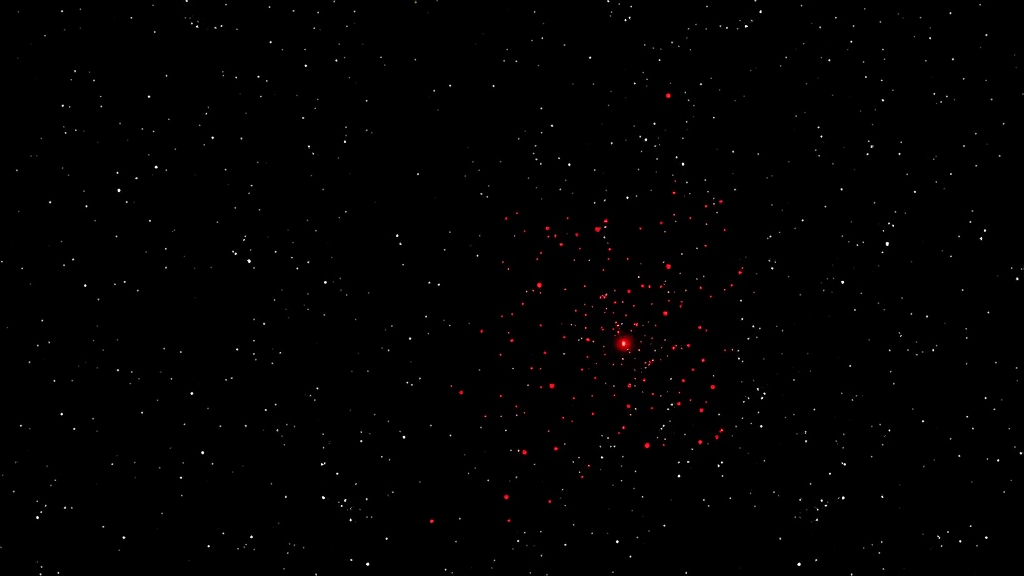
When the James Webb Space Telescope began its deep surveys of the early universe, it uncovered a class of objects that nobody had predicted: compact, extremely red sources that astronomers quickly nicknamed “little red dots.” These objects, found in large numbers at redshifts corresponding to the first billion years of cosmic history, have puzzled researchers since their discovery. Now, a Perspective published in Nature Astronomy by Kohei Inayoshi and Luis C. Ho of the Kavli Institute for Astronomy and Astrophysics at Peking University offers one of the most comprehensive critical evaluations to date of what these enigmatic sources actually are, arguing that they represent the earliest observable phase of black hole and galaxy formation.
Little red dots are almost certainly associated with active galactic nuclei, the brilliant engines powered by gas falling onto supermassive black holes. Yet their properties stubbornly refuse to fit the canonical picture of how such nuclei should behave. They show broad emission lines, which in standard active galactic nuclei indicate rapidly moving gas close to a black hole, but they lack the X-ray emission, variability, and hot dust signatures that normally accompany such activity. This mismatch has stimulated a flurry of competing ideas about how massive black holes formed and grew so quickly after the Big Bang.
The new evaluation weighs three broad classes of explanation. The first is a purely stellar scenario, in which the light of the little red dots comes entirely from extraordinarily dense concentrations of stars rather than a black hole. Inayoshi and Ho find this option untenable: reproducing the observed infrared spectral energetics with stars would require stellar masses so enormous that they would be inconsistent with everything else known about early galaxies. Star formation may still contribute to the ultraviolet emission of some objects, but it cannot be the dominant power source.
The second possibility, and the one the authors favor, is mass accretion onto black holes with masses of roughly one to ten million solar masses. Such accretion can naturally produce both the broad emission lines and the strikingly red optical continuum that define the class. The third category involves more exotic configurations, including quasi-stars and supermassive stars, which some researchers have proposed as bridges between the first seed black holes and the giants seen later in cosmic history.
A crucial clue comes from the spectra themselves. Many little red dots display a prominent Balmer break, a sharp feature in the continuum near the Balmer limit of hydrogen, together with Balmer absorption lines and unusually large Balmer decrements, meaning the ratio of different hydrogen emission line strengths departs strongly from standard expectations. In ordinary galaxies, a Balmer break signals an aging stellar population. But in the little red dots, the authors argue, these features instead point to nuclear black holes that are heavily enshrouded by extremely dense gas, whose properties imprint the observed spectral signatures without any need for stars.
This gas-envelope interpretation also resolves a long-standing puzzle about the red colors. Rather than the light being dimmed and reddened by intervening dust, as in a classic obscured quasar, the optical to infrared spectra of little red dots appear to arise from a combination of gas attenuation and thermal self-emission from the dense envelope itself, with an effective temperature of approximately 5,000 kelvin. That temperature is remarkably similar to the surfaces of cool stars, which is why some researchers have described these objects as “black hole stars”: structures that look superficially stellar but are powered by accretion onto a black hole at their core.
The evidence for dense gas extends across the electromagnetic spectrum. Little red dots are conspicuously X-ray weak, a property that can be explained if the surrounding material is so thick that even X-rays cannot escape, or if super-Eddington accretion onto infant black holes intrinsically produces feeble X-ray output. Meanwhile, millimeter observations with ALMA have placed stringent upper limits on the dust content of these sources, creating what some authors have called a dust budget crisis: there simply may not be enough dust in the early universe to redden the little red dots by conventional obscuration, further favoring the gas-dominated picture.
Demographics add another layer of constraint. Surveys such as CEERS, EIGER, FRESCO, UNCOVER, and COSMOS-Web have shown that little red dots are abundant at redshifts between roughly 4 and 9, yet they do not reside in the same massive dark matter haloes as comparably luminous unobscured quasars. Their number densities and clustering suggest they occupy a distinct evolutionary niche. Variability studies complicate the picture further: most little red dots show little or no photometric variability over years to decades, unlike normal active galactic nuclei, although a minority of sources do show tentative changes, and century-scale monitoring of one lensed object hints at slow evolution consistent with an extended gas envelope.
Looking forward, Inayoshi and Ho identify several observational programs that could decisively distinguish the competing scenarios. Deep rest-optical to infrared spectroscopy will test whether the continuum truly behaves like a 5,000 kelvin photosphere of dense gas rather than a collection of stars. Time variability studies, exploiting both direct monitoring and gravitational lensing, can probe the physical size of the emitting region. Perhaps most promising are searches for post-LRD populations, objects that have shed their envelopes and evolved into more conventional active galactic nuclei, and for low-redshift analogues, several of which have already been discovered locally, offering nearby laboratories in which every spectral feature can be studied in detail.
If the gas-enshrouded black hole interpretation holds, the implications for cosmic history are profound. Little red dots would not be oddities but signposts marking the very first activity of black hole growth, the moment when seed black holes embedded in dense gas began their transformation into the supermassive engines that anchor galaxies today. Their spectral uniformity, the authors note, may be a natural outcome of coevolving seed black holes and nascent starbursts under similar physical conditions across the early universe. As JWST continues to accumulate spectra and as next-generation facilities come online, the little red dots are poised to remain at the center of efforts to understand how the first black holes, and the first galaxies, came to be.
Subject of Research: The physical nature of the little red dots, a class of compact red objects discovered by JWST in the early universe
Article Title: A critical evaluation of the physical nature of the little red dots
Article References: Inayoshi, K., & Ho, L. C. (2026). A critical evaluation of the physical nature of the little red dots. Nature Astronomy. https://doi.org/10.1038/s41550-026-02934-2
Image Credits: AI Generated
DOI: 10.1038/s41550-026-02934-2
Keywords: little red dots, JWST, active galactic nuclei, supermassive black holes, early universe, Balmer break, dense gas envelopes, black hole accretion, high-redshift galaxies, Nature Astronomy, X-ray weakness, black hole formation
Cite Scienmag News
Grant Pearson. (September 12, 2026). JWST’s Little Red Dots May Be Black Holes Wrapped in Dense Gas, Study Finds. Scienmag. https://scienmag.com/jwsts-little-red-dots-may-be-black-holes-wrapped-in-dense-gas-study-finds/
Grant Pearson. "JWST’s Little Red Dots May Be Black Holes Wrapped in Dense Gas, Study Finds." Scienmag, 12 September 2026, https://scienmag.com/jwsts-little-red-dots-may-be-black-holes-wrapped-in-dense-gas-study-finds/. Accessed 12 September 2026.
Grant Pearson. "JWST’s Little Red Dots May Be Black Holes Wrapped in Dense Gas, Study Finds." Scienmag. September 12, 2026. https://scienmag.com/jwsts-little-red-dots-may-be-black-holes-wrapped-in-dense-gas-study-finds/


