


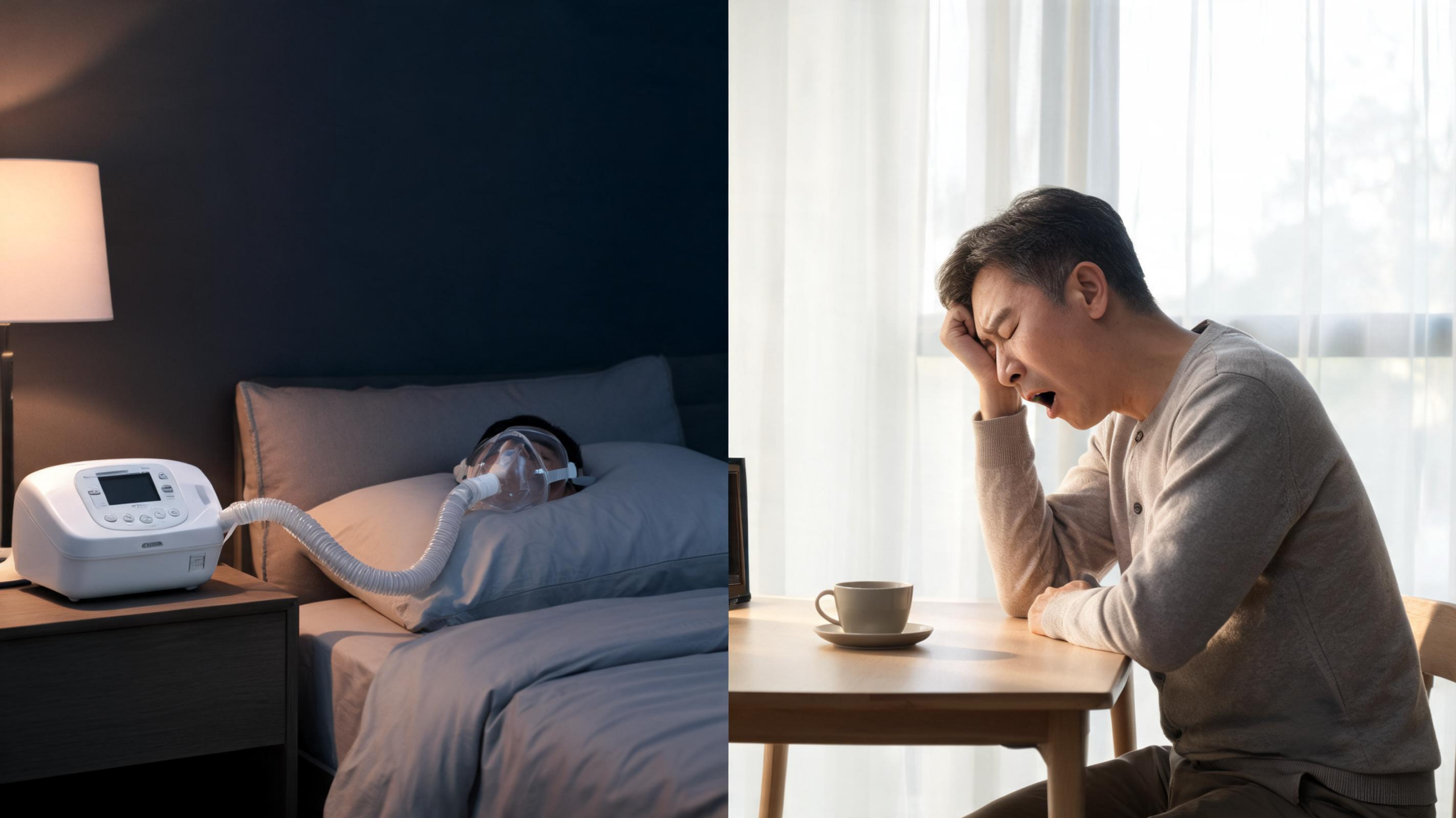
Excessive daytime sleepiness is one of the most stubborn and disabling symptoms in sleep medicine, and a new exchange in the Journal of Clinical Sleep Medicine has reignited a debate about why so many patients with obstructive sleep apnea continue to feel profoundly sleepy even after their breathing disorder is effectively treated. The correspondence, authored by Barbara Junco, Alberto R. Ramos, and Roger McIntosh of the University of Miami, responds to a provocative commentary by Christoph G. U. Riese and Uwe Koehler suggesting that occupational sleep restriction may be the missing piece in explaining residual excessive daytime sleepiness in patients who are faithfully adherent to positive airway pressure therapy. The reply defends the authors’ original research framework and pushes back on the idea that work-related sleep loss alone can account for the phenomenon.
At the center of the discussion is the MAGNETO study, a clinical investigation led by the Miami team that examined cognition and psychomotor vigilance in treated sleep apnea patients with and without daytime sleepiness. The study, published in the Journal of Clinical Sleep Medicine in 2026, addressed a puzzle that has troubled clinicians for decades: a substantial proportion of patients with obstructive sleep apnea who achieve excellent adherence to positive airway pressure, often measured as more than four hours of use per night on at least seventy percent of nights, nonetheless continue to report persistent daytime sleepiness. This residual sleepiness is not a trivial complaint. It is associated with impaired attention, slowed reaction times, reduced quality of life, and elevated risk for motor vehicle accidents and workplace errors.
The technical question underlying the exchange is deceptively simple: what causes sleepiness when the primary driver, repetitive upper airway collapse during sleep, has been mechanically corrected? Obstructive sleep apnea fragments sleep through hundreds of micro-arousals each night, triggers intermittent hypoxia and hypercapnia, and generates surges of sympathetic nervous system activity. Positive airway pressure splints the airway open, normalizes oxygen saturation, and dramatically reduces the arousal index. Yet objective sleepiness, as measured by the multiple sleep latency test, and subjective sleepiness, as captured by instruments such as the Epworth Sleepiness Scale, frequently persist. Estimates vary across cohorts, but studies have suggested that a meaningful fraction, often cited between six and fifteen percent of adherent patients, continue to experience clinically significant sleepiness despite normalized respiratory indices.
Riese and Koehler argued in their commentary that researchers and clinicians may be overlooking a mundane but powerful contributor: insufficient sleep opportunity during work weeks. Shift workers, long-haul drivers, physicians, and employees in demanding occupations routinely restrict their sleep to well below the recommended seven to nine hours, accumulating a chronic sleep debt that no airway device can repay. Their argument carries intuitive force, because laboratory studies of sleep restriction show that even healthy adults develop progressive deficits in vigilance and mood when sleep is curtailed night after night. A meta-analysis by Lim and Dinges, widely cited in the literature, demonstrated that short-term sleep deprivation reliably degrades attention and processing speed, with psychomotor vigilance tasks among the most sensitive measures of these deficits. In that sense, occupational sleep restriction is a plausible confounder in any study of sleepiness among employed apnea patients.
The Miami authors, however, contend that occupational factors cannot be treated as the single explanatory variable, and their reply emphasizes the multifactorial biology of residual sleepiness. Prior research has identified a constellation of mechanisms that operate independently of both apnea severity and sleep opportunity. These include subtle nocturnal hypoxemia that persists despite therapy, genetic polymorphisms affecting adenosine and monoamine signaling, obesity-related inflammatory pathways, and the phenomenon of phenotypic resistance in which certain individuals appear biologically less able to restore wakefulness even after mechanical correction of their breathing disorder. A study by Prasad and colleagues in the journal Sleep systematically examined determinants of sleepiness in obstructive sleep apnea and found that subjective and objective sleepiness have overlapping but distinct correlates, suggesting that different neural and metabolic pathways underlie each dimension.
Inflammation has emerged as a particularly compelling candidate mechanism. Work by Li, Vgontzas, and colleagues demonstrated that objectively sleepy apnea patients, but not subjectively sleepy ones, showed elevated circulating markers of inflammation such as interleukin-6 and tumor necrosis factor-alpha. This dissociation is scientifically important because it implies that objective sleepiness reflects a physiological state, potentially a chronic activation of immune signaling that alters sleep homeostatic pressure and wake-promoting circuits in the hypothalamus and brainstem. If inflammation drives a form of sleepiness that is independent of sleep duration, then simply asking patients about their work schedules would miss the relevant pathology entirely. The MAGNETO investigators argue that their findings on cognition and psychomotor vigilance fit within this broader model, in which residual sleepiness represents a genuine neurobiological phenotype rather than a simple arithmetic consequence of short sleep.
The Epworth Sleepiness Scale, developed by Murray Johns in 1991, remains the dominant clinical tool for quantifying subjective sleepiness, and it features prominently in this debate because of its well-known limitations. The scale asks patients to rate their likelihood of dozing in eight sedentary situations, but it conflates sleepiness with fatigue, boredom, and situational drowsiness, and it correlates only modestly with objective measures such as the maintenance of wakefulness test. Critics of sleepiness research, including Riese and Koehler, note that occupational demands can inflate Epworth scores without indicating any apnea-specific pathology. Defenders of the biological model counter that when objective measures of sleep propensity and cognitive performance, such as the psychomotor vigilance task used in the MAGNETO study, are added to the picture, the residual sleepiness phenotype remains robust and is not easily dismissed as an artifact of lifestyle.
From a clinical management standpoint, the stakes of this academic exchange are considerable. A growing pharmacological arsenal, including wake-promoting agents such as modafinil, armodafinil, and the dual orexin receptor antagonists solriamfetol, approved in 2019, and pitolisant, now offers targeted treatment for residual sleepiness in positive airway pressure-treated patients. The funding disclosure accompanying the Miami authors’ work notes support from Axsome Therapeutics and Jazz Pharmaceuticals, companies active in this therapeutic space, although the authors state that sponsors had no role in study design, data collection, analysis, or interpretation, and they declare no competing interests. If residual sleepiness is attributed primarily to occupational sleep restriction, the clinical response would be behavioral: extend sleep opportunity, adjust work schedules, and counsel patients on sleep hygiene. If instead it reflects a distinct biological susceptibility, then pharmacotherapy and further mechanistic research become the priority. The practical answer, most experts now agree, is likely a careful differential diagnosis that rules out inadequate sleep opportunity, depression, medications, and comorbid sleep disorders before attributing residual symptoms to an intrinsic sleepiness phenotype.
The broader significance of this debate extends well beyond the sleep clinic. Occupational health psychology has documented how constant connectivity and after-hours work erode psychological detachment from job demands, degrade sleep quality, and diminish morning vigor, findings described by Clinton and colleagues in the Journal of Occupational Health Psychology. In a workforce where chronic sleep insufficiency is endemic, distinguishing the sleepiness caused by a treated disease from the sleepiness caused by modern working life is an epidemiological challenge with implications for safety-critical industries, disability assessment, and drug development. The MAGNETO investigators argue that their data on cognition and vigilance in treated patients provide a rigorous framework for this differentiation, and their reply to Riese and Koehler underscores a central tenet of contemporary sleep science: residual excessive daytime sleepiness in positive airway pressure-adherent patients is best understood not as a single-cause problem but as a convergent phenotype, shaped by occupational sleep opportunity, inflammatory biology, genetic vulnerability, and the incomplete reversibility of chronic apnea-related neural injury. Resolving the relative weight of each factor will require larger, prospective studies that objectively measure both habitual sleep duration and the neurobiological markers of sleepiness, a research agenda both sides of this exchange could endorse.
Beyond the immediate exchange, the correspondence highlights a methodological point with consequences for future trials: standard adherence metrics capture device usage but say nothing about total sleep time. A patient may wear positive airway pressure for eight hours yet spend only five of them asleep, so respiratory indices can normalize while sleep debt persists undetected. Studies that simultaneously record actigraphy or polysomnography alongside PAP download data are better positioned to separate these contributions, and the Miami authors implicitly call for that level of measurement granularity.
The reply also illustrates how author correspondence functions within the specialty. Published as a formal response with its own digital object identifier, the letter allows the MAGNETO team to clarify scope and interpretation without altering the underlying study, while inviting the field to weigh the competing framings. Notably, the authors emphasized in their contribution statement that the reply was drafted and revised through internal review, with sponsors excluded from any role in its content.
For clinicians evaluating the sleepy but adherent patient, the exchange reinforces a layered diagnostic sequence: confirm adherence objectively, quantify sleep opportunity across work and rest days, screen for depression, medications, and comorbid disorders such as narcolepsy or periodic limb movement disorder, and consider objective testing when subjective reports conflict with performance measures. Only after these steps is it reasonable to invoke an intrinsic residual sleepiness phenotype. The dialogue between the two groups thus serves less as a verdict than as a roadmap, signaling that occupational context and neurobiology must be assessed together rather than pitted as rival explanations.
Subject of Research: Residual excessive daytime sleepiness in positive airway pressure-adherent obstructive sleep apnea patients
Article Title: Reply to “Occupational sleep restriction: a missing piece in residual EDS of PAP-adherent OSA?”
Article References: Junco, B., Ramos, A. R., & McIntosh, R. (2026). Reply to “Occupational sleep restriction: a missing piece in residual EDS of PAP-adherent OSA?”. Journal of Clinical Sleep Medicine, 22(1), Article 164. https://doi.org/10.1007/s44470-026-00173-w
Image Credits: AI Generated
DOI: 10.1007/s44470-026-00173-w
Keywords: obstructive sleep apnea, excessive daytime sleepiness, positive airway pressure, occupational sleep restriction, MAGNETO study, Epworth Sleepiness Scale, psychomotor vigilance, sleep deprivation, inflammation, sleep medicine, cognition, Journal of Clinical Sleep Medicine
Cite Scienmag News
Ophelia Keating. (September 10, 2026). Why Some Treated Sleep Apnea Patients Still Battle Daytime Sleepiness. Scienmag. https://scienmag.com/why-some-treated-sleep-apnea-patients-still-battle-daytime-sleepiness/
Ophelia Keating. "Why Some Treated Sleep Apnea Patients Still Battle Daytime Sleepiness." Scienmag, 10 September 2026, https://scienmag.com/why-some-treated-sleep-apnea-patients-still-battle-daytime-sleepiness/. Accessed 10 September 2026.
Ophelia Keating. "Why Some Treated Sleep Apnea Patients Still Battle Daytime Sleepiness." Scienmag. September 10, 2026. https://scienmag.com/why-some-treated-sleep-apnea-patients-still-battle-daytime-sleepiness/


