


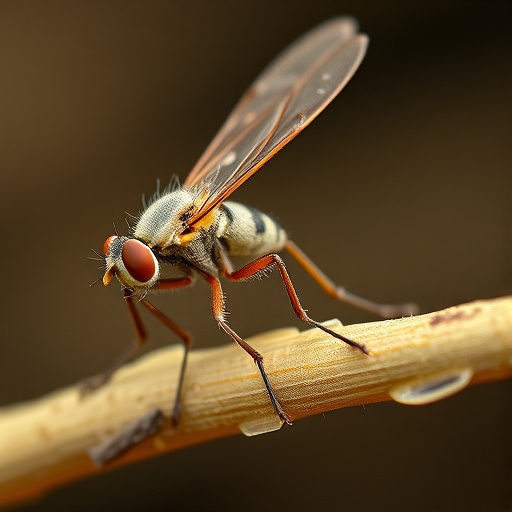
In the war against one of the world’s most neglected tropical diseases, a new front is opening in an unexpected place: the gut of a tiny blood-feeding insect. A comprehensive review published in the journal Parasites & Vectors argues that the key to controlling leishmaniasis may lie in decoding the intricate molecular conversation between Leishmania parasites and their sand fly vectors—a dialogue far more sophisticated than scientists once believed. The work, led by Erich Loza Telleria of Charles University in Prague together with Vinicius Wakoff Fonseca, Antonio Jorge Tempone, and Yara Maria Traub-Cseko of the Oswaldo Cruz Institute (Fiocruz) in Rio de Janeiro, synthesizes decades of research into a unified picture of how parasites manipulate their insect hosts and how that knowledge could be weaponized against the disease.
Leishmaniasis remains a major yet persistently under-controlled vector-borne disease, affecting millions of people across tropical and subtropical regions. The disease exists in several clinical forms, ranging from cutaneous leishmaniasis, which causes disfiguring skin lesions, to visceral leishmaniasis, which is fatal if untreated. The parasites responsible are single-celled flagellates of the genus Leishmania, and they spend part of their life cycle inside a mammalian host and part inside phlebotomine sand flies—the diminutive insects that transmit infection during blood meals. For years, the sand fly was viewed largely as a passive syringe, a mechanical conduit shuttling parasites from one vertebrate to the next. The new review dismantles that simplistic view, presenting the insect as an active, reactive biological system whose digestion, immunity, and resident microbial communities all shape whether transmission succeeds or fails.
At the heart of this biological negotiation is the sand fly’s digestive process. When a female sand fly takes a blood meal, she encases it in a chitinous structure called the peritrophic matrix, a physical barrier that forms within hours and partitions the midgut environment. This matrix does more than simply wrap the blood; it modulates the timing of digestion, influences nutrient availability, and creates a series of physiological checkpoints that developing parasites must navigate. Leishmania parasites enter the fly as amastigotes, the intracellular form taken up with the blood, and must differentiate into procyclic promastigotes, evade digestive enzymes, attach to the midgut epithelium, and ultimately transform into metacyclic promastigotes—the infective stage positioned in the foregut and ready to be regurgitated into a new host during the next bite. Each of these steps represents a potential choke point where the interaction could be interrupted.
The molecular tools the parasite deploys are remarkable in their specificity. Foremost among them are lipophosphoglycans (LPG), complex glycoconjugates studding the parasite surface that vary across Leishmania species and determine where in the fly’s alimentary tract a given parasite species can attach and develop. This species-specific compatibility helps explain why certain Leishmania species are transmitted by certain sand fly species and not others: the parasite’s surface molecules must fit the receptor landscape of the particular insect gut. Complementing these surface glycoconjugates are kinetoplastid-insect adhesion proteins (KIAP) and the promastigote secretory gel (PSG), a gelatinous mass secreted by parasites that plugs the fly’s midgut. The PSG does double duty—it physically obstructs the gut, forcing the fly to regurgitate during feeding and thereby enhancing transmission, while also conditioning the gut environment in ways that favor parasite survival. In effect, the parasite engineers the insect’s interior to serve its own transmission agenda.
Yet the sand fly is anything but a passive victim. The review emphasizes that the insect mounts multifaceted innate immune responses upon infection, engaging well-characterized signaling pathways. The immune deficiency (Imd) pathway, the Janus kinase–signal transducer and activator of transcription (JAK-STAT) pathway, and the Wnt signaling cascade are all implicated in the fly’s response to parasites, coordinating the production of antimicrobial peptides and other effectors. Reactive oxygen species (ROS) generated during digestion and immune activation represent a direct chemical assault on parasites, while inhibitors of serine peptidases (ISP) secreted into the gut lumen add another layer of host defense. The parasite, in turn, deploys countermeasures that can suppress or redirect these pathways, effectively manipulating the insect’s immune physiology to create a permissive environment for development.
One of the most striking frontiers highlighted in the review concerns the sand fly’s antiviral defenses and their unexpected intersection with parasite development. RNA interference (RNAi) is the fly’s principal antiviral machinery, built around small interfering RNAs (siRNAs), microRNAs (miRNAs), and Piwi-interacting RNAs (piRNAs) that are processed and deployed through the RNA-induced silencing complex (RISC), with the nuclease Argonaute 2 (Ago2) executing the destruction of viral RNA. Sand flies naturally harbor viruses of their own, including the American nodavirus (ANV), and they can be infected by arboviruses such as Toscana virus (TOSV) and vesicular stomatitis virus (VSV). Crucially, the review points out that the state of this antiviral machinery—and the viral load the fly carries—can modulate how the insect responds to Leishmania, adding an entire virome dimension to vector competence that extends well beyond classical parasite-vector models.
Equally transformative is the growing recognition that the gut microbiota is a decisive player in this system. The bacterial communities resident in the sand fly midgut are not passive bystanders; they compete with parasites for resources, produce antimicrobial compounds, and shape the immune tone of the insect. Certain bacterial symbionts can dramatically reduce parasite development, effectively rendering a fly less competent as a vector. Conversely, disruptions to the microbial community—whether through blood meal composition, environmental factors, or antibiotic exposure—can tip the balance in favor of the parasite. The metabolic context of the gut, including the nutritional products of digestion and microbial metabolism, further conditions whether Leishmania can complete its development cycle. This ecological layer means that vector competence is not a fixed property of an insect species but a dynamic outcome of interactions among parasite, host, microbiome, and environment.
The translational implications of this systems-level understanding are considerable, and the review sketches several avenues for intervention. Paratransgenesis—genetically modifying symbiotic bacteria carried by the fly to express anti-parasite molecules—could turn the insect’s own microbiome into a delivery system for transmission-blocking agents. RNAi-based approaches could be designed to silence parasite genes essential for development within the fly, exploiting the insect’s antiviral machinery against its burden. Vaccines aimed at the sand fly stage of the parasite, or at molecules like LPG and PSG that mediate vector-stage survival, could disrupt the cycle before it reaches humans. Even vector behavior, which parasites appear capable of manipulating, might offer leverage if the mechanisms underlying those changes can be targeted. The common thread is a shift in strategy: rather than only attacking parasites in humans or killing adult sand flies with insecticides, these approaches aim to break transmission at its source, inside the vector itself.
The authors underscore that timing and species-specific compatibility govern the outcome of every encounter between parasite and fly. A molecule that benefits the parasite at one stage of development may be irrelevant or even detrimental at another, and interventions that work for one parasite-vector pairing may fail for another. This temporal and taxonomic complexity helps explain why leishmaniasis has proved so stubborn: control strategies have often ignored the biology of the vector stage entirely. By mapping the full arc of the interaction—from the moment amastigotes enter the midgut to the delivery of metacyclic promastigotes into a new mammalian host—the review provides a framework for identifying precisely when and where the parasite is most vulnerable.
As climate change expands the range of sand fly vectors and human encroachment brings people into closer contact with reservoir hosts, the public health stakes of this research continue to rise. The work of Telleria, Fonseca, Tempone, and Traub-Cseko makes a compelling case that the microscopic battlefield inside a sand fly’s gut holds some of the most promising and underexploited targets for disease control. If the molecular language of the parasite-vector dialogue can be fully decoded—and, more importantly, interrupted—the result could be a new generation of tools against a disease that has eluded elimination efforts for far too long. The next breakthrough in leishmaniasis control, this review suggests, may not come from the clinic or the mammalian host, but from the tiny, teeming world within an insect’s midgut.
Cite Scienmag News
Drew Townsend. (September 9, 2026). Unraveling sand fly–Leishmania interactions to guide disease control strategies. Scienmag. https://scienmag.com/unraveling-sand-fly-leishmania-interactions-to-guide-disease-control-strategies/
Drew Townsend. "Unraveling sand fly–Leishmania interactions to guide disease control strategies." Scienmag, 9 September 2026, https://scienmag.com/unraveling-sand-fly-leishmania-interactions-to-guide-disease-control-strategies/. Accessed 9 September 2026.
Drew Townsend. "Unraveling sand fly–Leishmania interactions to guide disease control strategies." Scienmag. September 9, 2026. https://scienmag.com/unraveling-sand-fly-leishmania-interactions-to-guide-disease-control-strategies/


