


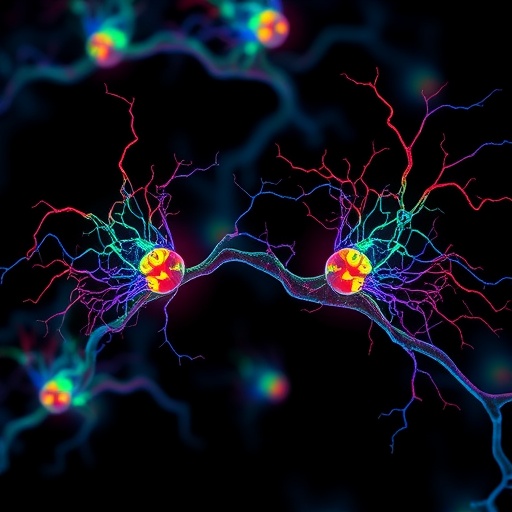
Scientists studying the cellular chaos of epileptic seizures have uncovered a previously unrecognized molecular pathway that appears to protect injured neurons from self-destruction. The research, published in BMC Neuroscience by Yan Li of Henan Provincial People’s Hospital in Zhengzhou, China, identifies what the author describes as a novel “VAMP2-PPAR-mitophagy axis” — a chain of molecular events linking vesicle trafficking proteins to mitochondrial quality control and inflammation suppression in seizure-damaged brain cells. The finding could point the way toward new therapeutic strategies for epilepsy and other hyperexcitability-related neurodegenerative disorders.
Seizures are among the most energetically violent events the brain can experience. During an epileptic episode, neurons fire in uncontrolled synchrony, flooding themselves with calcium ions and reactive oxygen species while their mitochondria — the microscopic power plants that supply cellular energy — swell, fragment and leak pro-death signals. When mitochondria become too damaged to function, they trigger apoptotic pathways that culminate in neuronal death, which in turn contributes to the progressive cognitive decline seen in chronic epilepsy. How some neurons survive this mitochondrial meltdown while others succumb has remained one of the central questions in epilepsy research.
The new study approached this question through an unusual angle: membrane trafficking. Vesicle-associated membrane protein 2, or VAMP2, is a member of the SNARE protein family, best known for its role in fusing synaptic vesicles with the presynaptic membrane to release neurotransmitters. But in recent years, biologists have come to appreciate that SNARE proteins perform far more than synaptic housekeeping, participating in autophagy, endosomal trafficking and signaling events that shape a cell’s fate. To investigate whether VAMP2 plays a protective role during seizure injury, Li established an in vitro seizure model by growing mouse hippocampal HT22 neuronal cells in magnesium-free medium — a widely used experimental trick that removes the normal inhibitory brake on neuronal firing, producing seizure-like hyperexcitability in the culture dish.
The first discovery was that VAMP2 expression dropped significantly in neurons exposed to the magnesium-free environment. This loss of the trafficking protein coincided with the classic hallmarks of seizure injury: declining cell viability, rising apoptosis, collapse of mitochondrial membrane potential, and a surge in reactive oxygen species. The observation suggested that VAMP2 might be more than a passive bystander — it might be a piece of the neuron’s own defense machinery that gets knocked out during seizure stress.
To test that idea, the researcher manipulated VAMP2 levels directly, using siRNA to knock the gene down and lentiviral vectors to overexpress it. The results were striking. When VAMP2 was overexpressed, cell viability climbed, apoptosis fell, and mitochondrial membrane potential recovered to near-normal levels, with all effects reaching statistical significance at p less than 0.001. Beyond the survival metrics, VAMP2 overexpression also shifted the molecular balance of the injured neurons in a broadly protective direction. Levels of mitophagy-related proteins — LC3-II relative to LC3-I, PINK1 and Parkin — went up, indicating that the cells were ramping up their cellular machinery for identifying and recycling damaged mitochondria. At the same time, reactive oxygen species and the pro-inflammatory cytokines interleukin-1 beta and tumor necrosis factor alpha declined, while the expression of synaptic proteins NMDAR1 and GABAA1, which represent the excitatory and inhibitory sides of synaptic signaling, rebalanced toward normal.
Mitophagy, the selective autophagic clearance of dysfunctional mitochondria, has emerged in recent years as a critical quality-control system in neurons. The PINK1-Parkin pathway, in particular, acts as a molecular tagging system: when a mitochondrion loses its membrane potential, the kinase PINK1 accumulates on its outer membrane and recruits the E3 ubiquitin ligase Parkin, which paints the organelle with ubiquitin chains that mark it for engulfment by autophagosomes. By boosting LC3-II/I conversion, PINK1 and Parkin, VAMP2 overexpression appeared to supercharge this cleanup crew, allowing neurons to purge their most damaged mitochondria before those organelles could release cytochrome c and ignite apoptotic cascades.
But a key mechanistic question remained: how does a vesicle-trafficking protein communicate with the autophagy machinery? To find out, Li turned to bioinformatic tools, mining the GeneCards database and the STRING protein interaction network for predicted relationships between VAMP2 and known signaling pathways. The analysis pointed consistently to the peroxisome proliferator-activated receptor, or PPAR, pathway — a family of nuclear receptors, notably PPAR alpha and PPAR gamma, that act as transcription factors regulating lipid metabolism, mitochondrial biogenesis and inflammation. Experimental follow-up confirmed the computational prediction: VAMP2 acted as an upstream regulator, promoting both the expression of PPAR alpha and gamma and, crucially, their translocation into the nucleus, where they can switch on the transcriptional programs that drive mitophagy and dampen inflammatory signaling.
The decisive experiment came in the form of a pharmacological challenge. Li treated the VAMP2-overexpressing neurons with GW9662, a well-characterized chemical inhibitor that blocks PPAR signaling. The results were unambiguous: blocking the PPAR pathway completely abolished every protective effect of VAMP2. Mitophagy faltered, mitochondrial function deteriorated, synaptic protein balance fell apart, and the cells reverted toward the injured state. In other words, VAMP2’s benefits were entirely dependent on intact PPAR signaling, confirming that the protective circuit runs through the nuclear receptor rather than through some parallel route.
Taken together, the study maps a coherent signaling cascade: seizure stress suppresses VAMP2; loss of VAMP2 weakens PPAR alpha and gamma activation and their nuclear translocation; without active PPAR signaling, neurons fail to mount an effective mitophagy response; damaged mitochondria accumulate, generating reactive oxygen species and inflammatory cytokines and tipping synaptic balance toward excitatory overdrive. Restoring VAMP2 re-engages the entire protective axis. The work also carries a notable conceptual message — it connects two domains of neuroscience that rarely intersect, showing that the vesicle-trafficking apparatus of the synapse and the nuclear receptor transcription machinery of the cell body collaborate to keep mitochondria healthy under stress.
The clinical implications, while still distant, are provocative. Roughly one-third of epilepsy patients are resistant to available anti-seizure medications, which act mainly by dampening neuronal excitability without addressing the downstream cellular damage that seizures inflict. A therapy that could bolster neuronal resilience — by enhancing mitophagy through the VAMP2-PPAR axis — would attack the problem from a fundamentally different direction, potentially protecting the brain during and after seizures rather than merely trying to prevent them. PPAR gamma agonists are already in clinical use for metabolic disease, and PPAR-targeting strategies are being explored in neurodegenerative conditions ranging from Alzheimer’s disease to Parkinson’s, offering a possible head start for translational work.
Substantial caveats remain. The entire study was conducted in a single immortalized mouse hippocampal cell line exposed to an artificial seizure model, and cell culture findings — however mechanistically elegant — routinely fail to survive translation into living brains, where astrocytes, microglia, blood flow and the blood-brain barrier all modulate injury and repair. Whether VAMP2 can be safely or effectively manipulated in human neurons, and whether the same axis operates during naturally occurring seizures, will require animal studies and, eventually, clinical investigation. The study also focused on one cell type and one model system, leaving open questions about how the pathway behaves in different neuronal populations or in chronic epilepsy.
Nevertheless, the identification of a VAMP2-PPAR-mitophagy axis adds a fresh molecular node to the growing map of neuroprotective signaling in the injured brain. If subsequent work confirms the pathway in vivo, it could reshape how researchers think about the connection between synaptic dysfunction, mitochondrial failure and neuroinflammation in epilepsy — three processes long studied in isolation that now appear, at least in a dish in Zhengzhou, to be different faces of the same regulatory circuit. The open-access study, published August 10, 2026, is likely to attract attention from both the epilepsy and mitochondrial biology communities for precisely that reason: it suggests that the route to protecting neurons may run not through the synapse or the mitochondrion alone, but through the conversation between them.
Cite Scienmag News
Cassandra Pierce. (September 9, 2026). VAMP2-PPAR pathway balances mitochondrial recycling and inflammation in magnesium-starved neurons. Scienmag. https://scienmag.com/vamp2-ppar-pathway-balances-mitochondrial-recycling-and-inflammation-in-magnesium-starved-neurons/
Cassandra Pierce. "VAMP2-PPAR pathway balances mitochondrial recycling and inflammation in magnesium-starved neurons." Scienmag, 9 September 2026, https://scienmag.com/vamp2-ppar-pathway-balances-mitochondrial-recycling-and-inflammation-in-magnesium-starved-neurons/. Accessed 9 September 2026.
Cassandra Pierce. "VAMP2-PPAR pathway balances mitochondrial recycling and inflammation in magnesium-starved neurons." Scienmag. September 9, 2026. https://scienmag.com/vamp2-ppar-pathway-balances-mitochondrial-recycling-and-inflammation-in-magnesium-starved-neurons/


