


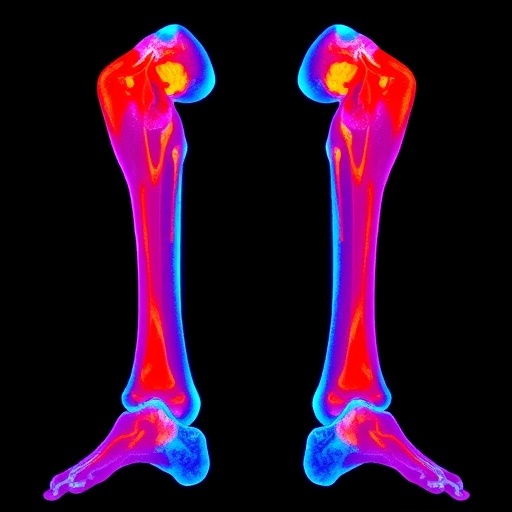
When cancer spreads to bone from a neuroendocrine tumor, patients face a double burden: the tumor itself keeps growing, and the skeletal lesions it seeds cause relentless, often debilitating pain that standard therapies struggle to control. A new prospective pilot study published in the European Journal of Nuclear Medicine and Molecular Imaging suggests a way to strike both targets at once with a single radionuclide. Researchers at the Affiliated Hospital of Southwest Medical University in Luzhou, China, combined two lutetium-177–labeled radiopharmaceuticals in the same treatment regimen: [177Lu]Lu-DOTATATE, a somatostatin-receptor–seeking peptide already established for peptide receptor radionuclide therapy (PRRT), and [177Lu]Lu-DOTA-IBA, a bone-seeking compound built around ibandronic acid, a bisphosphonate that homes to sites of active bone turnover. The concept is elegant in its logic: one agent delivers radiation to tumor cells expressing somatostatin receptors wherever they reside, while the second concentrates radiation in the bone microenvironment where metastases remodel and destroy skeletal tissue. Because both molecules carry the same beta-emitting isotope, the strategy doubles the delivery routes for therapeutic radiation without introducing a new radionuclide or a fundamentally different radiobiology.
The clinical problem the team set out to address is substantial. Bone metastases from neuroendocrine neoplasms (NENs) are common in advanced disease and are associated with skeletal-related events, worsening performance status, and poor quality of life. Standard PRRT with [177Lu]Lu-DOTATATE, validated by the landmark NETTER-1 phase 3 trial in midgut neuroendocrine tumors, has revolutionized systemic treatment for somatostatin receptor–positive disease, but its effect on bulky or sclerotic bone lesions can be inconsistent, and bone pain often persists. External-beam radiation can palliate discrete painful sites but cannot cover widespread skeletal involvement. Bone-targeting radiopharmaceuticals such as samarium-153–EDTMP, strontium-89, and radium-223 dichloride deliver palliation in other cancers, yet they are primarily aimed at the bone matrix rather than the tumor cells themselves. [177Lu]Lu-DOTA-IBA, developed and tested in earlier phase 0/I and prospective trials, links the bone affinity of ibandronate to lutetium-177, allowing irradiation of osteoblastic lesions while sparing much of the surrounding tissue. Combining it with DOTATATE was hypothesized to give complementary coverage: receptor-mediated tumor kill plus bone-microenvironment irradiation.
The study enrolled 30 patients with bone metastases from neuroendocrine neoplasms in a prospective, single-center, single-arm design. Across the cohort, 95 treatment cycles of the combined [177Lu]Lu-DOTATATE plus [177Lu]Lu-DOTA-IBA regimen were administered. Response assessment was deliberately multi-layered, reflecting the well-known difficulty of evaluating bone disease in nuclear oncology. Whole-body tumor burden was scored with RECIST 1.1, the anatomical standard for solid tumors; metabolic response was captured with SSTR-PERCIST, a positron emission tomography adaptation that tracks changes in somatostatin receptor expression on gallium-68–DOTATATE PET/CT; and bone-specific response was graded with the modified M.D. Anderson criteria (MDAC), which account for the scintigraphic flare phenomena that can confound bone scan interpretation. Pain palliation was quantified with the Visual Analogue Scale (VAS), and safety was graded using the Common Terminology Criteria for Adverse Events (CTCAE) version 5.0. Progression-free survival was estimated with Kaplan-Meier analysis.
The safety signal was the study’s most reassuring finding. Absorbed doses to critical organs, including the kidneys and red marrow, which are the principal dose-limiting organs in PRRT, remained within accepted thresholds throughout the treatment course. No grade 4 or higher adverse events occurred, an important result given that both agents irradiate the bone compartment and additive myelosuppression was a genuine theoretical concern. Prior work has shown that [177Lu]Lu-DOTATATE itself can deliver meaningful absorbed doses to red marrow through specific uptake, and hematologic toxicity, including persistent cytopenias and rare therapy-related myeloid neoplasms, has been documented in long-term follow-up of PRRT patients. The dual-agent regimen could plausibly have compounded this risk. Instead, treatment-related adverse events in this pilot were manageable, supporting the feasibility of the combination at the activities used.
Efficacy results were encouraging, if preliminary. Among 24 evaluable patients, the objective response rate was 16.7% by RECIST 1.1, rising to 50% by SSTR-PERCIST and 29.2% by MDAC. The discrepancy between anatomical and metabolic response rates is familiar to anyone working in theranostics: lutetium-177 therapy often induces metabolic shutdown of lesions before any measurable shrinkage occurs, which is precisely why PET-based criteria were developed. Disease control rates, combining objective responses with stable disease, were high across the board: 79.2% by RECIST 1.1, 79.2% by SSTR-PERCIST, and 87.5% by MDAC. Semi-quantitative PET/CT parameters, including somatostatin receptor–expression tumor volume (STV), maximum and mean standardized uptake values (SUVmax and SUVmean), total lesion somatostatin receptor expression (TLS), tumor-to-background ratio (TBR), peak lean body mass–corrected SUV (SULpeak), the sum of the longest diameters of target lesions (SLD), and total bone metastasis volume (TBV), all decreased significantly after treatment, with p-values below 0.05 for every parameter.
The pain outcomes were arguably the headline result. The overall bone pain relief rate reached 95.9%, with complete resolution of pain in 41.7% of patients. For a population in whom skeletal pain is often the dominant symptom driving morphine use, immobility, and loss of independence, a near-universal palliation rate from a well-tolerated outpatient infusion regimen is clinically meaningful. Palliative benefit of this magnitude compares favorably with established bone-pain radiopharmaceuticals such as 177Lu-EDTMP and strontium-89, while the concurrent DOTATATE component offers the prospect of actual tumor control rather than symptom relief alone. The authors report that progression-free survival did not differ significantly between the two main disease subgroups, gastroenteropancreatic NENs (n = 14) and non-gastroenteropancreatic NENs (n = 10), with a log-rank p-value of 0.828, and subgroup analyses showed comparable objective response and disease control rates across all three response criteria, suggesting the approach may be applicable beyond the midgut and pancreatic primaries where PRRT evidence is strongest.
Mechanistically, the combination exploits two independent localization pathways. [177Lu]Lu-DOTATATE binds somatostatin receptor subtype 2, which is densely expressed on the majority of well-differentiated neuroendocrine tumor cells, internalizing the radioligand and subjecting the cell to beta irradiation with a mean path length of roughly 0.7 millimeters. [177Lu]Lu-DOTA-IBA, in contrast, chelates lutetium-177 to the nitrogen-containing bisphosphonate ibandronic acid, which chemically adsorbs onto hydroxyapatite crystals at surfaces of active bone remodeling, the very zones created by osteolytic and osteoblastic activity around metastatic deposits. Delivering lutetium-177 by both routes means tumor cells at the bone interface receive irradiation from two directions, while micrometastatic or receptor-positive disease elsewhere in the body remains within reach of the peptide. Lutetium-177 itself is an attractive workhorse isotope: its 6.7-day half-life suits logistics, its beta emissions treat, and its gamma emissions allow post-therapy imaging and dosimetry with the same administration.
The investigators and independent commentators alike are careful about how far these findings can be pushed. The trial was single-arm, single-center, and small, without a comparator group receiving DOTATATE alone or DOTA-IBA alone, so it cannot establish that the combination outperforms standard PRRT, which itself achieves pain palliation in a substantial fraction of patients with skeletal metastases. Response rates by RECIST were modest, and progression-free survival data in a pilot cohort cannot speak to overall survival. The authors explicitly state that definitive anti-tumor efficacy requires confirmation in larger controlled trials. Still, the study provides what early-phase nuclear medicine research most needs: evidence that the combination is deliverable, dosimetrically acceptable, and associated with striking symptom benefit and broad metabolic disease control in a heterogeneous NEN population that included tumors beyond the gastroenteropancreatic axis.
The work lands at a moment of rapid evolution in neuroendocrine tumor theranostics. PRRT is expanding into new indications, from pheochromocytoma and paraganglioma to neoadjuvant settings in pancreatic NENs, and the field is actively debating how best to measure response, with ENETS task force consensus efforts and novel frameworks such as RECIN attempting to standardize evaluation in receptor-targeted therapy. Against that backdrop, dual-targeted strategies represent a natural next frontier: pairing ligands so that radiation reaches both the tumor cell and its microenvironment. Similar logic is being explored in prostate cancer, where PSMA-targeted radioligand therapy is being combined with bone-seeking agents. If the Chinese team’s findings are replicated in randomized studies, [177Lu]Lu-DOTATATE plus [177Lu]Lu-DOTA-IBA could offer patients with widespread skeletal neuroendocrine metastases a single-isotope regimen that treats tumor and bone pain in the same sitting, without the added complexity of coordinating multiple radionuclides with different physical half-lives.
For now, the study stands as a proof of concept with unusually strong palliative numbers: 95 treatment cycles delivered safely, pain relieved in nearly every patient who had it, complete pain resolution in more than four in ten, disease controlled in roughly eight of every ten patients by every criterion applied, and no severe adverse events. The dose-limiting questions, long-term marrow safety, renal dosimetry over repeated cycles, and genuine therapeutic advantage over PRRT alone, will require the larger controlled trials the authors call for. But for a disease population long relegated to sequential palliative measures, the prospect of a dual-targeted radioligand regimen that aims radiation simultaneously at the tumor and the bone it destroys marks a genuinely promising advance in the theranostics of neuroendocrine cancer.
Cite Scienmag News
Nathaniel Bowman. (September 9, 2026). Dual radioligand therapy targets neuroendocrine bone metastases in pilot study. Scienmag. https://scienmag.com/dual-radioligand-therapy-targets-neuroendocrine-bone-metastases-in-pilot-study/
Nathaniel Bowman. "Dual radioligand therapy targets neuroendocrine bone metastases in pilot study." Scienmag, 9 September 2026, https://scienmag.com/dual-radioligand-therapy-targets-neuroendocrine-bone-metastases-in-pilot-study/. Accessed 9 September 2026.
Nathaniel Bowman. "Dual radioligand therapy targets neuroendocrine bone metastases in pilot study." Scienmag. September 9, 2026. https://scienmag.com/dual-radioligand-therapy-targets-neuroendocrine-bone-metastases-in-pilot-study/


