


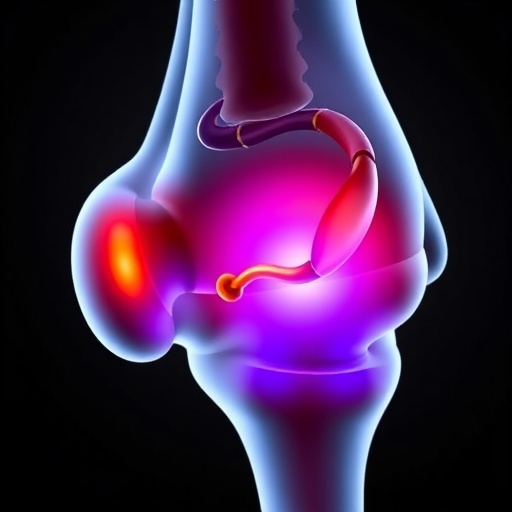
Osteoarthritis affects hundreds of millions of people worldwide, yet the treatments available to them remain stubbornly palliative. Painkillers, anti-inflammatory drugs and, eventually, joint replacement surgery manage the consequences of cartilage breakdown without ever addressing the underlying loss of the tissue itself. Now, a team of researchers in Spain reports that a small signaling molecule already known to science for decades may be able to push the disease in the opposite direction, both by accelerating the formation of new cartilage-like tissue from stem cells and by silencing some of the destructive machinery that drives joint degradation in established disease.
The molecule in question is vasoactive intestinal peptide, or VIP, a 28-amino-acid neuropeptide first identified in the gut and later found throughout the nervous and immune systems. VIP exerts its effects largely through VPAC receptors on target cells and has attracted attention in immunology for its broadly anti-inflammatory profile. Previous work by the same group and others had shown that VIP can dampen proinflammatory mediator production in synovial cells from osteoarthritis and rheumatoid arthritis patients, and that the peptide exerts osteoinductive effects on human mesenchymal stem cells. The new study, led by Karolina Tecza and Selene Pérez-García of the Complutense University of Madrid together with collaborators at the Instituto de Salud Carlos III network, the Fundación Jiménez Díaz and the Biomedical Research Institute of A Coruña, extends that story into the two cell types that matter most for cartilage repair: the stem cells that could seed new cartilage and the chondrocytes that maintain what remains.
To model chondrogenesis, the researchers isolated bone marrow-derived human mesenchymal stem cells from healthy donors and cultured them in three-dimensional pellet systems under chondrogenic conditions for up to 21 days, with or without VIP at a concentration of 10⁻⁸ M. The three-dimensional pellet format matters because cartilage formation is fundamentally a three-dimensional process; cells forced into flat monolayers tend to lose their chondrocyte identity, a phenomenon known as dedifferentiation. In the pellets, the team tracked the expression of canonical chondrogenic markers, including the transcription factor SOX9, which acts as a master regulator of the cartilage phenotype, the gene encoding type II collagen (COL2A1), the principal structural protein of healthy articular cartilage, and aggrecan (ACAN), the large proteoglycan that gives cartilage its compressive resilience.
The results were striking in their timing. VIP-treated pellets showed earlier induction of these chondrogenic markers at both the mRNA and protein levels compared with untreated controls, indicating that the peptide did not merely amplify cartilage differentiation but accelerated its onset. This was mirrored at the level of the extracellular matrix itself: VIP-treated pellets deposited more glycosaminoglycans, the negatively charged sugar chains that trap water within cartilage and allow it to bear load, as visualized by Alcian blue staining across the differentiation time course. In practical terms, the presence of VIP appeared to shift the differentiation program forward, producing cartilage-like matrix sooner than standard chondrogenic culture conditions alone.
A critical concern with any stem-cell-based cartilage strategy is hypertrophy. Mesenchymal stem cells pushed toward the chondrocyte lineage can drift toward an endochondral ossification program, in which cells begin expressing RUNX2, type X collagen (COL10A1) and matrix metalloproteinase 13 (MMP13), hallmarks of the transient cartilage that is normally replaced by bone during skeletal development. Hypertrophic differentiation is considered a major failure mode of cell-based cartilage repair in the clinic, because the resulting tissue mineralizes and degrades rather than persisting as stable articular cartilage. The team therefore monitored these hypertrophic markers across the 21-day protocol, along with the ratio of chondrogenic to hypertrophic gene expression. The data, presented in the paper’s supplementary analyses, suggest that VIP did not drive the cells toward this undesirable endpoint, an encouraging sign for the peptide’s potential as a differentiation supplement in tissue engineering protocols.
The second arm of the study addressed the diseased side of the equation. The researchers obtained articular chondrocytes from osteoarthritis patients undergoing joint surgery and cultured them in three-dimensional alginate microbeads, a scaffold that permits the cells to redifferentiate and regain a cartilage-like phenotype after expansion in monolayer. To recreate a pathogenic stimulus relevant to the osteoarthritic joint, they exposed the chondrocytes to fibronectin fragments, degradation products that accumulate in osteoarthritic cartilage and synovial fluid and are known to trigger catabolic and inflammatory responses in resident joint cells. Fibronectin fragments are thought to act as danger signals that amplify matrix destruction, inducing chondrocytes to secrete enzymes that further erode their own surroundings.
When VIP was added to these challenged cultures, the effects were again consistent and directional. The peptide increased chondrocyte proliferation and enhanced glycosaminoglycan deposition, supporting the matrix-building side of cartilage homeostasis. At the same time, VIP significantly reduced the production of several key pathogenic mediators. Complement component C1R, part of the complement cascade that has been implicated in osteoarthritis progression since a landmark 2011 Nature Medicine study identified complement activation as a central driver of the disease, was lowered by VIP treatment. So too were matrix metalloproteinases MMP1 and MMP13, collagen-degrading enzymes that directly cleave the type II collagen framework of articular cartilage and are widely regarded as prime therapeutic targets for slowing cartilage loss. Measurements of MMP3, MMP9 and complement C3 were also performed, providing a broader map of the catabolic and inflammatory landscape that VIP touches in these cells.
Taken together, the findings portray VIP as a molecule with an unusual dual action. On one hand, it functions as a pro-chondrogenic cue that speeds the maturation of mesenchymal stem cells into cartilage-forming cells and boosts production of the extracellular components that give cartilage its mechanical properties. On the other, it acts as an anti-inflammatory and anti-catabolic agent in diseased chondrocytes, suppressing both the complement pathway and the metalloproteinases that dismantle cartilage matrix. Most current disease-modifying candidates for osteoarthritis attempt only one of these tasks; a single agent that builds matrix while restraining degradation is comparatively rare.
The authors frame their results as support for combining VIP with mesenchymal stem cell-based regenerative approaches. Cell therapy for knee osteoarthritis has produced mixed clinical results, with one persistent limitation being the uncertain fate of transplanted cells in the harsh, inflammatory environment of an osteoarthritic joint. If VIP could simultaneously precondition stem cells toward a faster, more stable chondrogenic program and calm the degrading signals in the host tissue, the combination might improve both the production and the survival of repair tissue. The use of human cells throughout the study, from healthy donor bone marrow and from patient cartilage, strengthens the translational relevance of the observations, although the work remains at the level of three-dimensional in vitro models rather than animal studies or clinical trials.
Significant hurdles remain before VIP could reach patients. The peptide has a short half-life in vivo, and delivery to a joint in therapeutically meaningful concentrations would likely require formulations such as slow-release depots, nanoparticles or gene-therapy vectors. Safety questions, including VIP’s systemic cardiovascular and immunological effects, would need careful evaluation. Nevertheless, the study adds a compelling entry to the short list of molecules capable of promoting cartilage formation and blocking cartilage destruction at the same time, and it does so using the very cell types and pathogenic stimuli that define human osteoarthritis. For a disease in which no approved therapy alters the course of joint degeneration, that combination is precisely what the field has been waiting for.
Cite Scienmag News
Drew Townsend. (September 8, 2026). Vasoactive intestinal peptide promotes cartilage formation and modulates osteoarthritis mediators. Scienmag. https://scienmag.com/vasoactive-intestinal-peptide-promotes-cartilage-formation-and-modulates-osteoarthritis-mediators/
Drew Townsend. "Vasoactive intestinal peptide promotes cartilage formation and modulates osteoarthritis mediators." Scienmag, 8 September 2026, https://scienmag.com/vasoactive-intestinal-peptide-promotes-cartilage-formation-and-modulates-osteoarthritis-mediators/. Accessed 8 September 2026.
Drew Townsend. "Vasoactive intestinal peptide promotes cartilage formation and modulates osteoarthritis mediators." Scienmag. September 8, 2026. https://scienmag.com/vasoactive-intestinal-peptide-promotes-cartilage-formation-and-modulates-osteoarthritis-mediators/


