


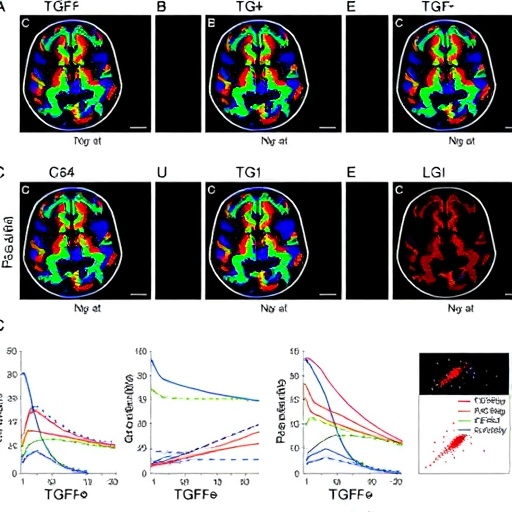
Meningiomas, the most common primary brain tumors in adults, may soon be stratified more accurately thanks to a new study revealing a strikingly isoform-specific pattern of transforming growth factor-beta dysregulation across tumor grades. In research published in the Journal of Neuro-Oncology, a team led by Mateusz Miller and Beniamin Oskar Grabarek of WSB University’s Collegium Medicum in Poland reports that as meningiomas progress from benign grade 1 to atypical grade 2, two of the three TGF-β isoforms surge dramatically while the third collapses to near-undetectable levels — a molecular fingerprint that could ultimately help clinicians identify the aggressive tumors that histology alone misses.
Meningiomas account for more than 40 percent of all primary central nervous system tumors, and their incidence rises with age, with a two- to three-fold female predominance. While most grade 1 meningiomas are cured by surgical resection, atypical grade 2 tumors carry a substantially higher risk of recurrence, and a clinically significant subset of grade 1 and 2 tumors behaves far more aggressively than their microscopic appearance predicts. The 2021 WHO CNS5 classification introduced molecular biomarkers such as TERT promoter mutations and CDKN2A/B deletions for grade 3 disease, but the biological basis of unpredictable behavior in lower grades remains incompletely understood. Known oncogenic drivers — loss of NF2 and activating mutations in AKT1, SMO, TRAF7, and KLF4 — explain much but not all meningioma biology, which has focused attention on cytokine-mediated signaling, particularly the TGF-β axis.
TGF-β is a family of three closely related signaling molecules, TGF-β1, TGF-β2, and TGF-β3, which share a common receptor system and signal through SMAD2/3 proteins as well as non-canonical MAPK and PI3K/AKT pathways to coordinate cell proliferation, differentiation, apoptosis, and immune regulation. In cancer biology, the family is famously two-faced: it can suppress tumor growth early in tumorigenesis while paradoxically promoting tumor progression in advanced disease through epithelial-to-mesenchymal transition-like processes, immunosuppression, angiogenesis, and fibrosis. The three isoforms are not functionally interchangeable in most cancers, yet until now no systematic, grade-stratified, isoform-resolved characterization of TGF-β1 through TGF-β3 had ever been carried out in meningioma across the full range of molecular layers.
The new study addressed that gap with an unusually comprehensive design. Between October 2022 and December 2024, the investigators prospectively enrolled 154 patients undergoing elective meningioma resection at two neurosurgical centers in Kraków, Poland: 124 with grade 1 meningothelial tumors and 30 with grade 2 atypical tumors. The cohort was demographically well matched across grades, with no significant differences in age or sex distribution. Frozen tissue from each specimen was subjected to a four-pronged molecular workup: quantitative reverse-transcription PCR to measure mRNA levels of all three isoforms, methylation-specific PCR to assess promoter CpG island methylation, RT-qPCR quantification of six bioinformatically prioritized targeting microRNAs, and protein measurement by enzyme-linked immunosorbent assay, Western blotting, and immunohistochemistry.
The transcriptional results were dramatic and strikingly isoform-specific. TGF-β2 mRNA was upregulated 5.68-fold in grade 2 tumors relative to grade 1, and TGF-β3 mRNA rose 5.23-fold — both roughly five-fold increases that reached statistical significance. TGF-β1, by contrast, showed a fold-change of just 0.039, indicating near-complete loss of detectable mRNA in atypical tumors. Protein-level analyses broadly corroborated the transcriptional picture for two of the three isoforms. ELISA measurements of tissue homogenates showed TGF-β2 concentrations significantly higher in grade 2 tumors (67.23 versus 56.19 pg/mL) and TGF-β3 nearly doubled in grade 2 (198.23 versus 122.17 pg/mL), while TGF-β1 was significantly lower in grade 2 (276.91 versus 345.89 pg/mL). Immunohistochemistry told a consistent story: TGF-β1 immunoreactivity was significantly reduced in grade 2, while TGF-β3 optical density rose approximately 61 percent in atypical tumors. Western blotting, however, failed to detect the increases in TGF-β2 and TGF-β3, a discrepancy the authors attribute to differences in assay sensitivity and epitope detection rather than a true biological divergence, since both assays used the same homogenates.
Perhaps the most epigenetically revealing finding came from the methylation analysis. In grade 1 tumors, the promoters of all three TGF-β genes were hypermethylated in 95 to 97 percent of specimens — a near-universal pattern the authors interpret as a lineage-associated epigenetic phenotype. In grade 2 tumors, that pattern was largely reversed, with 73 to 77 percent of promoters unmethylated. Fisher’s exact test confirmed the shift was highly significant for all three isoforms. This wholesale epigenetic reprogramming between grades echoes patterns seen in other tumor types during malignant progression and suggests that promoter methylation status could serve as a molecular adjunct to histological grading in borderline cases.
The microRNA analysis added a third regulatory layer. Using three complementary databases — miRDB, TargetScan, and the experimentally validated miRTarBase — the team prioritized a six-miRNA panel predicted to target TGF-β isoforms: hsa-miR-200a-3p and hsa-miR-141-3p targeting TGF-β2, hsa-miR-663a and hsa-miR-425-5p targeting TGF-β1, hsa-miR-29b-3p as a candidate pan-isoform regulator, and hsa-let-7a-3p targeting TGF-β3. All six microRNAs were coordinately downregulated in grade 2 tumors, with the two miR-200 family members showing the greatest reduction — miR-200a-3p fell to 21 percent of its grade 1 level. The miR-200 family is a well-established regulator of epithelial identity and epithelial-to-mesenchymal transition through its targets ZEB1 and ZEB2, and its loss has previously been linked to meningioma invasiveness via reduced E-cadherin and Wnt/beta-catenin pathway activation.
Cross-platform correlation analysis across all 154 specimens reinforced the coherence of these signals. For TGF-β2 and TGF-β3, promoter methylation correlated inversely with mRNA levels — exactly what methylation-associated repression would predict. The two miR-200 family members correlated inversely with TGF-β2 mRNA, consistent with a de-repression model in which loss of these microRNAs releases the brake on TGF-β2 production. For TGF-β1, the story inverted: methylation correlated positively with mRNA, and the miR-663a and miR-425-5p candidates correlated positively with TGF-β1 mRNA, arguing against either mechanism as the principal driver of TGF-β1 suppression.
That paradoxical TGF-β1 collapse is, in the authors’ view, the most intriguing observation. In many advanced cancers, TGF-β1 is the prototypical prometastatic isoform, yet in these atypical meningiomas its mRNA nearly vanished despite a predominantly unmethylated promoter in 76.7 percent of grade 2 cases. The authors propose candidate mechanisms that methylation analysis alone cannot capture: silencing mediated by polycomb repressive complex 2 and the H3K27me3 histone mark, suppression of SP1 and AP-1 transcription factors driven by the AKT1 E17K mutation found in a subset of meningiomas, or loss of NF2-dependent signaling. Distinguishing among these possibilities will require functional follow-up work that this observational study was not designed to perform.
The findings also intersect with prior, sometimes conflicting, literature. Earlier work by Johnson and colleagues reported TGF-β1 through TGF-β3 and their receptors across meningioma grades, with TGF-β1 restraining proliferation in some grade 1 cultures, while Ma and colleagues found TGF-β3 mRNA declining with increasing grade — the opposite of the upregulation observed here. The authors attribute such discrepancies to differences in cohort composition, platform, and normalization approaches, and emphasize that their own contribution is the concurrent, isoform-resolved characterization across four regulatory layers within the same specimens. They also note that single-cell studies have identified macrophage, fibroblast-like, and mesenchymal populations as prominent, grade-associated components of meningiomas, and that M2-macrophage-derived exosomes have been shown to promote meningioma progression through TGF-β signaling — raising the possibility that stromal and immune cells, not tumor cells alone, contribute to the tissue-level TGF-β signal captured by ELISA and immunohistochemistry.
The translational implications, while preliminary, are tangible. Elevated TGF-β2 nominates it as a candidate therapeutic target, building on clinical experience with TGF-β pathway inhibitors in glioblastoma and other solid tumors. The grade-discriminant microRNA panel — particularly the miR-200 family and miR-29b-3p — could in principle be developed as minimally invasive biomarkers detectable in cerebrospinal fluid or blood, though the authors caution this remains speculative pending dedicated validation cohorts. Locus-specific methylation testing by methylation-specific PCR might also add molecular resolution where histological grade is ambiguous.
The study has acknowledged limitations: it is observational and cross-sectional, documents associations rather than mechanistic causality, lacked non-neoplastic control meningeal tissue, enrolled only meningothelial and atypical subtypes, did not assess downstream SMAD signaling components or receptors, and lacks an independent validation cohort. The authors state that functional validation of candidate microRNA–TGF-β interactions and single-cell profiling of TGF-β’s cellular source are planned as follow-up work. Even so, by demonstrating that transcriptional, epigenetic, post-transcriptional, and protein-level signals converge on the TGF-β2/TGF-β3 axis in atypical meningioma, the study delivers one of the most complete molecular portraits yet of how a single signaling family behaves as this common brain tumor turns aggressive.
Cite Scienmag News
Nathaniel Bowman. (September 8, 2026). TGF-β expression patterns across meningioma grades revealed by multi-omics analysis. Scienmag. https://scienmag.com/tgf-%ce%b2-expression-patterns-across-meningioma-grades-revealed-by-multi-omics-analysis/
Nathaniel Bowman. "TGF-β expression patterns across meningioma grades revealed by multi-omics analysis." Scienmag, 8 September 2026, https://scienmag.com/tgf-%ce%b2-expression-patterns-across-meningioma-grades-revealed-by-multi-omics-analysis/. Accessed 8 September 2026.
Nathaniel Bowman. "TGF-β expression patterns across meningioma grades revealed by multi-omics analysis." Scienmag. September 8, 2026. https://scienmag.com/tgf-%ce%b2-expression-patterns-across-meningioma-grades-revealed-by-multi-omics-analysis/


