


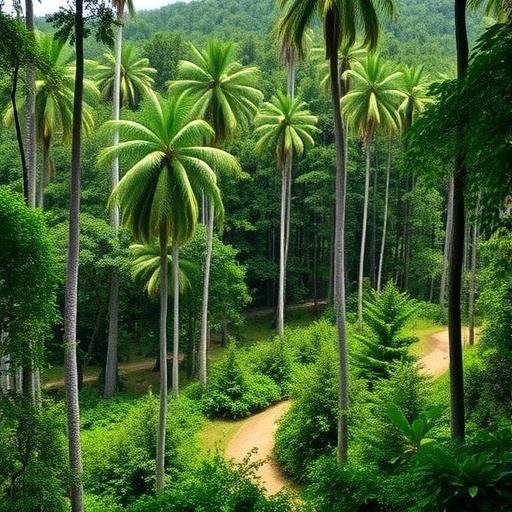
A team of Brazilian researchers has unveiled ForestCalc, a free, open-source web application that transforms raw forest inventory data into estimates of timber volume, aboveground dry biomass, and carbon stocks for the native forest types of Minas Gerais, one of the most ecologically diverse states in Brazil. The tool, described in a study published in the journal Earth Science Informatics, was developed at the Federal University of Lavras using the R programming language and the Shiny web framework, and it aims to remove the technical barriers that have long kept scientifically validated allometric models out of the hands of foresters, consultants, and environmental decision-makers who lack programming expertise.
The scientific foundation of ForestCalc rests on the Forest Inventory of Minas Gerais, one of the most comprehensive datasets ever assembled for native Brazilian forests. That inventory, carried out through a partnership between the State Forestry Institute and the Federal University of Lavras, involved destructive sampling of 2,060 trees distributed across the state’s major vegetation types, known as phytophysiognomies: Cerrado Sensu Stricto and Campo Cerrado with 915 trees, Cerradão with 176, Seasonal Semideciduous Forest with 674, Ombrophilous Forest with 158, and Seasonal Deciduous Forest with 137. Carbon concentrations were determined from a representative subsample of 539 trees. From these measurements, researchers fitted phytophysiognomy-specific allometric equations that relate easily measured field attributes—tree diameter at breast height and total height—to volume, dry biomass, and carbon content.
Mathematically, ForestCalc implements the logarithmic form of the Schumacher–Hall model, in which the natural logarithm of the response variable, whether volume, biomass, or carbon, is regressed against the logarithms of diameter and height, with coefficients that vary by vegetation type and target variable. Because the equations were calibrated locally for each phytophysiognomy, they carry less uncertainty than generalized national or pan-tropical models, which studies have repeatedly shown can produce biased estimates when applied across ecologically distinct forest formations. Minas Gerais is an especially demanding test case for such models because it spans three major biomes—the Atlantic Forest, the Cerrado, and the Caatinga—and includes two globally recognized biodiversity hotspots, with climates ranging from humid subtropical to tropical savanna and semi-arid conditions across its roughly 586,514 square kilometers.
The application itself follows a modular architecture with four layers: a user interface, data validation and preprocessing, an analytical engine, and visualization with decision support. Users upload a spreadsheet of forest inventory data containing, at minimum, tree diameters, heights, an optional species identification, and a phytophysiognomy classification. After automated validation, the system selects the appropriate set of allometric equations from its internal database and computes estimates aggregated at the level of individual trees, plots, diameter classes, and entire inventories. The software was engineered with the Golem framework, which separates interface, server logic, and configuration files to improve maintainability and reproducibility, and its interface is built on Bootstrap 4 dashboards with interactive graphics powered by ggplot2 and plotly, plus Leaflet-based maps for spatial visualization. Deployment follows the Software-as-a-Service paradigm, meaning anyone with a web browser can use the tool without installing software locally.
Beyond the core estimation modules, ForestCalc incorporates a full phytosociological analysis component that calculates relative density, relative frequency, relative dominance, the Coverage Value Index, and the Importance Value Index for every species recorded in an inventory. These ecological metrics allow users to identify which species dominate a given forest community in terms of abundance, distribution, and basal area contribution. In the validation exercise, this module correctly flagged ecologically characteristic species for each forest type: Cabralea canjerana ranked highest in Ombrophilous Forest, Copaifera langsdorffii in Seasonal Semideciduous Forest, and Xylopia aromatica in Cerradão. By combining carbon accounting with community ecology in a single environment, the tool extends its usefulness from biomass quantification into biodiversity assessment, restoration planning, and conservation prioritization.
To verify that the application faithfully reproduces the underlying science, the team evaluated it against a fully independent dataset from the Phytogeographic Model of the Rio Grande Basin project, comprising 1,009 permanent plots of 250 square meters each, 39,308 measured trees, 677 identified species, and 232 destructively sampled trees representing 78 species, all collected in forest fragments across Ombrophilous Forest, Seasonal Semideciduous Forest, and Cerradão. Because none of this material overlapped with the data used to calibrate the original equations, the validation offers a rigorous test of whether the computational workflow was implemented correctly. Multi-stemmed individuals were handled through an equivalent-diameter calculation that sums the squared diameters of all stems at breast height before taking the square root, ensuring compatibility with the allometric models.
The results showed good agreement between reference values derived from destructive sampling and the estimates generated by ForestCalc. Accuracy was highest for Seasonal Semideciduous Forest, where mean absolute percentage errors fell below 2 percent for biomass and carbon and below 1 percent for volume, while Ombrophilous Forest showed the largest errors, a pattern the authors attribute to the greater structural complexity and heterogeneity of that vegetation type. Across all forest types, stem volume was the most accurately estimated variable, whereas total biomass carried the highest relative errors, reflecting the additional uncertainty introduced by wood density assumptions, carbon concentration factors, and the propagation of errors through intermediate model components. Scatter plots comparing reference and estimated values showed a strong positive relationship for every variable, with points clustering tightly around the one-to-one line for volume and fanning out more at high biomass values while preserving overall trends.
Computational benchmarking demonstrated that the application scales well to real-world inventory sizes. In tests using datasets of up to 33,170 trees, the volume, biomass, and carbon module completed processing in under 0.25 seconds for most forest types, rising only to about 1.04 seconds for the largest Seasonal Semideciduous Forest dataset, while the phytosociology module ran in roughly 0.05 seconds regardless of dataset size. The graphics module was the main bottleneck, requiring up to about 39.6 seconds for the largest datasets, mostly due to the generation of multiple statistical summaries and rendered plots within the web interface. The authors note that these timings were obtained on the free hosting tier of shinyapps.io, which runs on shared, limited infrastructure, so real-world performance may fluctuate; even so, the numbers confirm that numerical processing is not a practical constraint for operational forest inventories.
The significance of ForestCalc lies less in new equations than in what researchers call operationalization: converting established scientific knowledge into a reproducible, openly accessible decision-support system. Existing monitoring platforms such as MapBiomas provide valuable land-cover information but do not directly apply regional allometric equations to field inventory data, and comparable tools such as the TB&C App, which offers broader national coverage, lack the regional specificity and phytosociological integration that ForestCalc provides for Minas Gerais. The developers acknowledge limitations: the tool depends on field inventory data and does not replace remote sensing approaches based on satellite imagery or LiDAR; the underlying equations come from inventories conducted between 2005 and 2008 and may lose representativeness as forests change; and the current version is restricted to the phytophysiognomies of a single state.
Future work, according to the team, will focus on expanding geographic coverage by incorporating models from the Brazilian National Forest Inventory, improving interoperability with external databases, adding automated reporting, and implementing formal uncertainty quantification, including confidence intervals and error propagation for biomass and carbon estimates. The application is publicly accessible through a standard web browser, its source code, documentation, and example datasets are hosted on GitHub and archived in a permanent repository, and the study itself is published open access. For a field in which carbon accounting increasingly underpins climate policy, payment-for-ecosystem-services schemes, and national reporting under the Paris Agreement, tools that lower the technical threshold for applying locally calibrated science may prove as consequential as the models they deliver.
Cite Scienmag News
Violet Maxwell. (September 8, 2026). New web tool estimates forest volume, biomass, and carbon in Minas Gerais. Scienmag. https://scienmag.com/new-web-tool-estimates-forest-volume-biomass-and-carbon-in-minas-gerais/
Violet Maxwell. "New web tool estimates forest volume, biomass, and carbon in Minas Gerais." Scienmag, 8 September 2026, https://scienmag.com/new-web-tool-estimates-forest-volume-biomass-and-carbon-in-minas-gerais/. Accessed 8 September 2026.
Violet Maxwell. "New web tool estimates forest volume, biomass, and carbon in Minas Gerais." Scienmag. September 8, 2026. https://scienmag.com/new-web-tool-estimates-forest-volume-biomass-and-carbon-in-minas-gerais/


