


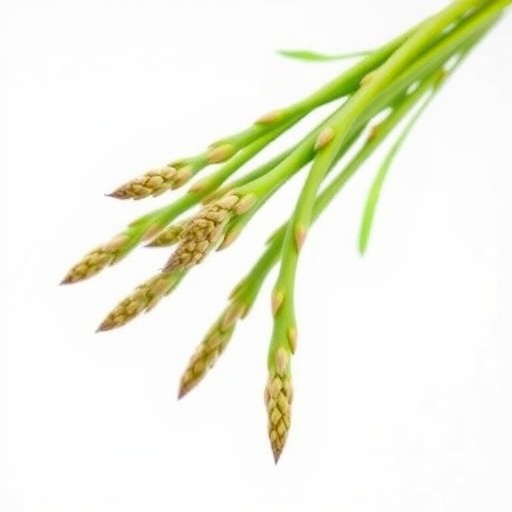
Scientists in China have assembled, for the first time, the complete mitochondrial genome of Asparagus cochinchinensis, a medicinal herb cherished for centuries in traditional Chinese medicine for its therapeutic, nutritional, and skin-whitening properties. The study, published in BMC Genomics by researchers at the Chongqing Academy of Chinese Materia Medica, reveals a remarkably complex mitochondrial genome architecture that offers new clues about how this versatile plant has adapted to diverse environments across East Asia and how its genome may underpin the pharmacological traits that have made it a staple of herbal medicine. The work fills a significant gap in the genomic knowledge of a species that, despite its ecological flexibility and economic importance, has remained poorly characterized at the level of its organellar DNA.
Mitochondrial genomes in flowering plants are famously unruly compared with the compact, uniform mitochondrial genomes of animals. While animal mitogenomes typically span a modest 16,000 or so base pairs, plant mitogenomes can balloon to hundreds of thousands, or even millions, of base pairs, often existing as a dynamic collection of circular or linear chromosomes that recombine, rearrange, and exchange DNA with other cellular compartments. The new analysis of A. cochinchinensis adds a striking example to this gallery of genomic exuberance. Rather than a single circular molecule, the species’ mitochondrial genome is distributed across three independent circular chromosomes measuring 327,009 base pairs, 175,491 base pairs, and 83,175 base pairs respectively, for a combined total of 585,675 base pairs. The overall GC content of the assembly is 45.83 percent, a figure consistent with many other angiosperm mitogenomes and one that reflects the characteristic nucleotide balance of plant mitochondrial DNA.
To arrive at this picture, the team performed comprehensive sequencing of the mitochondrial genome, followed by de novo assembly and functional annotation. The assembled chromosomes collectively carry 61 genes: 38 protein-coding genes, 20 transfer RNA genes, and 3 ribosomal RNA genes. This gene content is broadly typical of flowering plant mitogenomes, which retain a core set of genes involved in oxidative phosphorylation, the process by which mitochondria generate the cell’s energy currency, ATP. The presence of mitochondrial tRNA and rRNA genes also underlines the organelle’s semi-autonomous nature, a legacy of its ancient origin as a free-living bacterium that entered the eukaryotic cell billions of years ago and gradually surrendered most of its genes to the nucleus while retaining the machinery to translate a handful of essential proteins on site.
Beyond the annotated genes, the researchers examined the repetitive landscape of the genome using simple sequence repeat, or SSR, profiling. SSRs are short tandem repeats of one to several nucleotides that are abundant in most genomes and are prized as molecular markers because of their high variability and ease of detection. In the A. cochinchinensis mitogenome, the analysis detected 170 SSR loci, with mononucleotide repeats dominating the tally at 70 loci, accounting for 41.18 percent of the total. Such repeats can serve as valuable tools for population genetics studies, allowing researchers to track genetic diversity across wild and cultivated populations of the herb, assess the effects of habitat fragmentation, and guide conservation and breeding programs for a plant whose demand in the medicinal and cosmetic industries continues to grow.
Perhaps the most intriguing finding of the study concerns the traffic of genetic material between the cell’s organelles. The analysis uncovered 13 orthologous DNA fragments, totaling 6,744 base pairs, that indicate historical transfer of sequences between the mitochondrial genome and the chloroplast genome. The largest of these fragments, designated MTPT6, spans 2,170 base pairs. These so-called mitochondrial-to-plastid or plastid-to-mitochondrial transfer sequences, collectively known as MTPTs, are a well-documented phenomenon in plant evolution: DNA moving between organelles, or from organelles to the nucleus, has shaped plant genomes over millions of years. Each transferred fragment is a fossil record of a past DNA exchange event, and mapping them across species helps evolutionary biologists reconstruct the direction, timing, and mechanisms of inter-organellar gene flow. The identification of 13 such fragments in A. cochinchinensis adds to a growing catalog that is helping scientists understand why plant mitochondrial genomes are such genetic magnets for foreign DNA.
The study’s authors emphasize that the mitogenome of A. cochinchinensis has been shaped by long-term adaptation to diverse environmental pressures. East Asian habitats where the species thrives range from shaded forest understories to disturbed slopes, and the plant’s wide ecological amplitude has long impressed botanists. Mitochondrial genomes, because they encode key components of the respiratory machinery and interact with the nuclear genome to regulate cytoplasmic male sterility and stress responses, can harbor signatures of this adaptive history. Documenting the full mitochondrial sequence therefore provides critical raw material for investigating how respiratory genes evolve under different climates and how mitochondrial-nuclear interactions contribute to the species’ survival strategies. The researchers note that the assembly enriches our broader understanding of mitochondrial genome evolution in flowering plants, where every newly completed mitogenome contributes data points on chromosome number, repeat content, and gene order variation.
A. cochinchinensis, known in Chinese medicine as Tiandong or Asparagus root, occupies a cherished place in the traditional pharmacopoeia. Its tuberous roots are used in formulations believed to nourish yin, moisten the lungs, and generate fluids, and the plant has attracted modern interest for its reported antioxidant, anti-inflammatory, and skin-brightening activities. Despite this pedigree, in-depth genomic research on the species, particularly on its organellar genomes, has lagged far behind its economic and medicinal importance. The mitochondrial genome is especially relevant for medicinal plants because it is maternally inherited in most angiosperms, making it a powerful marker for tracing seed-mediated gene flow, identifying the geographic origins of herbal material, and combating adulteration in the herbal trade. A complete mitogenome reference therefore has practical implications for authenticity testing and quality control of Tiandong products, an area of growing concern as global demand for traditional medicines expands.
The technical achievement behind the assembly should not be understated. De novo assembly of plant mitochondrial genomes is notoriously difficult because repetitive sequences can bridge distant genomic regions, creating alternative arrangements that complicate reconstruction into a single canonical molecule. Many plant mitogenomes are better described as a landscape of recombining sequences than as a fixed map. By resolving the A. cochinchinensis mitogenome into three distinct circular chromosomes, the team has produced a reference structure that can now serve as a scaffold for comparative studies across the asparagus family, Asparagaceae, and the wider monocot lineage. Comparisons with related species will help determine whether the three-chromosome architecture is ancestral, derived, or simply one snapshot of a fluid genomic state, and whether similar patterns of chloroplast DNA incorporation are widespread among the plant’s relatives.
Phylogenetic analysis based on mitochondrial data, as flagged among the study’s keywords, further positions the work within the larger enterprise of resolving flowering plant relationships. Organellar genomes, particularly the mitochondrial genome with its slower substitution rate but frequent structural rearrangements, offer complementary signal to plastid and nuclear markers. As more mitogenomes from across the angiosperm tree are completed, researchers can triangulate gene order changes, transfer events, and repeat expansions to build a richer picture of how plant genomes have diversified since the origin of flowering plants more than 140 million years ago. The A. cochinchinensis mitogenome, with its documented MTPTs and well-characterized repeat landscape, is a welcome addition to this comparative framework.
For the researchers involved, including co-first authors Yuanjiang Xu and Benxia Yu, along with Xiaomei Zhang, Xue Liu, and Xianyou Qu, the assembly represents a foundation rather than a finishing point. The reference genome now enables follow-up investigations into the expression of mitochondrial genes under environmental stress, the evolutionary dynamics of the transferred chloroplast fragments, and the development of SSR-based markers for breeding improved cultivars of the herb. The work was funded in part by China’s National Key Research and Development Program, reflecting national investment in the scientific modernization of the traditional Chinese medicine industry, including projects on key technologies for cultivating medicinal materials such as Coptidis rhizoma and Ganoderma under forest ecology. As genomic resources accumulate for medicinal plants, the bridge between ancient herbal wisdom and modern molecular science grows steadily more solid, and the humble asparagus root now has its mitochondrial genome firmly on the map.
Cite Scienmag News
Juliet Wilcox. (September 8, 2026). Mitochondrial genome of Chinese asparagus reveals genetic secrets of its medicinal value. Scienmag. https://scienmag.com/mitochondrial-genome-of-chinese-asparagus-reveals-genetic-secrets-of-its-medicinal-value/
Juliet Wilcox. "Mitochondrial genome of Chinese asparagus reveals genetic secrets of its medicinal value." Scienmag, 8 September 2026, https://scienmag.com/mitochondrial-genome-of-chinese-asparagus-reveals-genetic-secrets-of-its-medicinal-value/. Accessed 8 September 2026.
Juliet Wilcox. "Mitochondrial genome of Chinese asparagus reveals genetic secrets of its medicinal value." Scienmag. September 8, 2026. https://scienmag.com/mitochondrial-genome-of-chinese-asparagus-reveals-genetic-secrets-of-its-medicinal-value/


