


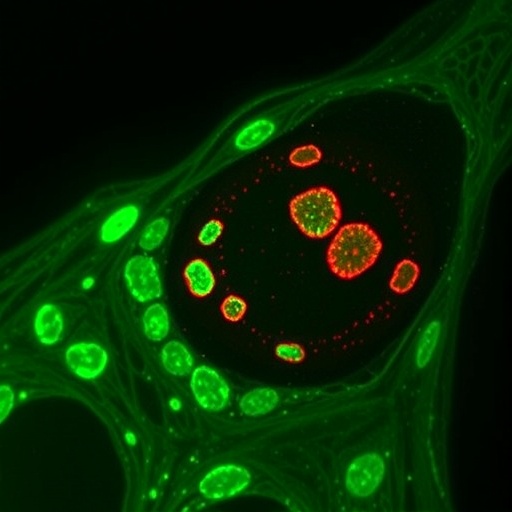
Cervical cancer remains one of the most preventable yet persistent malignancies worldwide, and every new insight into its molecular machinery carries the potential to reshape how the disease is detected and treated. Now, a team of researchers in China has uncovered a previously unrecognized tumor-suppressive pathway in cervical cancer, centered on an enzyme called MYSM1 and its ability to switch on a gene known as ITPR1, thereby driving a self-destruction program in cancer cells. The study, published in the Journal of Translational Medicine, weaves together large-scale genomic data, epigenetic mapping, laboratory experiments, animal models, and patient tissue analysis into a coherent story about how the loss of a single chromatin regulator can tip cervical cells toward malignancy.
MYSM1, short for Myb-like, SWIRM and MPN domains 1, is best known as a histone H2A deubiquitinase, an enzyme that removes ubiquitin tags from histone H2A, the protein spool around which DNA is wound. By erasing a specific mark called H2A lysine 119 ubiquitination, which is deposited by the Polycomb repressive complex 1 and generally silences genes, MYSM1 helps keep portions of the genome accessible and active. It has well-established roles in blood cell development and immune regulation, and recent work has implicated it in breast, colorectal, and prostate cancers. What remained unclear until now was whether it plays any role in cervical cancer, a question the new study set out to answer systematically.
The researchers began by mining public transcriptome resources, including The Cancer Genome Atlas, the Genotype-Tissue Expression project, and the Human Protein Atlas, to chart where MYSM1 is expressed across the full spectrum of human cancers. The pan-cancer survey showed that MYSM1 is aberrantly expressed in many tumor types, but the most striking finding was its profound downregulation in cervical cancer tissues compared with healthy cervical tissue. When the team cross-referenced MYSM1 levels with clinical information, high expression correlated with more benign clinicopathological characteristics, consistent with the idea that the protein acts as a brake on tumor progression. Survival analyses drawn from TCGA, an independent dataset called GSE44001, and the investigators’ own cohort of 44 paired cervical cancer specimens reinforced this picture.
To move beyond correlation, the scientists manipulated MYSM1 in cervical cancer cell lines, including HeLa and SiHa cells, using both lentiviral knockdown and overexpression approaches. When MYSM1 was silenced, the cells became more aggressive: proliferation measured by cell counting assays accelerated, colonies grew larger and more numerous in colony formation tests, and the cells migrated more readily through Transwell membranes. Conversely, restoring MYSM1 suppressed these malignant behaviors. The pattern held in living systems as well, with in vivo experiments confirming that the enzyme restrains tumor growth. The team then asked what cellular program MYSM1 triggers, and the evidence pointed squarely at autophagy, the conserved process by which cells digest their own components in double-membraned vesicles that fuse with lysosomes.
Autophagy has a complicated relationship with cancer, sometimes helping tumor cells survive metabolic stress and sometimes pushing them into autophagic cell death. In this study, MYSM1 expression was accompanied by clear biochemical and visual signatures of heightened autophagy. Western blotting revealed an increased ratio of LC3-II to LC3-I, the lipidated form of the microtubule-associated light chain 3 that decorates autophagosomal membranes. Immunofluorescence microscopy showed abundant LC3 puncta in the cytoplasm, and transmission electron microscopy captured the ultrastructural hallmarks of autophagic vesicles. Critically, when the authors blocked autophagy with chloroquine, the anti-proliferative and anti-migratory effects of MYSM1 largely disappeared, demonstrating that the autophagy program is not a bystander but the functional engine of MYSM1’s tumor suppression.
The next challenge was to identify how MYSM1, a nuclear chromatin enzyme, communicates with the autophagy machinery in the cytoplasm. Using chromatin immunoprecipitation sequencing, or ChIP-Seq, combined with transcriptomic profiling and correlation analyses against TCGA cervical cancer data, the researchers screened for downstream genes that are both bound by MYSM1 and expressionally dependent on it. Among roughly twenty candidate targets, one gene stood out: ITPR1, which encodes the inositol 1,4,5-trisphosphate receptor type 1, a large calcium channel embedded in the endoplasmic reticulum membrane. Gene Ontology, KEGG pathway, and Gene Set Enrichment analyses all connected ITPR1 to autophagy-related biological processes, and functional rescue experiments confirmed that ITPR1 mediates the anti-tumor effects of MYSM1 by acting as an inducer of autophagy.
Mechanistically, the picture that emerges is elegant. MYSM1 binds near the ITPR1 locus and removes repressive H2A ubiquitin marks, opening the chromatin and allowing the gene to be transcribed. The resulting ITPR1 channels modulate calcium release from the endoplasmic reticulum, a signal long known to feed into autophagosome initiation through autophagy-related proteins such as ATG5 and ATG7. With ITPR1 cranked up, cervical cancer cells experience elevated basal autophagy that tips them toward growth arrest and cell death rather than uncontrolled division. Like MYSM1, ITPR1 was found to be downregulated in the 44 paired clinical tumor specimens, and its abundance correlated with favorable clinical phenotypes, suggesting that the entire axis degrades together as the disease advances.
The study went a step further by asking whether variation in the MYSM1 and ITPR1 genes influences who develops cervical cancer in the first place. Using Mendelian randomization, a statistical framework that employs genetic variants as natural experiments, the team analyzed data from the GWAS Catalog to test whether genetically predicted expression of the two genes is associated with cervical cancer susceptibility. The results revealed a modest, suggestive genetic association, a finding that stops short of proving causation but adds a population-level dimension to the cellular and tissue-level evidence. Receiver operating characteristic analyses indicated that MYSM1 and ITPR1, individually and especially in combination, hold diagnostic potential for distinguishing tumor from normal cervical tissue, while survival curves in the clinical cohort hinted at prognostic value.
For the clinic, the implications are twofold. As a biomarker, the combined signature of MYSM1 and ITPR1 expression could one day help stratify patients or flag early disease, complementing existing screening approaches. As a therapeutic target, the pathway suggests strategies to restore MYSM1 function or pharmacologically activate ITPR1-driven calcium signaling to re-engage autophagic cell death in tumor cells. Such approaches remain distant, and the authors caution that the Mendelian randomization evidence is only suggestive and that the regulatory axis will need validation in larger, independent cohorts. Still, identifying an epigenetic switch that connects chromatin state to an autophagic tumor-suppression program offers a fresh molecular entry point into a cancer for which the dominant known driver, human papillomavirus, has long overshadowed other mechanisms.
The research, supported by the National Natural Science Foundation of China and regional science programs in Shaanxi and Xi’an, exemplifies a growing trend in translational oncology: starting from public multi-omics data, narrowing candidates through epigenomic and transcriptomic screens, and closing the loop with mechanistic experiments and patient samples. In doing so, it elevates MYSM1 from a hematopoietic and immunological curiosity to a candidate tumor suppressor in the cervix, and it positions the MYSM1–ITPR1–autophagy axis as a pathway worth watching as researchers seek new diagnostic and therapeutic leverage against cervical cancer.
Cite Scienmag News
Juliet Wilcox. (September 7, 2026). MYSM1 halts cervical cancer growth by activating ITPR1-driven autophagy. Scienmag. https://scienmag.com/mysm1-halts-cervical-cancer-growth-by-activating-itpr1-driven-autophagy/
Juliet Wilcox. "MYSM1 halts cervical cancer growth by activating ITPR1-driven autophagy." Scienmag, 7 September 2026, https://scienmag.com/mysm1-halts-cervical-cancer-growth-by-activating-itpr1-driven-autophagy/. Accessed 7 September 2026.
Juliet Wilcox. "MYSM1 halts cervical cancer growth by activating ITPR1-driven autophagy." Scienmag. September 7, 2026. https://scienmag.com/mysm1-halts-cervical-cancer-growth-by-activating-itpr1-driven-autophagy/


