


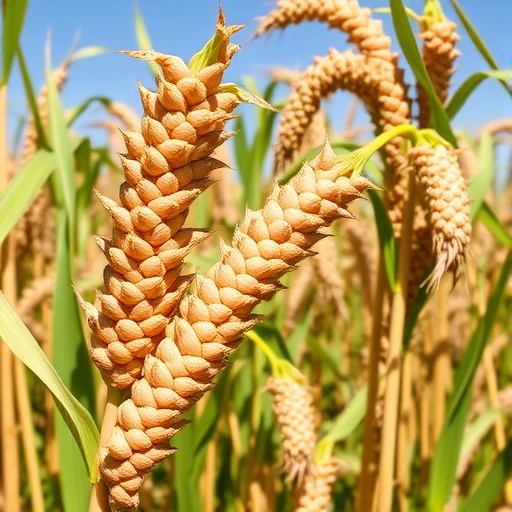
Researchers in India have developed a process that transforms sorghum stalks, an agricultural residue often discarded after grain harvest, into high-value prebiotic xylooligosaccharides with performance that exceeds commercial alternatives. The study, published in Biotechnology for Biofuels and Bioproducts, demonstrates a complete valorization pathway in which lignocellulosic biomass is chemically fractionated, enzymatically converted, and analytically characterized, yielding oligosaccharides that not only nourish beneficial gut bacteria but also display antioxidant activity and remarkable stability under gastric conditions. The work offers a compelling example of how crop residues can be upgraded from low-value waste into functional food ingredients within an integrated biorefinery framework.
Sorghum, or Sorghum bicolor, is one of the world’s most important cereal crops, particularly across semi-arid regions of Asia and Africa, and its cultivation generates vast quantities of lignocellulosic stalk residue. Like most agricultural biomass, sorghum stalks consist of three principal structural polymers: cellulose, hemicellulose, and lignin. The hemicellulose fraction is dominated by xylan, a long-chain polysaccharide composed of xylose units linked by beta-1,4-glycosidic bonds. When xylan is partially cleaved into short chains of two to ten xylose units, the resulting molecules are known as xylooligosaccharides, or XOS. These compounds have attracted growing commercial interest because they resist digestion in the upper gastrointestinal tract and instead serve as selective substrates for probiotic microorganisms such as Lactobacillus and Bifidobacterium species, a property that defines their function as prebiotics.
The research team, led by Nisha Nisha, Sumit Arora, and Richa Singh of the Dairy Chemistry Division at ICAR-National Dairy Research Institute in Karnal, together with collaborators from the Indian Council of Agricultural Research in New Delhi and the Global Centre of Excellence on Millets at ICAR-Indian Institute of Millets Research in Hyderabad, began by extracting xylan from sorghum stalk biomass using alkaline treatment. The choice of alkaline extraction is chemically deliberate: sodium hydroxide disrupts ester bonds that crosslink xylan to lignin, releasing the hemicellulose fraction in a relatively pure form. The team systematically varied the concentration of sodium hydroxide and found that increasing alkalinity significantly enhanced xylan recovery. The optimal condition, 3 M sodium hydroxide, achieved an xylan recovery of 87.17 percent with a standard deviation of only 0.32 percent, a striking yield for a lignocellulosic feedstock.
Purity was confirmed through Fourier-transform infrared spectroscopy, or FTIR, a technique that identifies functional groups within a material by measuring the absorption of infrared light at characteristic wavenumbers. The spectra indicated that xylan extracted at the highest alkaline concentration contained minimal residual lignin, which matters considerably because lignin contamination can impede subsequent enzymatic reactions and compromise the quality of the final product. By cleaving the chemical associations between xylan and lignin, the alkaline pretreatment effectively liberated a substrate clean enough for precise enzymatic hydrolysis.
The second stage of the process converted the extracted xylan into short-chain oligosaccharides using enzymatic hydrolysis, a reaction catalyzed by xylanase enzymes that cleave the internal beta-1,4 bonds of the xylan backbone. Rather than relying on trial and error, the researchers applied formal statistical optimization using Design-Expert software, which allows multiple reaction variables to be tuned simultaneously through response surface methodology. The optimized conditions were identified as a pH of 5.5, a temperature of 45.45 degrees Celsius, an incubation time of 24 hours, and an enzyme dose of 20 international units per 200 milligrams of xylan. This moderate pH and near-physiological temperature reflect the operating envelope of the enzyme itself, while the defined enzyme-to-substrate ratio ensures efficient catalysis without excessive enzyme loading, an important consideration for process economics.
Analytical characterization of the resulting hydrolysates revealed that the product was dominated by xylooligosaccharides with a degree of polymerization, or DP, ranging from 2 to 6, meaning chains of two to six xylose units. Within this range, the hydrolysate contained primarily xylohexaose, the six-unit oligomer. The DP profile is scientifically significant because oligosaccharide length governs both fermentability by gut microbes and physiological persistence. Very short oligomers are consumed rapidly in the proximal colon, while longer chains survive further along the gastrointestinal tract, enabling targeted activity. A profile centered on DP 2 to 6 therefore sits in a desirable middle zone, and the predominance of xylohexaose in this product suggests a slow, sustained fermentation profile.
The biological performance of the XOS was then evaluated in prebiotic assays using Lactobacillus salivarius, a probiotic bacterium associated with oral and intestinal health. The sorghum-derived XOS achieved a prebiotic index of 1.74, plus or minus 0.04, outperforming both commercial galacto-oligosaccharides, which scored 1.12 plus or minus 0.03, and inulin, a widely used fructan prebiotic, which scored 1.27 plus or minus 0.08. The team also reported a prebiotic activity score of 13.42 plus or minus 0.27, the highest recorded under the experimental conditions evaluated. These metrics quantify how selectively an oligosaccharide promotes the growth of beneficial bacteria relative to undesirable ones, and the magnitude of the advantage over established commercial products is one of the most notable findings of the study.
Beyond its prebiotic behavior, the XOS demonstrated a clear concentration-dependent antioxidant capacity measured by DPPH radical scavenging, a standard assay in which the degree to which a compound neutralizes a stable free radical indicates its antioxidant potential. Scavenging capacity rose gradually from 23.02 percent at 0.125 milligrams per milliliter to 75.83 percent at 4 milligrams per milliliter. This dual functionality, combining prebiotic and antioxidant properties within a single molecule, positions the sorghum-derived product as a candidate for functional food applications in which oxidative stress management and gut microbiome support are both desired outcomes.
Perhaps equally important for any ingredient intended for human consumption, the XOS displayed high resistance to simulated gastric conditions across the pH range of 1 to 5, with less than 6 percent hydrolysis after six hours of exposure. This finding addresses one of the central challenges in prebiotic delivery: the harsh acidic environment of the stomach and the enzymatic activity of the upper digestive tract can degrade many bioactive compounds before they reach the colon, where they are needed. The structural stability of these xylooligosaccharides means that the overwhelming majority of the ingested dose would arrive intact at the site of fermentation, maximizing their physiological effect.
The study was supported by the Global Centre of Excellence on Millets at ICAR-Indian Institute of Millets Research in Hyderabad, reflecting India’s broader investment in millet and sorghum-based value chains as part of national efforts to promote these climate-resilient crops. The research aligns with a growing body of literature on biomass valorization, including earlier work on enzymatic XOS production from sorghum bagasse and integrated chemo-enzymatic strategies applied to sunflower stalks and bamboo. What distinguishes the present study is the combination of high xylan recovery, rigorous statistical process optimization, and comprehensive biological characterization within a single workflow applied to a feedstock that is currently underutilized.
From a biorefinery perspective, the findings suggest a model in which sorghum stalk residue is not merely burned or returned to soil as a low-value amendment but instead becomes the basis for a high-margin nutraceutical product. Because the process relies on alkaline extraction and enzymatic hydrolysis rather than aggressive acid treatment or high-temperature thermochemical conversion, it generates a cleaner product stream with fewer degradation byproducts, simplifying downstream purification. The enzymatic step in particular offers specificity that chemical hydrolysis cannot match, producing a controlled oligosaccharide profile rather than a heterogeneous mixture.
The economic and environmental implications extend beyond sorghum itself. The principles demonstrated here, namely alkaline xylan extraction followed by optimized enzymatic conversion, are broadly applicable to other xylan-rich agricultural residues, including corn stover, wheat straw, and rice husks. As demand grows for plant-derived prebiotics to support the expanding probiotics and functional foods market, processes of this kind could allow agricultural economies to capture more value domestically from residues they already produce in abundance. India, as one of the world’s largest sorghum producers, stands to benefit considerably from translating these laboratory-scale results into industrial practice.
For now, the study establishes a rigorous technical foundation: an optimized extraction and hydrolysis protocol, a clearly defined product profile dominated by xylohexaose, and compelling evidence of prebiotic superiority over commercial benchmarks. Whether the process can be scaled economically, and whether the in vitro findings translate into health benefits in clinical settings, will be the questions that determine how far this sorghum-derived prebiotic travels from the laboratory bench to the grocery shelf. The researchers indicate that the open-access publication is intended to accelerate exactly that process, providing the detailed process parameters and analytical data that other groups will need to replicate, refine, and commercialize the approach.
Cite Scienmag News
Drew Townsend. (September 7, 2026). Turning sorghum stalk lignocellulose into valuable xylooligosaccharides efficiently. Scienmag. https://scienmag.com/turning-sorghum-stalk-lignocellulose-into-valuable-xylooligosaccharides-efficiently/
Drew Townsend. "Turning sorghum stalk lignocellulose into valuable xylooligosaccharides efficiently." Scienmag, 7 September 2026, https://scienmag.com/turning-sorghum-stalk-lignocellulose-into-valuable-xylooligosaccharides-efficiently/. Accessed 7 September 2026.
Drew Townsend. "Turning sorghum stalk lignocellulose into valuable xylooligosaccharides efficiently." Scienmag. September 7, 2026. https://scienmag.com/turning-sorghum-stalk-lignocellulose-into-valuable-xylooligosaccharides-efficiently/


