


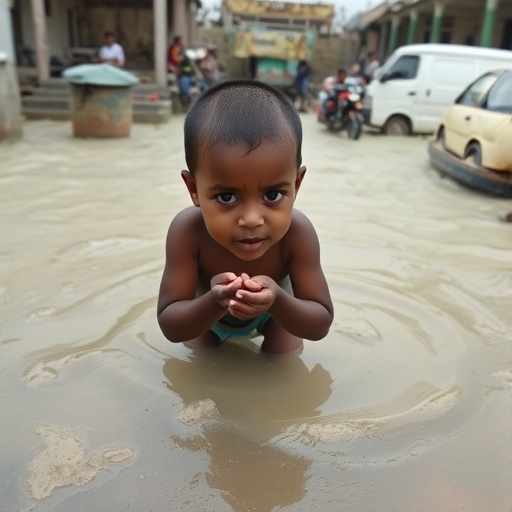
A sweeping new systematic review and meta-analysis published in Pediatric Research has brought together the available global evidence on how two of the most devastating consequences of a changing climate—floods and droughts—shape the nutritional status of children in the world’s poorest countries, and the findings underscore an uncomfortable truth: the youngest and most vulnerable members of society are paying the highest price for climate volatility they did little to cause.
The study, led by A. La Vecchia, E. Borrione, and B. Esposito along with colleagues, examines the relationship between extreme hydrological events and pediatric malnutrition in low-income countries, synthesizing data across multiple studies and geographic settings to produce a more reliable estimate of the association than any single investigation could offer. By pooling results in a meta-analytic framework, the researchers were able to quantify, with greater statistical confidence, the degree to which exposure to floods and droughts is linked to undernutrition among children—a category that encompasses stunting, wasting, and underweight, the three classic anthropometric markers used by the World Health Organization to gauge child nutritional status.
Why does this matter so much? Malnutrition in early childhood is not merely a matter of temporary hunger. It is a fundamental disruption of growth and development with consequences that can echo across an entire lifetime. Stunting—low height for age—reflects chronic undernutrition and is associated with impaired cognitive development, reduced school attainment, and diminished economic productivity in adulthood. Wasting—low weight for height—signals acute undernutrition and dramatically elevates a child’s risk of death from common childhood illnesses such as diarrhea, pneumonia, and measles. Underweight, a composite measure, captures both dimensions. The WHO and UNICEF have long identified childhood undernutrition as a contributor to nearly half of all deaths among children under five worldwide, and the burden is overwhelmingly concentrated in low- and middle-income countries, particularly in sub-Saharan Africa and South Asia.
The mechanisms linking climate extremes to child malnutrition are multifaceted, and the review takes care to map them. Floods can destroy croplands, wash away seeds and livestock, contaminate water supplies, and sever the transportation networks that move food to market. The resulting spikes in food prices and outbreaks of waterborne disease such as cholera and cryptosporidiosis strike young children hardest, since diarrheal illness both signals and exacerbates malnutrition through a vicious cycle of impaired nutrient absorption and weakened immunity. Droughts operate through a slower but no less damaging pathway: successive failed rainy seasons deplete household food stores, force families to sell productive assets, reduce agricultural employment opportunities, and degrade the quality and quantity of breast milk and complementary foods available to infants and toddlers. In both cases, the window of vulnerability is startlingly narrow—the first one thousand days of life, from conception through roughly age two, when rapid brain development and linear growth make nutritional insults particularly consequential and often irreversible.
What distinguishes the present analysis from earlier narrative reviews is its methodological rigor. Systematic reviews follow predefined protocols for searching databases, screening studies, assessing risk of bias, and extracting data, reducing the selective reporting that can distort less structured syntheses. Meta-analysis then combines the effect estimates from individual studies into a pooled measure, weighting each contribution by its precision. This approach not only yields a summary estimate of the association between extreme climate events and malnutrition outcomes but also allows researchers to explore heterogeneity—the extent to which findings differ across studies—and to probe whether the strength of the association varies by geography, study design, or the type of extreme event involved. The authors’ use of these tools is particularly important in a field where individual studies often suffer from small sample sizes, inconsistent exposure definitions, and confounding by poverty, conflict, and weak health infrastructure, all of which co-occur with climate vulnerability and can masquerade as climate effects if not properly accounted for.
The distinction between floods and droughts as exposures is itself scientifically meaningful. Droughts are typically slow-onset disasters whose nutritional toll accumulates over seasons and years, making them somewhat easier to capture in household surveys and longitudinal surveillance systems. Floods, by contrast, are acute shocks whose effects on nutrition may be immediate—through disease outbreaks—or delayed, as destroyed harvests translate into lean-season hunger months later. Studies that fail to account for these different temporal signatures may understate or misattribute effects. By examining both exposure types within a single analytic framework, the review provides a more complete picture of how hydro-climatic variability, in all its forms, translates into nutritional harm for children.
The policy implications of this body of evidence are considerable. Climate models consistently project that the frequency and intensity of both extreme precipitation events and prolonged droughts will increase in precisely the regions where child malnutrition is already endemic. This convergence—of highest climatic exposure and lowest adaptive capacity—means that climate change is not merely an environmental problem but a direct threat to global progress on the Sustainable Development Goals, particularly SDG 2 on zero hunger and SDG 3 on health and well-being. Estimates cited by major international bodies suggest that without aggressive climate mitigation, tens of millions of additional children could be pushed into severe food insecurity by mid-century, with concomitant rises in stunting and wasting that would erase decades of hard-won nutritional gains.
The review’s findings also speak to the design of interventions. If the evidence confirms that climate extremes are robust drivers of pediatric malnutrition, then nutrition programs cannot be designed in isolation from climate adaptation. Anticipatory action—releasing funds and prepositioning food and therapeutic nutrition supplies before a forecast drought or flood materializes—has shown promise in recent humanitarian practice, and the epidemiological evidence assembled in this review strengthens the case for such systems. Similarly, interventions that buffer the mechanisms identified in the causal chain—drought-tolerant crop varieties, flood-resilient storage, water and sanitation infrastructure, social safety nets that expand during climate shocks, and strengthened primary health care capable of identifying and treating wasting early—become not merely development priorities but climate adaptation measures with measurable nutritional returns.
There are, inevitably, limitations that the authors and readers must keep in view. Observational studies of climate and nutrition cannot randomize exposure, and residual confounding is a persistent threat: poor households are both more likely to live in flood-prone or drought-exposed areas and more likely to have malnourished children for reasons unrelated to climate. Publication bias—the tendency for studies finding significant associations to be published more readily—can inflate pooled estimates, which is why formal assessment of publication bias through funnel plots and related techniques is a standard component of credible meta-analysis. Heterogeneity across studies, arising from different outcome definitions, exposure windows, and analytic adjustments, limits the precision with which a single summary estimate can be interpreted. The authors’ transparent engagement with these methodological challenges strengthens, rather than weakens, the credibility of their conclusions.
Ultimately, the study arrives at a moment of mounting global anxiety about the intersection of climate change and child health. The Lancet Countdown on Health and Climate Change and successive IPCC assessment reports have documented with increasing confidence that climate change is already undermining food systems and nutritional outcomes, and pediatric populations in low-income countries stand at the sharp end of that trajectory. By rigorously synthesizing the evidence linking floods and droughts to child malnutrition, this meta-analysis transforms what has often been an intuitive connection—anecdotal, region-specific, and contested—into a quantified, systematically assembled body of knowledge that policymakers, donors, and public health authorities can act upon.
The message for the international community is stark and, in its own way, hopeful. The harm that climate extremes inflict on children’s nutrition is neither mysterious nor unavoidable. It follows known pathways—food, water, disease, and household economics—and each of those pathways can be fortified. What the evidence demands is integration: climate services that inform nutrition planning, agricultural policies that anticipate hydrological risk, health systems prepared for the malnutrition surges that follow disasters, and, above all, a recognition that every fraction of a degree of avoided warming, and every dollar of adaptation directed to the most vulnerable communities, is an investment in the bodies and brains of the world’s children. As extreme weather grows more frequent, the choice facing the global community is not whether climate change will affect child nutrition—it already is—but whether societies will respond with the urgency and coordination the evidence now so clearly warrants.
Cite Scienmag News
Harold Sullivan. (September 6, 2026). Floods and droughts linked to child malnutrition in low-income countries. Scienmag. https://scienmag.com/floods-and-droughts-linked-to-child-malnutrition-in-low-income-countries/
Harold Sullivan. "Floods and droughts linked to child malnutrition in low-income countries." Scienmag, 6 September 2026, https://scienmag.com/floods-and-droughts-linked-to-child-malnutrition-in-low-income-countries/. Accessed 6 September 2026.
Harold Sullivan. "Floods and droughts linked to child malnutrition in low-income countries." Scienmag. September 6, 2026. https://scienmag.com/floods-and-droughts-linked-to-child-malnutrition-in-low-income-countries/


