


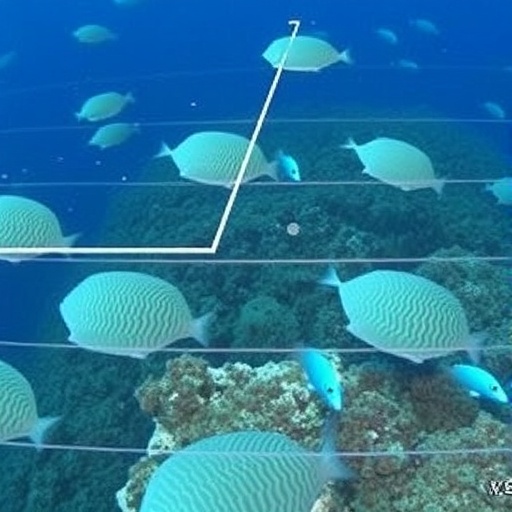
Deep beneath two small Indonesian islands, a team of scientists has drilled into 7,200 years of coral reef history and uncovered a finding that challenges a central assumption of modern reef conservation: the reefs of the Spermonde Archipelago were already undergoing dramatic ecological transformations thousands of years before industrialization, destructive fishing, or coastal development ever touched these waters. The research, published in the journal Coral Reefs, uses sixteen sediment cores extracted from the patch reefs surrounding Samalona and Kudingareng Keke islands in the Makassar Strait to reconstruct how coral, foraminiferan, and sponge communities shifted over millennia, revealing that today’s reef baselines are far from natural reference points.
The Coral Triangle, stretching from central and eastern Indonesia through Papua New Guinea to the Philippines and northern Borneo, hosts more than 600 species of reef-building corals and is the global epicenter of marine biodiversity. Within this region, the Spermonde Archipelago off southwest Sulawesi comprises roughly 120 islands, about 80 of which break the surface, scattered across a carbonate shelf near the city of Makassar and the mouths of three major rivers. These rivers deliver sediments and nutrients that create a pronounced onshore-to-offshore gradient of decreasing turbidity, and the archipelago’s reefs have been studied intensively since the 1930s. Yet nearly all biological observations date from after large-scale disturbances had already begun, leaving scientists with a severely distorted picture of what these reefs looked like in an undisturbed or minimally disturbed state, a problem ecologists call shifting baseline syndrome.
To overcome this limitation, the research team led by Michael G. Hynes of the Naturalis Biodiversity Center in Leiden employed push coring techniques in August 2022, collecting sixteen cores ranging from 0.41 to 3.53 meters in recovered length from transects across both reef platforms. Three cores were taken from each reef slope and five from each reef flat and island at both sites. The cores were subsampled on site into 5-centimeter sections to compensate for time averaging caused by bioturbation, mixing, and compaction, then sieved into fractions larger and smaller than 2 millimeters. Mollusk shells from the coarser fraction, 39 gastropods and 6 bivalves, provided material for radiocarbon dating calibrated with the Marine20 curve using a local reservoir correction derived from ten nearby reference points around the Makassar Strait.
The dating revealed a critical feature of the islands’ geological history: a prolonged period of slow reef accretion, termed a Hiatus, spanning roughly 6,000 to 2,000 years before present, coinciding with a minor sea-level decline following the mid-Holocene highstand. Based on this chronology, the team divided their analysis into three time bins: Pre-Hiatus, older than 6,000 years; Hiatus, from 6,000 to 2,000 years before present; and Post-Hiatus, younger than 2,000 years. Within each bin, they quantified the relative abundance of coral taxa by weighing identified fragments from the coarse fraction, reduced the assemblage to sixteen taxonomic groups, and recorded the dominant coral growth morphology, branching, foliose, massive, or free-living, for every sample. Large benthic foraminifera were counted from the sandy fraction, with roughly 200 specimens identified per sample, while sponge spicules were isolated by dissolving away carbonate sediment with acetic acid after oxidative cleaning in hydrogen peroxide.
The coral results tell a story of fundamental ecological reorganization driven by changing sea levels. In the Pre-Hiatus period, when sea level was still rising rapidly toward its mid-Holocene peak and reef flats stood in deeper water, the assemblages were dominated by massive and foliose growth forms along with free-living mushroom corals of the family Fungiidae. Statistical analyses using principal component analysis and SIMPER permutation tests confirmed that this early period was characterized by significantly higher occurrences of the generalist genus Montipora and stress-tolerant massive corals such as Goniastrea and other Merulinidae. As sea level stabilized and then slowly declined, the reefs transitioned, first on the nearshore island of Samalona and later on the more offshore Kudingareng Keke, toward assemblages overwhelmingly dominated by branching corals of the family Acroporidae, particularly the competitive genus Acropora and the weedy Seriatopora, genera that favor shallow, clear water on reef flats and upper slopes.
Perhaps the most striking single discovery concerns the scleractinian coral Palauastrea ramosa. This species appears consistently in cores from both islands across all three time bins, including samples deposited just 100 to 200 years ago, yet it has never been observed alive in any modern survey of the archipelago, despite five decades of intensive study and coral cover declines exceeding 30 percent since the 1980s. The nearest known living population sits roughly 150 kilometers away on Selayer Island at the southern tip of Sulawesi. Because the species is known to tolerate turbid, shallow lagoonal conditions, its apparent local disappearance from Spermonde waters, where natural turbidity has persisted for at least 7,000 years, remains an open puzzle, but its presence in the fossil record demonstrates that reef cores can capture cryptic biodiversity invisible to contemporary monitoring.
The foraminiferal record provides an independent proxy for both water depth and substrate composition, since these single-celled carbonate producers are highly specialized to specific environmental conditions. In the Pre-Hiatus reef flats, when waters were deeper, the assemblages showed high diversity, including slope-preferring taxa such as Heterostegina alongside reef-flat specialists. As the flats shallowed through the Hiatus and into the Post-Hiatus, diversity collapsed toward dominance by just a few groups: Amphistegina lessonii and Calcarina, with Neorotalia significant on the flats and Amphistegina radiata and Heterostegina marking the deeper reef slopes. Crucially, the substrate preferences of these organisms reveal a compositional shift on the reef flats from coral-rubble-associated taxa toward more algal-dominated substrates in recent times, a signal the authors interpret as evidence of accelerating reef degradation over the last few centuries.
The sponge evidence adds a third, independent line of corroboration. From 88 spicule morphotypes recovered from 24 samples spanning roughly the last 2,000 years, the team documented a persistent and apparently increasing presence of cryptic, excavating sponges, particularly species of Cliona and Spiroxya, whose distinctive spicules, mucronate subtylostyles and spiral microstrongyles respectively, reached relative abundances of up to 11.5 percent and 4 percent in individual samples. Because these sponges bore into coral rubble and other hard substrates, their sustained presence implies that substantial rubble habitat has existed on these reefs for two millennia, and their apparent rise toward the present day suggests that declining coral cover has been generating ever more dead-coral rubble, potentially feeding back into bioerosion that further supplies carbonate sand for island building.
Taken together, the three assemblage records paint a coherent picture: the reefs of the Spermonde Archipelago have never been static, and the changes that modern observers attribute entirely to human activity began centuries to millennia before industrial-scale pressures arrived. Rising and then falling Holocene sea levels restructured coral communities, foraminiferal substrates shifted repeatedly between rubble-dominated and algal-dominated states, and natural turbidity, especially at nearshore Samalona, has been a persistent feature of the system since at least 7,000 years ago. The authors argue that this long-term perspective is essential for setting realistic restoration targets and for predicting how these reefs, and the low-lying, densely populated sand cays they support, will respond to the accelerating sea-level rise projected over the coming decades, with global mean sea levels expected to rise by at least another 50 centimeters within 70 years.
The study also carries a methodological message for reef science worldwide. Fossil assemblages preserved in reef matrix cores captured species, from a locally extinct coral to cryptic boring sponges, that no amount of modern survey effort could have documented, and they revealed that the baseline against which degradation is measured was itself already an altered state. As conservation palaeobiology matures, the sediment beneath reef islands in the Coral Triangle and beyond may prove to be one of the most valuable archives available for distinguishing what reefs lost recently from what they lost long ago, and for understanding which ecological configurations are genuinely attainable restoration goals in a rapidly changing ocean.
Cite Scienmag News
Violet Maxwell. (September 6, 2026). Reef communities in Indonesian archipelago shifted over millennia, study finds. Scienmag. https://scienmag.com/reef-communities-in-indonesian-archipelago-shifted-over-millennia-study-finds/
Violet Maxwell. "Reef communities in Indonesian archipelago shifted over millennia, study finds." Scienmag, 6 September 2026, https://scienmag.com/reef-communities-in-indonesian-archipelago-shifted-over-millennia-study-finds/. Accessed 6 September 2026.
Violet Maxwell. "Reef communities in Indonesian archipelago shifted over millennia, study finds." Scienmag. September 6, 2026. https://scienmag.com/reef-communities-in-indonesian-archipelago-shifted-over-millennia-study-finds/


