


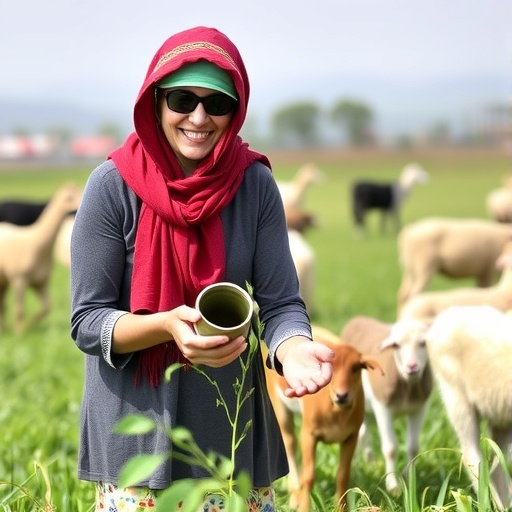
In the rolling farmlands of Chile, a woman may rise before dawn to tend livestock, care for an elderly parent, cook for her household, transport goods to market, and weave community obligations into the spaces between—all within a single day that official statistics may record as “not economically active.” This invisibility of rural women’s labor has long frustrated economists, policymakers, and gender researchers. Now, a team of Chilean researchers has developed and validated a purpose-built instrument to capture it: the Time-Use Questionnaire for Women in Family Farming (TUQ-FF), described in a new study published in Discover Global Society.
The research, led by Gloria Mora-Guerrero of the Universidad de Santiago de Chile together with colleagues from institutions across Chile, addresses a stubborn gap in the social sciences. Time-use measurement has a distinguished history—early attempts to estimate workers’ income relative to time spent in factories date to France in the 1890s—and over the twentieth century it became tightly linked to poverty research. Amartya Sen’s influential reframing of poverty as capability deprivation, rather than mere income shortage, lent urgency to the idea that a deficit of time is itself an obstacle to overcoming deprivation. Yet the instruments developed to measure time use have overwhelmingly been designed for wealthy, urbanized, high-literacy populations, and they systematically fail the women who need measurement most.
The problem is one of classification as much as logistics. International frameworks diverge sharply on how unpaid work should be treated. The International Classification of Activities for Time Use Statistics (ICATUS 2016) and the Classification of Time-Use Activities for Latin America and the Caribbean (CAUTAL) allow unpaid activities—domestic tasks in one’s own household, caregiving, community participation, volunteering—to be counted as productive work. By contrast, the Harmonised European Time Use Surveys and the American Time-Use Survey emphasize leisure, entertainment, hobbies, and computing: categories that, as development economist Indira Hirway has argued, are often less feasible and less relevant in developing contexts, where unpaid work represents a critical node of gender inequality. Paradoxically, it is precisely in developing countries that unpaid work is least measured in national statistical systems, partly because reliable data are difficult and costly to collect.
Traditional time-use methodology compounds these difficulties. The gold-standard approach—the time diary—asks respondents to reconstruct a reference day in minute-level detail, capturing simultaneous activities but demanding enormous cognitive effort, extensive interviewer training, and long administration times. In rural, low-literacy contexts, these demands become prohibitive. Farming adds its own complications: work is seasonal, weather-dependent, geographically dispersed, and conducted in areas with limited coverage of financial, health, educational, and caregiving services. When the study population is women engaged in family farming—agricultural production that relies primarily on family labor regardless of land tenure or farm size—three further obstacles emerge: the social invisibility and devaluation of their work, the overlapping of domestic and productive spaces, and the genuine simultaneity of productive, domestic, and caregiving activities.
Chile illustrates the challenge with particular clarity. The country’s GDP per capita of roughly 16,710 US dollars sits far below the 2024 US average of about 85,810 dollars, and its rural women face a distinctive constellation of barriers: limited access to basic utilities and services, low schooling levels (at least 22.5 percent of women have fewer than five years of education), limited digital literacy (only 49.6 percent of the rural population uses the internet), and an average age of 40 to 69 years among the farming population. Self-administered or digital questionnaires are simply not viable for this group, and even house-to-house surveys require interviewers capable of administering instruments to respondents who may struggle to translate daily activity into clock hours.
The TUQ-FF was therefore built from the ground up through a rigorous six-stage, mixed-methods process. The researchers began with a systematic bibliographic review across Web of Science, Scopus, and Scielo, supplemented by documents from the United Nations, ECLAC, and CLACSO, producing an initial 18-component, interviewer-administered survey. This draft then underwent expert judgment validation by four specialists spanning gender studies, family farming, productivity and economics, and gender-focused labor research. The team quantified expert agreement using Kendall’s coefficient of concordance (Kendall’s W) and item-level content validity using Aiken’s V, with items scoring below 0.80 flagged for revision or elimination—complemented by qualitative expert commentary.
The first round was sobering. Eight of the eighteen components scored below the overall average of 3.7 on a four-point scale, and Aiken’s V fell below threshold for ten components on at least one validity dimension, with relevance and sufficiency proving especially problematic. Experts flagged duplicated items, excessive length, and—critically—the subjectivity of asking women to allocate hours to tasks that resist hourly measurement. The pilot study, conducted with 20 participants in a single macro-zone, made the problem visceral. On average, pilot respondents needed 89 minutes to complete the questionnaire, with heavy interviewer support. Many had never reflected on their own time use before; many tasks were too irregular to estimate in hours; and among Indigenous Mapuche participants—who would ultimately constitute 50.3 percent of the final sample—time was often conceptualized not in hours and minutes but in relation to natural and environmental conditions.
The team’s response was a methodological innovation in its own right. They eliminated three weak components, merged and restructured others, and added a new Youth and Adult Care component to distinguish caregiving by age group: children and teens (0–14), youth and adults (15–59), and the elderly (60 and older). Most consequentially, they abandoned the demand for hourly precision, adopting instead a five-point ordinal scale anchored in rural women’s own temporal perception: none (0 hours), less than one hour (0.5 hours), less than half a day (2 hours), half a day (4 hours), and a full day (8 or more hours). A second round of expert review, conducted in May 2024, returned an overall average score of 3.93 across the revised 14-component instrument, with all components above the validity cut-offs—good enough that a third round was deemed unnecessary.
The decisive test came with large-scale field implementation. Working through municipal rural-development offices, agricultural cooperatives, and local associations across Chile’s four macro-zones, the team administered the final questionnaire to 1,120 women between June 2024 and February 2025; after excluding four incomplete cases, the analytical sample comprised 1,116 women, 84.2 percent of them rural, with a mean age of 49.1 years and just over half identifying as Mapuche. Average completion time fell from 89 minutes in the pilot to just 14 minutes—a transformation attributable to the structural revisions and the ordinal response scale. Convergent validity was supported by positive, statistically significant correlations between time devoted to productive activities and time allocated to domestic tasks (Spearman’s ρ = 0.366), exactly the role-overlap pattern theory predicts for women in family farming. Discriminant validity was assessed through the expected negative association between domestic time use and monthly household income, and through internal inverse correlations between transportation time and productive and domestic labor, consistent with established time-allocation trade-offs. Reliability analyses using the ordinal alpha statistic confirmed adequate internal consistency for the caregiving and domestic-work components.
The stakes of this technical achievement extend well beyond psychometrics. Time poverty—Bardasi and Wodon’s term for the deprivation of rest and leisure caused by excessive combined paid and unpaid work hours—cannot be remedied by policies that cannot see it. The 1995 Beijing Declaration and Platform for Action explicitly called for methodologies to value women’s unpaid work, and nearly three decades later, most developing-country statistical systems still fall short. An instrument that is concise, culturally adapted, interviewer-administered, and validated for the very populations where unpaid work is heaviest offers a practical route to gender-responsive rural policy: childcare provision, infrastructure investment, social protection design, and recognition of women as key actors in food production and family well-being.
The TUQ-FF is unlikely to be the last word. The authors frame it as a transferable framework for time-use measurement in other developing-country agricultural contexts, and the ordinal scale—trading minute-level granularity for cognitive feasibility—will rightly prompt debate among measurement specialists about what is lost when time is binned into half-days. But the study demonstrates something more fundamental: that valid measurement is possible even where respondents do not think in clock time, provided instruments are built around their lived temporal categories rather than imposed upon them. In making rural women’s simultaneous, invisible work countable, the researchers have given policymakers something they have never fully had before—a true picture of how half the rural workforce actually spends its days. The study received ethics approval from the Universidad de Santiago de Chile, and the validated questionnaire is available in an open repository, ensuring that the next study of rural women’s time—wherever it is conducted—will not have to start from zero.
Cite Scienmag News
Courtney Benton. (September 6, 2026). New questionnaire validated to measure women’s time use in family farming. Scienmag. https://scienmag.com/new-questionnaire-validated-to-measure-womens-time-use-in-family-farming/
Courtney Benton. "New questionnaire validated to measure women’s time use in family farming." Scienmag, 6 September 2026, https://scienmag.com/new-questionnaire-validated-to-measure-womens-time-use-in-family-farming/. Accessed 6 September 2026.
Courtney Benton. "New questionnaire validated to measure women’s time use in family farming." Scienmag. September 6, 2026. https://scienmag.com/new-questionnaire-validated-to-measure-womens-time-use-in-family-farming/


