


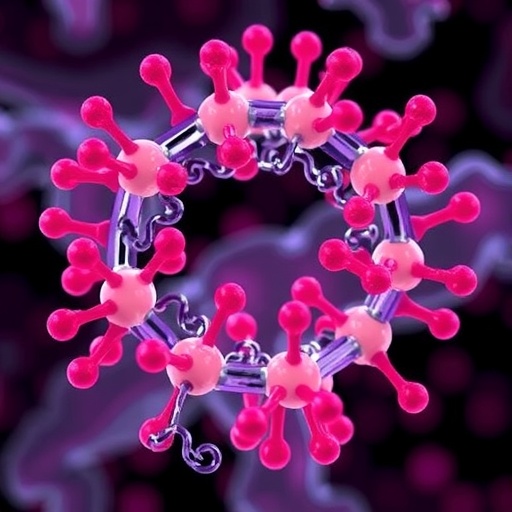
Hydrogen peroxide has long occupied a paradoxical position in biology. On one hand, it is a reactive oxygen species capable of damaging DNA, proteins, and membranes when it accumulates unchecked; on the other, it serves as a precise and versatile signaling molecule that cells use to communicate stress conditions and coordinate adaptive responses. At the heart of this duality sits a family of enzymes called peroxiredoxins, or Prxs, which have been studied since their discovery in the late 1980s as the cellular workhorses responsible for eliminating hydrogen peroxide. A new study from the Oxidative Stress and Cell Cycle Group at Universitat Pompeu Fabra in Barcelona, published in the journal Cellular and Molecular Life Sciences, has now teased apart the two faces of these remarkable enzymes, showing that their ability to detoxify hydrogen peroxide and their ability to transmit redox signals are separable functions whose effectiveness depends critically on where in the cell the enzyme resides.
The research, led by Laura de Cubas, Adrian Konopko, Susanna Boronat, José Ayté, and Elena Hidalgo, focused on the fission yeast Schizosaccharomyces pombe, a single-celled organism that has long served as an elegant model for understanding oxidative stress biology. In these cells, the dominant peroxiredoxin is an enzyme called Tpx1, which performs a remarkable dual duty. Under normal conditions, Tpx1 acts as a scavenger, keeping steady-state hydrogen peroxide concentrations below toxic thresholds through its peroxidase activity. But when peroxide levels rise beyond what the enzyme can neutralize, Tpx1 undergoes a functional transformation of sorts: it switches into a signaling mode, relaying the oxidative signal to Pap1, a transcription factor that orchestrates the activation of stress-defense genes. This relay mechanism, in which the peroxiredoxin effectively hands off oxidative information to its downstream partner, is conceptually similar to pathways found in mammalian cells, making the yeast findings broadly relevant to human biology.
The central difficulty in studying peroxiredoxins has always been their multitasking nature. Because Tpx1 simultaneously detoxifies hydrogen peroxide and activates Pap1, any experiment that removes or disables the enzyme eliminates both functions at once, making it impossible to determine which of its two roles produces which cellular outcome. Is the enzyme’s protective effect due purely to its scavenging, or does signaling through Pap1 contribute independently? Does activation of the transcription factor require direct physical contact between Tpx1 and Pap1 in the same cellular compartment, or is it the global lowering of peroxide levels that matters? To answer these questions, the Barcelona team turned to synthetic biology, designing a system in which the two functions could be experimentally disentangled and assigned to different molecules in different places.
The strategy was elegantly straightforward in concept. The researchers engineered yeast cells to express hydrogen peroxide-scavenging enzymes in specific subcellular compartments, comparing the native peroxiredoxin Tpx1 with catalase, encoded by the gene Ctt1, a mechanistically different peroxidase that breaks down hydrogen peroxide but cannot participate in the Tpx1–Pap1 signaling relay. By targeting these two scavengers to the cytosol, the mitochondria, and the nucleus, and then measuring both hydrogen peroxide concentrations and Pap1 activation with genetically encoded fluorescent biosensors, the team could assign cellular phenotypes to specific functions in specific locations. HyPer7, a highly sensitive fluorescent reporter of hydrogen peroxide, allowed the researchers to visualize peroxide dynamics in living cells with compartment-specific resolution, transforming a question that was previously intractable into one that could be answered quantitatively.
The first major finding concerned the protective role of peroxide scavenging. Cells lacking Tpx1 cannot survive in high-oxygen environments, a growth defect that has been a hallmark phenotype of peroxiredoxin studies. The researchers found that this defect could be rescued by catalase as well as by Tpx1, and that either enzyme could provide this protection from any of the subcellular compartments tested. In other words, the simple act of removing hydrogen peroxide, wherever it is performed, suffices to keep cells alive under aerobic stress. This result decisively established that detoxification is a spatially flexible function: the cell does not care which enzyme does the scavenging or where it does it, as long as the peroxide load is reduced.
The second major finding, however, revealed a striking contrast. While detoxification proved spatially promiscuous, redox signaling did not. Cells engineered to express Tpx1 exclusively in the mitochondria or exclusively in the nucleus were able to control hydrogen peroxide levels effectively, confirming that the peroxiredoxin is a highly efficient peroxidase regardless of its address within the cell. Yet these same cells displayed reduced tolerance to oxidative stress, and the reason was clear: activation of the transcription factor Pap1 required Tpx1 to be present in the cytosol. When cytosolic Tpx1 was absent, the signaling relay broke down, the stress-response program failed to engage properly, and cells became vulnerable even though their peroxide-scavenging capacity remained intact. The signaling function, unlike the scavenging function, is anchored to a specific cellular geography.
This asymmetry between the two functions carries significant conceptual weight for the field of redox biology. It demonstrates that peroxiredoxins are not merely peroxide drains but genuine transducers whose informational role depends on physical proximity to their signaling partners. The Tpx1–Pap1 system is a canonical example of a redox relay, in which oxidative modification of the peroxiredoxin is chemically transferred to the transcription factor, enabling Pap1 to accumulate in the nucleus and induce antioxidant genes. The new data indicate that this handoff is a local event that cannot be satisfied by equivalent peroxide removal elsewhere in the cell. A nuclear or mitochondrial peroxiredoxin may perfectly well keep hydrogen peroxide in check, but it cannot substitute for the cytosolic conversation between Tpx1 and Pap1.
The use of genetically encoded fluorescent H2O2 reporters deserves particular emphasis, because it represents a methodological advance that has reshaped how redox signaling is studied. Earlier generations of experiments relied on indirect measurements or dye-based probes that lacked compartmental specificity and suffered from artifacts. HyPer7 and related biosensors, by contrast, report peroxide concentrations in real time within defined organelles, permitting researchers to correlate local peroxide dynamics with functional outcomes such as transcription factor activation and cell survival. In the present study, the combination of compartment-targeted scavengers and compartment-targeted sensors allowed the authors to construct something like a spatial map of peroxide metabolism, revealing where in the cell the molecule is sensed, where it is destroyed, and where those two processes do and do not communicate with each other.
The implications extend well beyond yeast. Peroxiredoxins are among the most abundant proteins in many organisms, and the human genome encodes six Prx isoforms distributed among the cytosol, mitochondria, and other compartments. Human peroxiredoxins have been implicated in tumor progression, inflammatory signaling, neurodegeneration, and metabolic disease, and a longstanding question in the field is whether their pathological or protective roles stem from their peroxidase activity, their signaling function, or an interplay of both. The work by de Cubas and colleagues provides a conceptual framework for addressing this question: by manipulating the subcellular localization of individual Prx family members, researchers can in principle separate the detoxification and signaling contributions of each isoform in disease-relevant contexts. A mitochondrial peroxiredoxin that supports tumor cell survival, for instance, might be doing so primarily through scavenging, while a cytosolic isoform driving inflammatory gene expression might be acting chiefly as a redox transducer.
The study also speaks to an evolving appreciation of hydrogen peroxide itself as a spatially structured molecule rather than a homogeneous cellular entity. Because peroxide is membrane-permeable yet rapidly consumed by local enzymes, its concentration can differ substantially between the cytosol, nucleus, and mitochondria, and these gradients can themselves carry information. The Barcelona team’s finding that Tpx1 controls peroxide levels efficiently from any compartment, while catalase cannot, points to kinetic and functional differences between peroxidase classes that shape these gradients. Peroxiredoxins, with their high catalytic rates and sensitivity to peroxide-mediated inactivation, appear uniquely suited to act as both buffers and sensors at the subcellular scale, whereas catalases, though robust detoxifiers, lack the reactivity profile needed for signaling relays.
Funded by the Spanish Ministry of Science and Innovation, the Generalitat de Catalunya, and the European Regional Development Fund, and published open access under a Creative Commons license, the study reflects a maturing phase in redox biology, one in which the tools now exist to ask where, when, and how reactive oxygen species function as signals rather than simply whether they are harmful. The broader message is one of biological economy and precision: a single enzyme family has been repurposed by evolution to serve two masters, detoxification and information transfer, and the cell keeps these duties separate not through different chemistries but through the simple, elegant device of subcellular address. For a molecule as reactive and ephemeral as hydrogen peroxide, geography turns out to be destiny, and the peroxiredoxins, stationed at their specific posts throughout the cell, are the gatekeepers that decide whether peroxide becomes waste to be disposed of or a message to be delivered.
Cite Scienmag News
Drew Townsend. (September 6, 2026). How peroxiredoxins double as hydrogen peroxide scavengers and redox transducers. Scienmag. https://scienmag.com/how-peroxiredoxins-double-as-hydrogen-peroxide-scavengers-and-redox-transducers/
Drew Townsend. "How peroxiredoxins double as hydrogen peroxide scavengers and redox transducers." Scienmag, 6 September 2026, https://scienmag.com/how-peroxiredoxins-double-as-hydrogen-peroxide-scavengers-and-redox-transducers/. Accessed 6 September 2026.
Drew Townsend. "How peroxiredoxins double as hydrogen peroxide scavengers and redox transducers." Scienmag. September 6, 2026. https://scienmag.com/how-peroxiredoxins-double-as-hydrogen-peroxide-scavengers-and-redox-transducers/


