


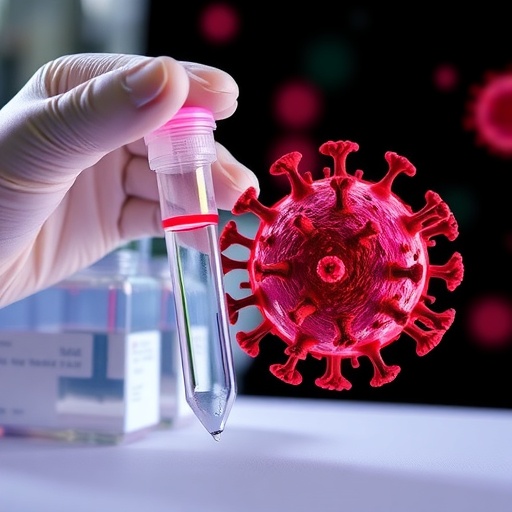
Nipah virus, one of the deadliest pathogens known to infect humans, may soon be detectable outside high-containment laboratories thanks to a new molecular diagnostic developed by scientists in India. In a study published in Applied Microbiology and Biotechnology, researchers from the ICMR–National Institute of Virology present a rapid, colorimetric dual-target reverse transcription loop-mediated isothermal amplification (RT-LAMP) assay that matches the performance of the gold-standard quantitative real-time reverse transcription polymerase chain reaction (qRT-PCR) while eliminating the need for expensive thermocycling equipment. The work, led by Shyam Sundar Nandi and Sonali A. Sawant of the ICMR-NIV Mumbai Unit, arrives at a moment when the global health community is watching Nipah outbreaks across South and Southeast Asia with growing concern.
Nipah virus is a zoonotic henipavirus carried by fruit bats of the genus Pteropus, capable of spilling over into humans directly or through intermediate hosts such as pigs. Infection can trigger severe respiratory illness and fatal encephalitis, and according to the World Health Organization, case-fatality rates can reach as high as 75 percent. There is currently no licensed vaccine and no approved therapeutic. That grim arithmetic makes early detection arguably the single most effective intervention available: if cases can be identified quickly, isolation, contact tracing and supportive care can be deployed before an outbreak spirals. Yet the diagnostic tools that work best in modern reference laboratories are precisely the tools least available where Nipah is most likely to emerge—rural, resource-limited regions of Bangladesh, India and Malaysia.
qRT-PCR, the current gold standard, relies on cycles of precise thermal denaturation and annealing, requiring a real-time thermocycler, trained technicians, reliable electricity and a supply chain for reagents. In a district hospital near a spillover zone, those requirements can translate into days of delay as samples are transported to distant central laboratories. The new assay was designed from the ground up to close that gap. RT-LAMP amplifies nucleic acid at a single constant temperature—here optimized at 62 degrees Celsius for just 40 minutes—using a set of four to six primers that recognize six to eight distinct regions of the target genome. The result is an exponential amplification reaction whose success can be read with the naked eye: a colorimetric indicator shifts hue when amplification occurs, so a positive sample announces itself visually, without instrumentation.
What sets the new assay apart from previously reported LAMP tests for Nipah is its dual-target architecture. Rather than depending on a single genomic region, the team designed primer sets against two conserved genes: the matrix (M) gene and the nucleocapsid (N) gene. This redundancy serves two purposes. First, it guards against false negatives that could arise if mutations accumulate in one target region, a real concern for an RNA virus with documented genetic diversity across circulating strains. Second, it improves analytical reliability when viral loads are low, as is often the case early in infection when transmission risk is highest. The researchers applied a composite interpretation rule—treating the sample as positive if either the matrix or nucleocapsid target amplified—which supported complete detection in all tested proxy positive clinical-matrix specimens in the study.
The validation was unusually rigorous for a field-oriented assay. The team evaluated a total of 137 samples spanning several categories. In vitro-transcribed RNA and serial dilutions of tissue culture fluid from virus isolates were used to establish the limit of detection, defining how little genetic material the assay can reliably detect. Fifty-seven samples containing non-Nipah viruses were screened for cross-reactivity, testing whether the assay might be fooled by related paramyxoviruses or other common respiratory and encephalitic pathogens—a critical concern in regions where dengue, Japanese encephalitis and other mimics circulate. Ten experimentally spiked positive clinical matrices served as proxy clinical specimens, and 50 confirmed Nipah-negative clinical swabs rounded out a preliminary proxy evaluation of diagnostic performance.
The results were striking. The dual-target assay demonstrated 100 percent analytical sensitivity, with a 95 percent confidence interval of 72.2 to 100.0, and 100 percent specificity, with a 95 percent confidence interval of 92.9 to 100.0. When compared head-to-head with qRT-PCR, the agreement was perfect, yielding a Cohen’s kappa statistic of 1.00—a value indicating complete concordance between the two methods across the tested panel. While the confidence intervals reflect the modest sample size, as is inevitable with a virus that produces relatively few laboratory-confirmed cases, the perfect kappa is a powerful signal that the assay’s chemistry can perform on par with laboratory-grade molecular testing under the conditions evaluated.
The analytical logic of the assay is worth understanding. LAMP relies on a strand-displacing DNA polymerase, typically Bst polymerase, working in concert with inner and outer primers and loop primers that generate stem-loop structures during amplification. Because the reaction never leaves its single incubation temperature, there is no need for the rapid heating and cooling that defines PCR. Reverse transcription is carried out in the same tube, streamlining the workflow from RNA extraction to result. The colorimetric readout—commonly based on a pH-sensitive dye that changes as amplification acidifies the reaction, or on calcein-based fluorescence quenched by manganese—turns the detection step into a simple visual judgment. In practice, a technician with a simple heat block and a good eye can produce a result within an hour.
The authors are candid that the work represents an analytical validation and a proxy diagnostic evaluation rather than a full clinical trial. The positive clinical matrices were experimentally spiked rather than derived from naturally infected patients, a practical necessity given the rarity and danger of Nipah infection and the biosafety constraints governing work with the virus. Nonetheless, the study adhered to strict ethical oversight, with approval from the Institutional Ethics Committee of ICMR-NIV, and all sample processing was performed under appropriate biosafety containment in line with the Institutional Biosafety Committee guidelines. The preliminary performance data establish a strong foundation for prospective clinical evaluation on genuine patient samples during future outbreaks or surveillance campaigns.
The public health implications are considerable. Decentralized molecular diagnostics change the tempo of outbreak response. A health worker at a peripheral facility who can confirm a Nipah case on-site can trigger isolation and tracing immediately rather than after a multi-day diagnostic round trip. Surveillance teams monitoring bat populations, livestock and high-risk occupational groups could screen samples in the field. Hospitals in endemic regions could triage suspected encephalitis and respiratory cases without waiting for central laboratory confirmation. And because the assay is inexpensive and portable, it is well suited to the very regions where the ecological conditions for Nipah spillover—date palm sap harvesting, bat-roosting proximity, pig farming—converge with the weakest laboratory infrastructure.
The work also carries a commercial dimension. The diagnostic method is protected by an Indian patent application, number 202211066352, filed on 18 November 2022 and published on 24 May 2024 under the title “Development of a colorimetric isothermal (RT-LAMP) assay for rapid detection of Nipah virus,” with corresponding author Shyam Sundar Nandi listed as primary inventor. Intellectual property protection of this kind often serves as a prerequisite for industry partnerships that can translate a laboratory-validated assay into manufactured kits, quality-controlled reagent panels and regulatory approvals. The study itself received no formal external funding, relying instead on infrastructural support from the ICMR Intramural grant, with the ICMR–National Institute of Virology in Pune and its Mumbai Unit providing the institutional backbone for the research.
Nipah virus remains on the World Health Organization’s list of priority pathogens, a designation reserved for agents judged to pose the greatest public health risk due to their epidemic potential and the absence of countermeasures. Outbreaks in recent years, particularly in Bangladesh where annual spillovers occur during the date palm sap harvesting season, have underscored how quickly a single index case can multiply into a deadly cluster.每一次延误都转化为生命的损失。 diagnostics like this dual-target RT-LAMP assay cannot prevent spillover, but they can shrink the window between infection and detection—the window in which outbreaks are either contained or lost. As the authors note, this simple, cost-effective and portable molecular tool is well suited for decentralized diagnostics, supporting early detection and surveillance in Nipah-endemic regions.
The study is published as an open-access article, meaning laboratories and public health programs anywhere can consult the full methods. The research team, which also included Pragya D. Yadav, Anita Shete-Aich, Triparna D. Majumdar, Kalpesh C. Bavkar, Anupam Mukherjee and Jagadish M. Deshpande, spanning ICMR institutions in Mumbai, Nagpur and Pune, suggests that the next chapter will involve moving from analytical validation to real-world deployment. If prospective studies confirm what this validation indicates, frontline workers in Nipah-endemic regions may soon have a $-scale, hour-long test that once required a thermocycler, a clean room and days of waiting. For a disease with no vaccine, no cure and up to a 75 percent fatality rate, faster answers are not a convenience—they are the difference between an isolated case and an epidemic.
Nandi, S.S., Sawant, S.A., Yadav, P.D., Shete-Aich, A., Majumdar, T.D., Bavkar, K.C., Mukherjee, A., & Deshpande, J.M. (2026). Development and analytical validation of a dual-gene isothermal assay for Nipah virus detection. Applied Microbiology and Biotechnology. https://doi.org/10.1007/s00253-026-13932-9
Journal Reference:
Nandi, S.S., Sawant, S.A., Yadav, P.D., Shete-Aich, A., Majumdar, T.D., Bavkar, K.C., Mukherjee, A., & Deshpande, J.M. (2026). Development and analytical validation of a dual-gene isothermal assay for Nipah virus detection. Applied Microbiology and Biotechnology. https://doi.org/10.1007/s00253-026-13932-9
Cite Scienmag News
Kristina Jarvis. (September 5, 2026). Dual-gene isothermal assay validated for rapid Nipah virus detection. Scienmag. https://scienmag.com/dual-gene-isothermal-assay-validated-for-rapid-nipah-virus-detection/
Kristina Jarvis. "Dual-gene isothermal assay validated for rapid Nipah virus detection." Scienmag, 5 September 2026, https://scienmag.com/dual-gene-isothermal-assay-validated-for-rapid-nipah-virus-detection/. Accessed 5 September 2026.
Kristina Jarvis. "Dual-gene isothermal assay validated for rapid Nipah virus detection." Scienmag. September 5, 2026. https://scienmag.com/dual-gene-isothermal-assay-validated-for-rapid-nipah-virus-detection/


