


None
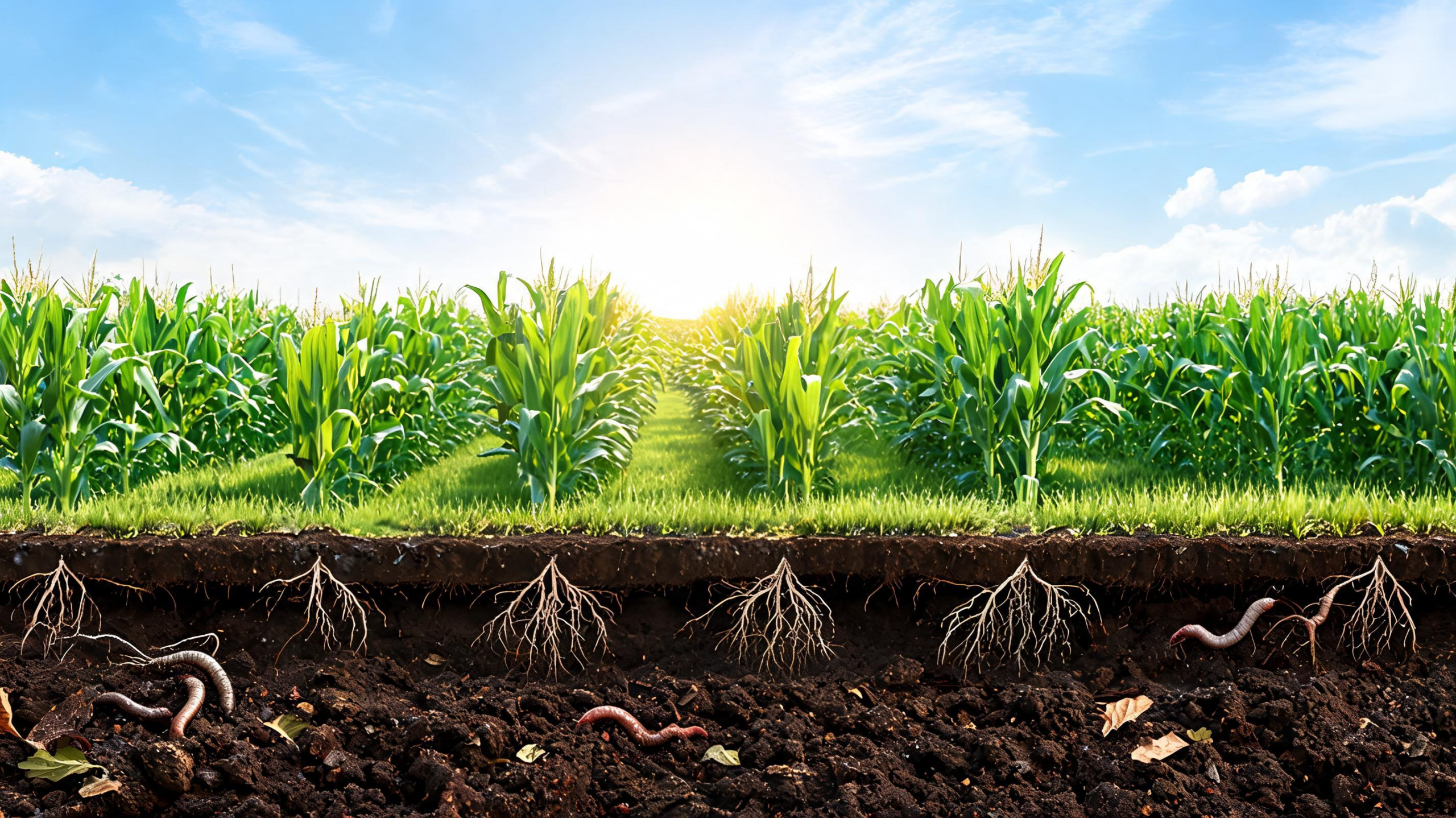
The relationship between soil organic matter and crop performance deserves closer examination, because it sits at the heart of the argument that managing crop health begins below ground. Soil organic matter functions as a reservoir of plant-available nutrients, a binding agent for soil aggregates, and a substrate for the microbial communities that mediate nutrient transformations. When organic matter declines through continuous cultivation, erosion, or inadequate return of crop residues, the soil loses its capacity to buffer water and nutrient supply. Crops growing in such depleted soils become more vulnerable to drought spells and nutrient stress, which in turn reduces both the quantity of harvestable yield and its nutritional density. This cascade illustrates why the condition of the soil cannot be treated as a background variable in agricultural planning; it is an active determinant of what ends up on the plate.
The distinction between macronutrients and micronutrients is central to understanding how soil condition translates into human nutrition. Macronutrients such as nitrogen, phosphorus, potassium, calcium, and magnesium are required in relatively large amounts and are the traditional focus of fertilizer programs. Micronutrients, by contrast, are needed in trace quantities but perform indispensable roles in human physiology. The source evidence identifies seventeen micronutrients relevant to human health, including iron, zinc, iodine, selenium, copper, molybdenum, manganese, and fluoride. Deficiencies of iron and iodine alone can produce anemia, impaired cognitive development, and thyroid disorders, conditions that remain widespread in regions where soils are degraded and diets lack diversity. Because plants acquire these elements from the soil solution, the nutritional quality of food is ultimately a reflection of what the soil can supply.
This pathway helps explain why malnutrition, understood as a deficiency of essential nutrients even when calories are sufficient, may be a larger global problem than undernutrition in terms of the vulnerable population affected. A field can produce abundant cereal grain on a degraded soil, yet that grain may carry lower concentrations of zinc or iron than grain grown on a healthier counterpart. The result is a paradox in which food availability improves while nutritional adequacy stagnates or declines. Addressing this paradox requires attention to the soil processes that govern micronutrient availability, including pH regulation, organic matter dynamics, and the activity of mycorrhizal fungi and other soil organisms that mobilize otherwise inaccessible elements.
The soil microbiome adds another dimension to this nexus. Healthy soils with robust organic matter content host diverse microbial communities that suppress soil-borne pathogens and can reduce the incidence of mycotoxins produced by fungal contaminants. Reduced disease pressure means fewer fungicide and insecticide applications, which in turn lowers pesticide residues in harvested food. There is also emerging interest in the possibility that the soil microbiome influences the human gut microbiome through the food chain, since the microbial and biochemical profile of produce reflects the environment in which it was grown. While this area of research is still developing, it reinforces the One Health premise that the health of soil, plants, and people is indivisible rather than merely analogous.
Clay mineralogy offers a concrete example of how inherent soil properties shape management options. Soils dominated by 1:1 clays, such as kaolinite, have low cation exchange capacity and limited capacity to hold nutrients, whereas 2:1 clays such as smectites have high charge density and large surface areas. Swelling and shrinking behavior in 2:1 clays affects aggregation, aeration, and root penetrability, while low-activity clays in many tropical soils leave smallholder farmers with little inherent nutrient reserve. The evidence notes that low nutrient reserves resulting from low charge density and low external inputs are a primary cause of low yields among resource-poor farmers in the global south. Any strategy for improving crop health in these regions must therefore combine organic and mineral inputs in ways that compensate for inherent mineralogical constraints.
Water dynamics are inseparable from these considerations. The capacity of a soil to hold plant-available water, sometimes described as green water stored in the root zone, determines how crops weather dry periods between rainfall events. Organic matter improves this capacity, as does good aggregation and minimal compaction. Conversely, degraded soils shed water rapidly as runoff, exposing crops to both drought stress during dry spells and inundation during intense storms. The coupled cycling of carbon, nitrogen, water, phosphorus, and sulfur must remain in balance; perturbing one cycle through land misuse inevitably disturbs the others, with consequences for nutrient leaching, greenhouse gas emissions, and water quality downstream.
The four components of soil health identified in the evidence, namely physical, chemical, biological, and ecological, provide a useful framework for diagnosis. Physical health encompasses structure, aggregation, porosity, and resistance to erosion by water and wind. Chemical health covers nutrient reserves, exchange capacity, and the absence of toxicities. Biological health reflects the abundance and diversity of organisms ranging from bacteria and fungi to earthworms. Ecological health describes how these elements function together to deliver ecosystem services. Because most of these components respond to soil organic matter, management practices that build organic matter tend to improve all four dimensions simultaneously, which is why organic matter is often treated as a master indicator of soil condition.
Regenerative agriculture and agroecological principles offer practical routes to this goal. Practices such as cover cropping, diversified rotations, reduced or no tillage, integration of livestock, mulching with crop residues, and agroforestry all contribute biomass carbon to the soil while protecting it from erosion. Leguminous cover crops add biologically fixed nitrogen, reducing dependence on synthetic fertilizers whose production and overuse carry environmental costs. Diverse rotations break pest and disease cycles, lowering pesticide requirements. These practices align with the four components of crop health proposed by Vega and colleagues, namely usefulness, adversities, safety, and autonomy, since they enhance productive usefulness while reducing adversities, improving safety, and increasing farmer autonomy from costly external inputs.
The salutogenic orientation embedded in this framework is worth emphasizing. Rather than defining crop health merely as the absence of pests or deficiencies, a salutogenic perspective asks what factors actively generate and sustain health. Meaningfulness, comprehensiveness, and manageability, borrowed from models of human wellbeing, translate into farming systems that farmers understand, can manage with available resources, and find worthwhile. This has implications for extension and policy: recommendations that ignore farmers’ economic realities and knowledge systems are unlikely to improve crop health at scale, no matter how sound the underlying agronomy.
Policy instruments also have a role. The evidence argues that soil health legislation at state, national, continental, and international levels should explicitly address crop health management and the research and outreach needed to advance it. Such policies should be pro-nature, pro-agriculture, and pro-farmer simultaneously, recognizing that these objectives are complementary rather than competing. Where farmers are compensated for building soil carbon, restoring biodiversity, or improving water quality, the private incentives of individual land managers align with the public benefits of ecosystem services. Conversely, policies that reward yield alone can encourage practices that mine soil fertility and externalize environmental costs.
The regional dimensions of the challenge deserve attention. Sub-Saharan Africa, South Asia, and Latin America carry a disproportionate burden of undernutrition, malnutrition, and soil degradation, and they are also regions where smallholder farming dominates. In these settings, even modest improvements in soil organic matter and nutrient supply can produce meaningful gains in yield stability and nutritional quality. Because smallholders often lack access to irrigation and purchased inputs, practices that rely on locally generated biomass and biological nitrogen fixation are particularly appropriate. At the same time, these regions face intensifying pressure from climate change, which raises the value of soil-based water buffering and carbon sequestration as adaptation and mitigation strategies.
Food safety completes the picture. Crops grown in clean environments with minimal agrochemical residues protect consumers from chronic exposure to harmful compounds, while suppression of pathogens and mycotoxins in healthy soils reduces acute risks. Safe, nutritious food supports not only physical health but also mental health and overall wellbeing, according to the evidence reviewed. The quality of the surrounding environment, including water, air, microclimate, and above- and below-ground biodiversity, is improved in parallel, so the benefits of crop health management extend well beyond the field boundary.
Taken together, these threads support a coherent conclusion: crop health is not a narrow agronomic metric but a nexus concept linking soil processes, food composition, environmental quality, and human wellbeing. Managing it well requires treating the soil as a living system whose physical, chemical, biological, and ecological functions can be built up or squandered through everyday decisions. It requires policies that recognize farmers as stewards of ecosystem services, research programs that integrate soil science with human nutrition, and farming systems grounded in ecological principles. The slogan that healthy soils produce healthy crops and healthy people is more than rhetoric; it summarizes a causal chain that science is increasingly able to trace, and that agricultural policy would do well to follow.
Subject of Research: Crop health management for food and nutritional security and soil health
Article Title: Crop health management for food and nutritional security and soil health
Article References: Lal, R. (2026). Crop health management for food and nutritional security and soil health. Crop Health, 4(1), Article 22. https://doi.org/10.1007/s44297-026-00083-6
Image Credits: AI Generated
DOI: 10.1007/s44297-026-00083-6
Keywords: Crop, health, management, food, nutritional, security, soil, scientific research
Cite Scienmag News
Alan Morgan. (September 3, 2026). Crop health management for food and nutritional security and soil health. Scienmag. https://scienmag.com/crop-health-management-for-food-and-nutritional-security-and-soil-health/
Alan Morgan. "Crop health management for food and nutritional security and soil health." Scienmag, 3 September 2026, https://scienmag.com/crop-health-management-for-food-and-nutritional-security-and-soil-health/. Accessed 3 September 2026.
Alan Morgan. "Crop health management for food and nutritional security and soil health." Scienmag. September 3, 2026. https://scienmag.com/crop-health-management-for-food-and-nutritional-security-and-soil-health/


