


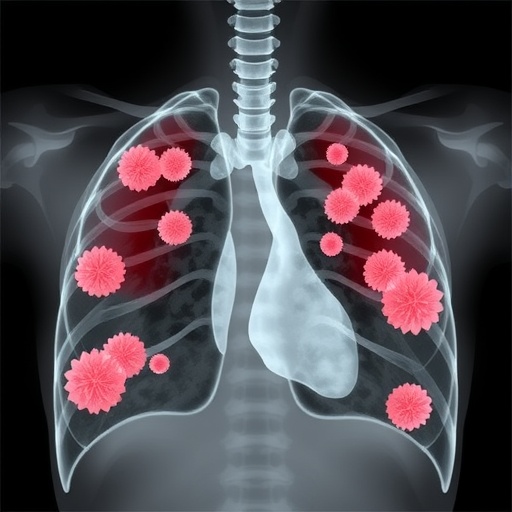
In a rare case that is drawing attention across the respiratory medicine community, clinicians have documented the recurrence of pulmonary alveolar proteinosis more than three years after a patient received a bilateral lung transplant—a finding that challenges assumptions about what transplantation can and cannot fix, and that offers a roadmap for diagnosing a disease that can hide in plain sight even inside a replaced lung.
Pulmonary alveolar proteinosis, or PAP, is an exceptionally rare condition in which a soap-like substance called surfactant accumulates in the lung’s air sacs. Normally, immune cells known as alveolar macrophages clear away used surfactant with the help of a signalling protein called granulocyte-macrophage colony-stimulating factor, or GM-CSF. In the autoimmune form of the disease, the body produces antibodies that block GM-CSF, leaving macrophages unable to do their cleanup work. The result is a slow suffocation of the alveoli by lipoproteinaceous debris, producing progressive breathlessness and a dry cough.
The newly reported case, published in Respirology Case Reports, follows a 73-year-old Hispanic man whose PAP was first diagnosed in 2001 through a surgical lung biopsy after an abnormal chest x-ray. His anti-GM-CSF antibodies were documented in 2002. Over nearly two decades, he cycled through the disease’s limited therapeutic arsenal: inhaled bronchodilators, two whole-lung lavage procedures—in which clinicians physically flush miles of surfactant-laden fluid out of the lungs in a single sitting—courses of pulmonary rehabilitation, and six months of inhaled sargramostim, a synthetic GM-CSF designed to kick-start macrophage function. Nothing held the disease at bay for long. After a bout of pneumonia followed by a Mycobacterium avium-intracellulare infection triggered a steep decline in 2020, he was listed for transplantation and received two new lungs in November 2021.
What happened next is the heart of the report. Transplantation, in theory, replaces the diseased lungs with healthy ones and, with them, a fresh population of donor-derived macrophages capable of clearing surfactant. Recurrence of PAP in a transplanted lung is considered vanishingly rare, and this case is unusual both for how long it took to appear and for how stubbornly it resisted detection. Initially, the transplant was a triumph. Surveillance bronchoscopies showed no rejection, and spirometry was remarkable—the patient’s forced expiratory volume in one second, a standard measure of airflow, reached 110% of predicted values, with an FEV1-to-FVC ratio of 91%, comfortably in supranormal territory.
The trouble began subtly. Mild dyspnea in 2022 prompted imaging that revealed new opacities, and anti-GM-CSF antibodies—negative just before transplant—reappeared in his blood. But because he remained clinically stable, his team chose careful observation. Then, in October 2023, a CT scan disclosed a cavitary nodule in the right upper lobe, and bronchoscopy confirmed an infection with Nocardia abscessus, an opportunistic bacterium that thrives in immunosuppressed patients. He was treated with prolonged multidrug therapy and placed on lifelong doxycycline prophylaxis. Over the following months, additional opportunistic pathogens emerged: Mycobacterium avium complex and Aspergillus sydowii, a mold, were both eventually recovered from lavage fluid.
Herein lies the diagnostic dilemma the case illustrates so vividly. Each of these infections can produce diffuse opacities and cavitary lesions on chest imaging that look strikingly similar to recurrent PAP. Meanwhile, the diagnostic gold standard for PAP—periodic acid–Schiff, or PAS, staining of bronchoalveolar lavage fluid to reveal the characteristic lipoproteinaceous material—came back negative, not once but repeatedly, in both lavage samples and transbronchial biopsies performed in August 2024. High-resolution CT, however, kept telling a different story: evolving ground-glass opacities and a “crazy-paving” pattern, a distinctive lattice of thickened interlobular septa overlying hazy ground glass that is classic for PAP but not exclusive to it. Anti-GM-CSF antibodies were positive, yet titers had never been quantified, making it impossible to track whether the autoimmune process was waxing or waning. And the patient’s lung function added another layer of confusion: his spirometry shifted from supranormal airflow to a mildly obstructive pattern—an atypical evolution for PAP alone and one that could just as easily be blamed on infection or chronic lung allograft dysfunction.
Rather than abandon the PAP hypothesis, the clinical team pursued a strategy of longitudinal, multimodal surveillance—repeating imaging, serology, bronchoscopy, and pulmonary function testing over months. That persistence paid off. In February 2025, given persistent symptoms, progressive imaging abnormalities, and consistently positive anti-GM-CSF antibodies, clinicians initiated inhaled sargramostim and performed a whole-lung lavage. This time, the lavage fluid was unmistakable: abundant PAS-positive lipoproteinaceous material, confirming that PAP had indeed returned in the transplanted lungs. A second lavage followed in April 2025, and the response was dramatic. Ground-glass and crazy-paving changes cleared radiographically, symptoms improved markedly, and spirometry partially recovered.
Why would PAP recur in a transplanted lung? The report’s authors propose a compelling mechanism: over time, the allograft is progressively repopulated by recipient-derived alveolar macrophages, which carry the same underlying GM-CSF signalling defect that caused the original disease. In other words, transplantation replaces the soil but not the seed—the systemic autoimmune process that disables macrophage surfactant clearance remains in place, and as the donor macrophage population is gradually supplanted, the stage is reset for disease recurrence. The authors caution that neither macrophage chimerism nor donor GM-CSF signalling status was directly assessed in this patient, so the mechanism remains a hypothesis, but it fits the delayed timeline of more than three years.
Just as important is the therapeutic lesson. Despite the diagnostic detours, once recurrent PAP was confirmed, it responded robustly to conventional PAP-directed treatment—inhaled sargramostim combined with sequential whole-lung lavages. The authors note that the patient’s apparent improvement with these therapies after transplantation, when the same measures had offered only transient benefit before, should be interpreted cautiously; differences in disease burden, remaining lung reserve, timing, and the burden of concurrent infection could all have contributed. But the core message stands: the transplanted lung is not immune to PAP, yet it remains fully amenable to PAP therapy when the disease returns.
For clinicians, the case carries a clear set of implications. A single negative PAS stain does not rule out recurrent PAP, particularly when high-resolution CT shows progressive ground-glass and crazy-paving changes and anti-GM-CSF antibodies are positive. Concomitant opportunistic infections—Nocardia, mycobacteria, Aspergillus—can mask the underlying process and must be treated in parallel rather than accepted as the sole explanation for a patient’s decline. And for lung transplant recipients with a history of PAP, the authors argue, structured long-term surveillance—periodic HRCT, serial pulmonary function testing, and repeat bronchoscopy with lavage for at least the first three years—may be warranted to catch recurrence before it becomes incapacitating.
In an era when lung transplantation is increasingly offered for rare diffuse lung diseases, this single patient’s journey—two decades of PAP, a transformative transplant, a maze of opportunistic infections, and ultimately the return of the very disease the new lungs were meant to escape—serves as a reminder that some immunological problems travel with us, no matter what organs we carry them in. It is also a testament to diagnostic persistence: the answer was there all along, waiting in a wash of PAS-positive fluid.
Cite Scienmag News
Ophelia Keating. (September 3, 2026). Recurrent Pulmonary Alveolar Proteinosis Challenges Care After Double Lung Transplant. Scienmag. https://scienmag.com/recurrent-pulmonary-alveolar-proteinosis-challenges-care-after-double-lung-transplant/
Ophelia Keating. "Recurrent Pulmonary Alveolar Proteinosis Challenges Care After Double Lung Transplant." Scienmag, 3 September 2026, https://scienmag.com/recurrent-pulmonary-alveolar-proteinosis-challenges-care-after-double-lung-transplant/. Accessed 3 September 2026.
Ophelia Keating. "Recurrent Pulmonary Alveolar Proteinosis Challenges Care After Double Lung Transplant." Scienmag. September 3, 2026. https://scienmag.com/recurrent-pulmonary-alveolar-proteinosis-challenges-care-after-double-lung-transplant/


