


For decades, the prevailing narrative about the world’s shared rivers has been one of looming conflict: as populations grow and climates shift, nations that drink from the same waterways will inevitably come to blows over every cubic meter. A new study from the University of Tehran adds a strikingly different layer to that story, one told not in rhetoric but in the mathematics of networks. By applying social network analysis to the governance of Iran’s transboundary river basins, the researchers traced how the webs of institutions that cooperate over, and fight over, the country’s shared waters were rewired across one of the most consequential political ruptures of the twentieth century, the 1979 Iranian Revolution. Their findings, published in the journal Environmental Management, show that a governance system once fragmented and centrally controlled has evolved toward a denser, more polycentric arrangement, in which multiple centers of decision-making now interact across scales. The shift, the authors argue, carries direct implications for how disputes over water are managed far beyond Iran’s borders.
The study, led by Majid Rahimi of the University of Tehran’s Social Business Institute, with colleagues Mehdi Ghorbani, Leila Avazpour and Ahmad Naderi, tackles a question that has long frustrated water scholars: how do you detect, systematically, that a governance regime has actually changed? Regime shifts in water management are rarely announced; they emerge gradually as new organizations appear, old relationships dissolve, and the balance between cooperation and conflict tilts. To capture this, the team combined social network analysis with Claudia Pahl-Wostl’s widely used typology of water governance regimes, a framework that classifies governance arrangements along a spectrum from centralized, state-dominated systems to polycentric ones in which state and non-state actors share authority. Iran offered a natural laboratory for the question. The researchers compared the centralized governance that prevailed before 1979 with the institutional arrangements that took shape afterward, treating the two eras as distinct snapshots of the same hydrological system and asking whether the structural fingerprints of the underlying networks had changed.
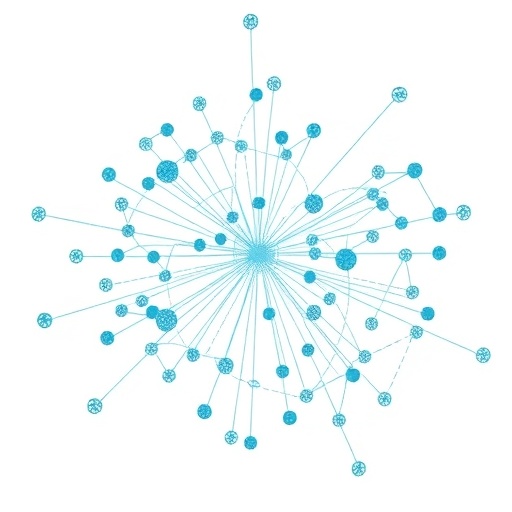
Social network analysis, or SNA, represents the actors in a system — government agencies, basin authorities, local user groups, international counterparts — as points, or nodes, and their working relationships as links, or edges. Once a governance system is drawn this way, its character can be compressed into a handful of revealing metrics. Network density measures the proportion of all possible ties that actually exist; a score of 100 percent would mean every actor works with every other, while low scores signal fragmentation. Centralization captures how unevenly those ties are distributed — a star-shaped network in which nearly everything routes through a single dominant hub scores high, while a flat, distributed web scores low. Transitivity, the third key indicator, measures the tendency of an actor’s partners to also be connected to one another, closing triangles across the network. Because closed triangles create redundant pathways and mutual reinforcement, researchers often read high transitivity as a structural signature of trust. Together, these metrics allowed the team to quantify what is usually left to qualitative judgment: whether a governance regime is fragmented, centrally controlled, or genuinely polycentric.
The pre-1979 picture was one of institutional isolation. In the cooperation networks spanning what the authors call the ‘Whole Area’ of Iran’s major transboundary basins, density stood at just 14.5 percent — meaning barely one in seven possible collaborative links actually existed — while centralization was a moderate 26.6 percent. In plain terms, the organizations responsible for the country’s shared rivers were not only poorly connected to one another; they were also not converging around strong coordinating hubs. Conflict networks were similarly sparse, with a density of 11.7 percent and a centralization of 30.2 percent, reflecting limited interconnectedness among the actors involved in disputes. The structural verdict was clear: the pre-revolutionary governance regime was fragmented. Institutions responsible for transboundary waters operated largely in silos, with weak lateral ties and no dense core to coordinate responses when disagreements over shared flows flared. In such an architecture, the analysis suggests, both cooperative problem-solving and the resolution of conflicts remained constrained by the simple fact that the relevant actors were, for the most part, not talking to each other.
After 1979, the architecture changed in ways the numbers make visible. Cooperation density across the whole area rose to 20.9 percent, a substantial gain in connectedness for a governance network of this kind, while centralization climbed modestly to 36.5 percent, suggesting that a limited set of actors had begun to bridge otherwise separate clusters rather than dominate them outright. Most telling was the rise in transitivity, which reached 27.9 percent, indicating that the partners of the same institutions increasingly worked with one another as well. In the vocabulary of network science, closed triangles had multiplied and, with them, by the researchers’ reading, structural trust. Taken together, the metrics describe a system moving away from isolated fragments toward what scholars call polycentricity: a governance landscape containing multiple, semi-autonomous centers of authority that nonetheless interact, overlap and hold one another in check. The authors emphasize that the transformation, while clearly observable, remained partial — the regime had grown more interconnected without collapsing into a single centralized command structure.
The starkest evidence of transformation emerged at the basin scale, above all in the Harirud, a river shared by Iran, Afghanistan and Turkmenistan. There, cooperation density jumped from 13.3 percent before 1979 to 53.3 percent after — a fourfold increase — while transitivity climbed from 16.7 percent to 39.7 percent, signaling the rise of genuinely collaborative structures in a basin once defined by thin institutional ties. Yet the conflict network transformed just as dramatically: its density surged from 16.7 percent to a striking 83.3 percent, and conflict transitivity rose from zero to 50 percent, even as centralization held steady at 22.2 percent. Far from being contradictory, the researchers argue, the simultaneous densification of cooperation and conflict reveals a governance system in which actors are intensely engaged on both fronts — contesting the allocation of water while negotiating over it, embedded in overlapping clusters of allies and adversaries. Conflicts confined to dense, interconnected clusters, the analysis implies, may paradoxically be easier to manage, because shared relationships create channels through which de-escalation can travel.
The theoretical stakes extend well beyond Iran. Polycentric governance, a concept associated with Elinor Ostrom’s work on institutional diversity, has been promoted as a remedy for the brittleness of centralized water management: when many centers of decision-making coexist, failure in one corner of the system does not necessarily cascade, and experimentation can proceed in parallel. What the Tehran team contributes is a way to measure whether a transition toward polycentricity has actually occurred. By pairing Pahl-Wostl’s regime typology with the structural metrics of social network analysis, their framework turns a diffuse governance concept into quantifiable evidence, reading density, centralization and transitivity as the fingerprints of institutional change. The findings, the authors write, underscore the importance of network dynamics for enhancing adaptive capacity and conflict resolution in transboundary water management. A denser, moderately centralized network with rising transitivity, they suggest, is better positioned to absorb shocks such as drought, mobilize knowledge across administrative levels, and keep disputes from hardening into entrenched standoffs.
The framework’s transferability may prove to be its most consequential feature. The authors show that the approach can be carried to other transboundary contexts by systematically identifying governance regime shifts, the evolution of stakeholder networks, and the mechanisms through which institutions change. The need is pressing. The study joins a body of scholarship, cited by the team, that documents water competition between cities and agriculture driven by climate change and urban growth, questions the popular myth of imminent water wars, examines the mixed effectiveness of treaty design in settling disputes, and charts the rise of water diplomacy as a negotiated approach to managing complex water networks. Iran itself sits at a hydrological crossroads of such pressures, sharing basins with several neighbors amid recurrent drought. In that light, the ability to detect, in hard numbers, whether a governance regime is shifting from fragmented to polycentric offers diplomats and basin managers something like an early-warning instrument — a way to see institutional change as it happens, rather than reconstructing it after a crisis has already broken out.
The study’s division of labor reflects the breadth of the undertaking: Rahimi designed the research framework and conducted the social network analysis; Ghorbani, the corresponding author, supervised the study, refined the methodology and coordinated data validation; Avazpour contributed the governance regime analysis and policy interpretation; and Naderi led the literature review and the contextual analysis of transboundary governance. The underlying data, the team notes, will be made available upon reasonable request. As with any network-based reconstruction, the approach summarizes structure rather than the full content of every interaction — a tie records that two actors engaged, not how productively — and comparisons across historical periods depend on the documentary record available for each era. Yet it is precisely this compression of messy institutional history into a few interpretable numbers that gives the method its power, allowing basins as different as the Harirud and Iran’s other transboundary systems to be compared on common structural ground across more than four decades of political upheaval.
For a field long occupied with the question of whether water scarcity leads to war, the message from Iran’s rivers is refreshingly architectural. Cooperation and conflict are not opposites that simply alternate over time; they are intertwined networks that co-evolve, and the shape of those networks — how dense, how centralized, how clustered in trust — can shape whether a basin muddles through its crises or fractures along them. Iran’s post-1979 drift toward polycentricity, now visible in the language of nodes, edges and transitivity, suggests that governance regimes can reorganize under pressure in ways that enhance adaptive capacity rather than erode it. Whether the same structural evolution is underway in the world’s other contested basins, and whether it can be deliberately encouraged rather than merely observed, is the question the Tehran framework now puts within reach. For the countries that share the world’s rivers, the study implies, the most important infrastructure may not be concrete dams or diversion canals, but the invisible wiring between the institutions that govern the flows.
Cite Scienmag News
Courtney Benton. (August 30, 2026). Social Network Analysis Reveals Polycentric Shift in Transboundary Water Governance. Scienmag. https://scienmag.com/social-network-analysis-reveals-polycentric-shift-in-transboundary-water-governance/
Courtney Benton. "Social Network Analysis Reveals Polycentric Shift in Transboundary Water Governance." Scienmag, 30 August 2026, https://scienmag.com/social-network-analysis-reveals-polycentric-shift-in-transboundary-water-governance/. Accessed 30 August 2026.
Courtney Benton. "Social Network Analysis Reveals Polycentric Shift in Transboundary Water Governance." Scienmag. August 30, 2026. https://scienmag.com/social-network-analysis-reveals-polycentric-shift-in-transboundary-water-governance/


