


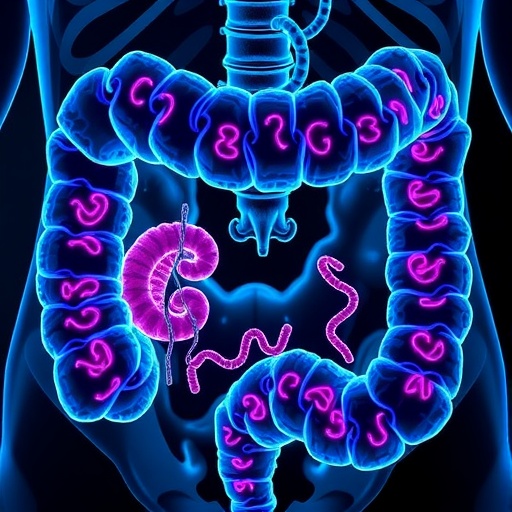
Scientists have identified a little-known signalling protein that appears to operate as a hidden engine of colorectal cancer, quietly fuelling tumour growth, migration, and stem-like behaviour through an unconventional molecular route. The protein, guanine nucleotide-binding protein subunit gamma-10 (GNG10), is markedly overexpressed in colorectal tumours, where its abundance tracks with advanced pathological stage and poor patient survival. In a study published in the Journal of Cellular and Molecular Medicine, researchers affiliated with Southern Medical University in China show that GNG10 does not push cancer cells down the β-catenin highway that dominates colorectal tumour biology. Instead, it activates the lesser-explored non-canonical Wnt pathway, switching on a RHOA–JNK–NFATc1 signalling cascade that endows tumour cells with lethal versatility. When the team silenced GNG10 in colorectal cancer cells, proliferation, migration, and stemness collapsed while apoptosis surged, and tumours in mice grew significantly more slowly. Blocking the same pathway chemically with the Wnt5a antagonist Box5, or genetically by depleting RHOA, produced matching results—exposing a concrete molecular circuit that could one day be therapeutically dismantled.
The stakes could hardly be higher. Colorectal cancer is the third most frequently diagnosed malignancy and the second leading cause of cancer-related death worldwide, accounting for roughly ten percent of all cancer diagnoses and imposing a substantial strain on public health systems. Established contributors include hereditary susceptibility—notably mutations within the APC and KRAS genes—alongside lifestyle influences such as adiposity, physical inactivity, and a nutritional pattern rich in processed meats but deficient in fibre. Yet despite decades of progress in surgery, chemotherapy, radiotherapy, and targeted therapies, the clinical outlook for patients remains unsatisfactory, especially at advanced or metastatic stages, where pharmacological resistance, toxic side effects, and limited survival gains routinely blunt therapeutic efforts. Those shortcomings underscore the imperative to decipher the fundamental molecular pathways driving tumour advancement. It is precisely this gap that the new study set out to close, focusing on a gene whose role in the disease has stayed stubbornly opaque even as clues to its importance have accumulated across other cancers.
GNG10 is one of the gamma subunits of heterotrimeric G proteins, the molecular relays that transmit instructions from G protein-coupled receptors into the cell interior. Encoded by a gene at the 9p13.3 chromosomal locus and expressed across the brain, liver, and blood-forming systems, it funnels GPCR traffic into cascades such as cAMP/PKA and MAPK that govern proliferation, differentiation, and programmed cell death. Previous work had hinted at a pro-tumourigenic streak: GNG10 has been reported as a prognostic indicator in glioma through crosstalk with the PI3K-Akt axis, linked to radiation sensitivity and outcomes in head and neck squamous cell carcinoma, and implicated in colorectal cancer via the lncRNA CCAT1/miR-4679 regulatory network. What remained unknown was the downstream circuit it commandeers in the gut. The clue lies in geometry: Frizzled receptors, the cell-surface docking sites for Wnt ligands, structurally resemble GPCRs and can directly activate heterotrimeric G proteins upon ligand binding. The released Gβγ complexes—of which GNG10 is a central component—chiefly propagate β-catenin-independent, non-canonical Wnt signals, including the planar cell polarity and Wnt/Ca2+ streams that regulate cytoskeletal dynamics, cell migration, and cancer stemness through effectors such as RHOA and JNK.
To establish GNG10’s clinical credentials, the researchers mined RNA-sequencing data from The Cancer Genome Atlas via the Genomic Data Commons, normalized the transcript counts with DESeq2, and stratified patients into high- and low-expression groups at the median. GNG10 messenger RNA was significantly elevated in tumour tissue relative to adjacent normal tissue, and high expression predicted shorter overall survival and progression-free survival. Protein-level validation followed on a tissue microarray of 89 colorectal tumours and 71 normal samples, stained immunohistochemically and scored blindly by two senior pathologists: high GNG10 expression appeared in 52.8 percent of tumours against just 4.2 percent of normal tissues, and staining intensity climbed with histological grade—31 of 40 grade III tumours were strongly positive, compared with only 16 of 49 grade II tumours. Yet in two multivariate Cox regression models adjusting for age, sex, and either overall AJCC stage or individual TNM categories, GNG10 lost independent statistical significance, with p values of 0.644 and 0.400. The authors read this not as a dismissal but as a clue: the molecule’s prognostic signal is so deeply intertwined with malignant progression that macroscopic tumour staging absorbs it, marking GNG10 as a participant in progression rather than a passive bystander.
Functional experiments then sharpened the picture. Among a panel of colorectal cancer lines—HT29, RKO, DLD-1, HCT116, and CACO2—screened against normal colonic FHC epithelial cells, HCT116 and RKO carried the highest endogenous GNG10 levels and became the workhorses for functional studies. Two independent short hairpin RNAs, delivered by lentiviral transduction and validated by quantitative real-time PCR and Western blotting, stably silenced the gene. The consequences were sweeping. Cell Counting Kit-8 assays, quantified by absorbance at 450 nanometres, and 14-day colony formation tests showed sharply reduced proliferation. Annexin V–propidium iodide flow cytometry, recording at least 10,000 events per sample, revealed a markedly increased apoptotic fraction. Scratch wounds closed far more slowly over 24 hours, and Transwell chambers intercepted dramatically fewer migrating cells. Silencing a single G protein subunit simultaneously blunted growth, survival, and motility—the three malignant behaviours that make colorectal cancer lethal—and the agreement between two independent knockdown constructs argued against off-target artefacts.
The mechanistic breakthrough came from Gene Set Enrichment Analysis of the TCGA colon and rectal adenocarcinoma cohorts, which found high GNG10 expression positively enriched for the β-catenin-independent Wnt signalling gene set. Western blotting confirmed the molecular switch: silencing GNG10 significantly reduced the protein levels of RHOA, JNK, and NFATc1, whereas forced GNG10 expression elevated all three. Crucially, neither knockdown nor overexpression altered the levels of active, non-phosphorylated β-catenin or total β-catenin—the defining readouts of the canonical Wnt cascade—thereby excluding it. Even c-Myc, a classical β-catenin target, rose in response to GNG10 in a strictly β-catenin-independent fashion, apparently driven by the JNK arm. The underlying biology rewards a second look. Canonical Wnt stabilizes β-catenin so that it can enter the nucleus and switch on growth genes; the non-canonical route bypasses β-catenin altogether, signalling through RHOA-driven cytoskeletal remodelling, JNK stress kinase activity, and the transcription factor NFATc1 to promote cellular plasticity, motility, and stem-like traits.
Correlation alone is rarely convincing, so the researchers constructed a dual rescue strategy. They first overexpressed GNG10 and then treated the cells with Box5, a specific antagonist of Wnt5a-mediated non-canonical signalling, incubating the cultures with 1 micromolar of the compound for one hour before functional assays—a regimen calibrated from prior work to inhibit the target while minimizing collateral toxicity. Box5 reversed the GNG10-driven upregulation of RHOA, JNK, and NFATc1, restored apoptosis, and curbed the proliferative surge. Because small-molecule inhibitors can always be accused of off-target effects, the team then ran a genetic rescue, depleting RHOA with short hairpin RNA in GNG10-overexpressing cells. Genetic ablation of RHOA phenocopied the drug almost perfectly: it abolished the upregulation of every cancer stem cell marker tested—CD44, CD133, Nanog, OCT4, and SOX2—reversed the expansion of the CD44-positive/CD133-positive subpopulation, and stripped away the enhanced tumoursphere formation and proliferative advantage. Two independent interventions, one chemical and one genetic, converging on the same node, provide unusually strong evidence that the RHOA-dependent non-canonical Wnt axis is the true conduit of GNG10’s oncogenic power.
The most clinically consequential findings concerned cancer stemness, the capacity of a tumour’s cells to self-renew, resist therapy, and seed relapse. When GNG10 was silenced, Western blots showed significant downregulation of the stemness markers CD44, CD133, OCT4, Nanog, and SOX2, alongside the non-canonical Wnt components RHOA, JNK, and NFATc1. Flow cytometry confirmed a shrunken CD44-positive/CD133-positive fraction in both cell lines, and three-dimensional tumoursphere assays—growing single cells in ultra-low-attachment plates in serum-free medium supplemented with epidermal growth factor, basic fibroblast growth factor, and B27—yielded fewer and smaller spheres. Conversely, forcing GNG10 expression inflated the stem-like compartment, an effect erased by Box5 and mirrored by RHOA depletion. Cancer stem cells are widely regarded as the architects of treatment failure, evading chemotherapy and later re-seeding tumours, so a signalling node that maintains them is a prized target. The GNG10–RHOA–JNK–NFATc1 module, the data suggest, is precisely such a node—and it operates entirely without β-catenin.
Finally, the team carried the question into living animals, implanting ten million control or GNG10-silenced RKO cells subcutaneously into the right flank of four-week-old female NCG mice in a phosphate-buffered saline and Matrigel suspension. Tumour volumes, calculated with the standard xenograft formula of length multiplied by width squared divided by two, were tracked on days 7, 10, 12, 14, and 17; the mice were euthanized on day 18 and the tumours excised, weighed, and processed for analysis. Tumours lacking GNG10 grew significantly more slowly across every measured time point and weighed substantially less at the endpoint. Immunohistochemistry confirmed efficient knockdown in vivo and revealed sharply reduced Ki67, a canonical marker of cell division, while Western blotting of the excised tissue completed the molecular audit: JNK, SOX2, and CD44 all fell in the GNG10-deficient tumours. The animal data mirrored the culture dish, closing the evidentiary loop from molecule to organism.
Important questions remain open. The upstream handshake—how GNG10 physically engages Wnt receptors or their accomplices to ignite the cascade—has not yet been mapped, and the loss of independent prognostic power after adjustment for tumour stage tempers any claim that GNG10 alone will stratify patients at the bedside. But the biological message is unmistakable. Colorectal cancer has long been framed as a disease of runaway canonical Wnt signalling; this work reveals a parallel circuit, driven by a heterotrimeric G protein subunit and running through RHOA, JNK, and NFATc1, that fuels growth and stemness while leaving β-catenin untouched. Because Wnt signalling also underpins therapy resistance and recurrence, blocking this axis—or the GNG10 node itself—could complement existing treatments where β-catenin-centred strategies falter. The research, supported by the Guangdong Medical Science and Technology Research Foundation, transforms GNG10 from a genomic footnote into a named, testable target in one of the world’s deadliest cancers, and future studies identifying its direct binding partners will determine how quickly that target can be drugged.
Cite Scienmag News
Nathaniel Bowman. (August 30, 2026). GNG10 Drives Colorectal Cancer Through Non-Canonical Wnt Signaling. Scienmag. https://scienmag.com/gng10-drives-colorectal-cancer-through-non-canonical-wnt-signaling/
Nathaniel Bowman. "GNG10 Drives Colorectal Cancer Through Non-Canonical Wnt Signaling." Scienmag, 30 August 2026, https://scienmag.com/gng10-drives-colorectal-cancer-through-non-canonical-wnt-signaling/. Accessed 30 August 2026.
Nathaniel Bowman. "GNG10 Drives Colorectal Cancer Through Non-Canonical Wnt Signaling." Scienmag. August 30, 2026. https://scienmag.com/gng10-drives-colorectal-cancer-through-non-canonical-wnt-signaling/


