


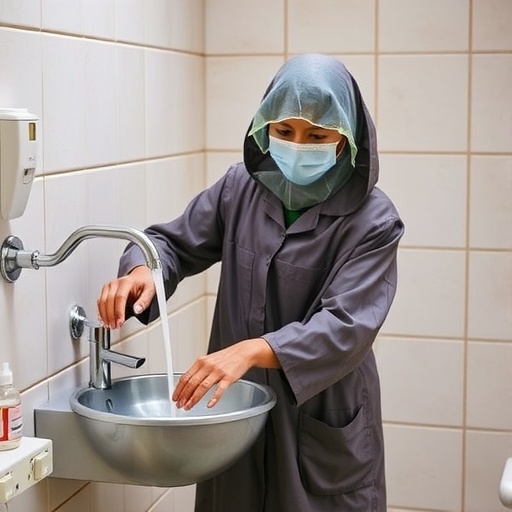
The Sewers Beneath Our Hospitals May Be Fueling the End of the Antibiotic Era
In 2007, readers of the British Medical Journal were asked to name the greatest medical advance since 1840. More than 11,300 of them chose not antibiotics, not vaccines, and not imaging technology, but safe water and sanitation—the so-called sanitary revolution pioneered by figures such as John Snow, Edwin Chadwick, and Joseph Bazalgette, whose work helped extinguish the cholera pandemics of the nineteenth century. Antibiotics came second. Nearly two decades later, a new analysis argues that these two triumphs of modern medicine are now entangled in a way few public health experts have appreciated: the very sanitation systems built to protect us from waterborne disease may be actively cultivating the next great pandemic—antimicrobial resistance, or AMR—and hastening what researchers describe as the end of the antibiotic era.
Writing in the journal Public Health in Practice, Michael Weinbren and Susanne Surman-Lee contend that the world’s approach to AMR has overlooked its single largest driver of antibiotic pollution: human excretion, and specifically the wastewater flowing out of hospitals. The stakes could hardly be higher. Projections cited in the analysis estimate global economic costs exceeding $100 trillion and 10 million excess deaths per year, with AMR on course to become the leading cause of mortality worldwide. Without effective antibiotics, procedures as routine as caesarean sections, cancer chemotherapy, and joint replacement surgery would carry unacceptably high mortality or cease to be viable at all.
For an increasing number of patients, particularly in the United Kingdom, that future has already arrived. Pan-resistant organisms—bacteria impervious to every known antibiotic—are now present in some UK hospitals and are causing infections. Even where one or two active drugs remain, infections caused by multidrug-resistant organisms (MDROs) carry high mortality, largely because effective therapy is delayed. When a patient develops a bloodstream infection, clinicians initiate empirical treatment while awaiting culture results, and receiving ineffective empirical therapy substantially increases the risk of death. A large multicentre study in the United States found that 20 percent of patients with bloodstream infections were receiving ineffective empirical therapy; in a UK study of patients with MDRO bloodstream infections, that figure reached 80 percent.
The core of the problem, the authors argue, lies in Darwinian selection acting within an environment nobody designed to contain it. Resistance would be manageable if bacteria acquired resistance to only one or two drug classes. The crisis arises when organisms accumulate resistance to nearly all available antimicrobials while simultaneously acquiring genes conferring tolerance to biocides and heavy metals—determinants often physically linked on the same mobile genetic elements, so that exposure to any one pressure co-selects for all the others. Such organisms require a setting of sustained and diverse selective pressures in order to emerge and persist. Hospital wastewater systems, the researchers argue, provide exactly that environment.
The numbers are striking. Two last-resort antibiotics—ceftazidime–avibactam and cefiderocol—are excreted largely unchanged by the kidneys, with at least 90 percent of the administered dose leaving the body biologically active. That means the majority of the world’s supply of these critical drugs is discharged directly into healthcare wastewater. Sampling of hospital sewage stacks has shown sustained concentrations of antibiotics such as meropenem exceeding the minimum inhibitory concentration for some organisms throughout the day, and analysis of municipal wastewater consistently shows healthcare facilities are the dominant contributors to AMR by orders of magnitude—unsurprising, given that community antibiotic use tends to involve narrower-spectrum drugs for shorter durations.
Within the pipes themselves, the problem compounds. Wastewater systems should be understood not as inanimate infrastructure but as complex living ecosystems, the authors write. By design, sanitation systems contain abundant nutrients, favourable temperatures, and vast surface areas that promote biofilm formation, and the materials used in their construction were never chosen to inhibit microbial growth. Many MDROs are carried in the human gut and enter these systems in enormous numbers. The result is what the researchers call a “superhighway” for microbial movement: organisms can ascend vertical sewage stacks on aerosols generated when wastewater flow displaces air—a mechanism implicated in the 2003 SARS outbreak in Hong Kong and later confirmed experimentally with tracer organisms. Bacteria can migrate horizontally between waste traps and even move against gravity within interconnected pipework. In laboratory studies, organisms placed in a clean sink waste trap grew up vertical pipework at a rate of one millimetre per hour once a carbon source was added, reaching the sink strainer, where water from the outlet hitting the drain can disperse them into the room.
The consequences for patient safety are well documented. The concept of “water-free” care units, first described by Joost Hopman and colleagues in 2017, emerged from the desperate need to control an intractable MDRO outbreak originating from sink wastewater systems by removing clinical handwash sinks from patient rooms altogether. The model has since been adopted worldwide, including in neonatal intensive care units; in April 2025, the first UK water-free unit opened at Wexham Park Hospital, where early results suggest reductions not only in MDRO transmission but also in infections caused by antibiotic-susceptible Gram-negative organisms. Transmission events linked to water and wastewater occur well beyond patient rooms, too: bed-bathing bowls touching contaminated sink drains, water jugs filled in sinks, shower drains that put patients in direct contact with drain water, and even a hospital-wide outbreak traced to the main kitchen. There is currently no truly safe design for clinical handwash stations, and human behaviour compounds the engineering problem—one camera study above a critical care handwash station found that only 4 percent of visits were for hand decontamination.
Nor does the problem stay within hospital walls. Wastewater treatment plants do not fully eliminate antibiotic resistance determinants, allowing resistant organisms into surface waters, and during heavy rainfall, combined sewer overflows can discharge untreated sewage into the environment with documented links to human infection. In low- and middle-income countries, wastewater is sometimes used to irrigate crops, including leafy vegetables eaten raw, creating a direct pathway for resistance to re-enter human populations.
What troubles the authors most is that existing policy frameworks have a gap precisely where the risk is greatest. The World Health Organization published guidance in 2024 on curbing antibiotic pollution from manufacturing, but manufacturing emissions are a small fraction of total pollution compared with post-consumption excretion. The updated Global Action Plan on AMR adopted by the World Health Assembly in May 2026 does not address wastewater from healthcare premises, and Standard Infection Control Precautions—the universal protective measures underpinning hospital infection control—are largely ineffective against water- and wastewater-associated organisms. Surveillance, meanwhile, lacks the sensitivity to detect transmission from these sources; resistant organisms are only now making these pathways visible, while susceptible organisms have likely been exploiting them invisibly for decades.
The authors propose a fundamentally different approach. Waterless toilets, unconnected to wastewater systems and already in use in settings from festivals to water-scarce communities, could collect human waste for controlled disposal rather than dilution into sewers—and life-cycle assessments suggest nutrient-recovering designs can be economically and environmentally favourable. Bioreactors installed between hospital and municipal wastewater systems, already deployed in some Dutch hospitals, can remove antibiotics, resistance genes, and other toxic compounds. And water and wastewater safe environments—units that remove or carefully manage sinks—show substantial effect sizes where studied: a 2024 systematic review of seven quasi-experimental studies covering 332 ICU beds found five of seven reported cessation of their outbreaks, with pathogen incidence falling 1.2- to 4.2-fold. Innovations such as the “Frimley Faucet,” designed to prevent water jugs and clean bowls from contacting contaminated drains, point toward engineering solutions. Safe water and sanitation helped end cholera; the authors argue that rethinking sanitation, with public health leading a coordinated national response, may now be essential to ending the pandemic brewing beneath our hospitals.
Cite Scienmag News
Ophelia Keating. (August 30, 2026). Sanitation and antibiotics: averting the end of the antibiotic era. Scienmag. https://scienmag.com/sanitation-and-antibiotics-averting-the-end-of-the-antibiotic-era/
Ophelia Keating. "Sanitation and antibiotics: averting the end of the antibiotic era." Scienmag, 30 August 2026, https://scienmag.com/sanitation-and-antibiotics-averting-the-end-of-the-antibiotic-era/. Accessed 30 August 2026.
Ophelia Keating. "Sanitation and antibiotics: averting the end of the antibiotic era." Scienmag. August 30, 2026. https://scienmag.com/sanitation-and-antibiotics-averting-the-end-of-the-antibiotic-era/


