


Working With Pigs Reshapes the Human Gut — and Installs Livestock Resistance Genes
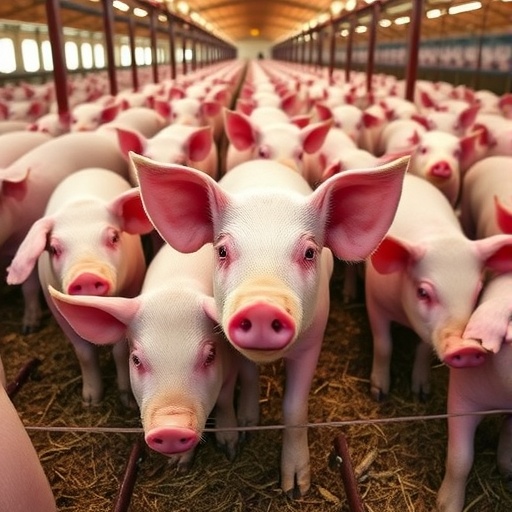
The people who raise the world’s pigs spend their working lives inside one of the most microbially concentrated environments modern society has created, and new research suggests their bodies keep a detailed record of it. In a study published on 30 August 2026 in the journal Microbiome, researchers based at Sichuan University, working with collaborators at the Sichuan Animal Science Academy, report that pig farm workers carry gut microbial communities that are measurably different from those of their non-farming neighbors: poorer in health-associated species, skewed toward mucus-scavenging metabolisms, and substantially richer in antibiotic resistance genes that trace back to veterinary medicine. The investigation, one of the most exhaustive portraits yet of the livestock–human microbial interface, combined shotgun metagenomics of 431 fecal samples with whole-genome sequencing of 833 Escherichia coli isolates gathered across 103 swine farms in Sichuan Province, China. Its central message is subtle but consequential. Whole bacteria rarely appeared to jump from pig to person. The mobile DNA that carries resistance genes, by contrast, seemed to cross the species boundary with unsettling ease.
To quantify occupational exposure with real statistical power, the team recruited 96 pig farmers and 97 residents drawn from the same rural communities. The residents shared the farmers’ geography, water systems and broadly similar diets but had no direct contact with swine, which made them an unusually clean control group: direct animal exposure became the variable of interest. The researchers also sampled 238 pigs from the same farms, yielding a three-way comparison of pigs, farmers and residents. Each human volunteer provided fecal samples and completed questionnaires covering age, sex, antibiotic use and health status, under protocols approved by the Medical Ethics Committee of Sichuan University. Shotgun metagenomics — the sequencing of all of the DNA in a sample rather than a single marker gene — allowed the researchers to inventory not only which microbial species were present but which functional genes they carried, including the complete collection of antibiotic resistance genes known as the resistome. In parallel, the team cultured E. coli from all three groups: 665 pig isolates, 80 from farmers and 88 from residents.
The compositional differences between farmers and residents were unambiguous. Farmers showed reduced gut alpha-diversity, meaning their intestinal ecosystems contained fewer distinct species and were less evenly balanced, and they scored lower on the Gut Microbiome Health Index, a species-based metric that associates community composition with overall health status. A multivariate dispersion analysis indicated that farmers and residents differed in composition rather than merely in variability, and supplementary analyses accounted for age and sex. The functional shifts were equally telling. Farmers were depleted of several taxa that degrade dietary fiber and produce short-chain fatty acids — acetate, propionate and, above all, butyrate, the preferred fuel of the cells lining the colon and a key regulator of inflammation and immune tone. In their place, the researchers found organisms and metabolic pathways geared toward exploiting mucin-derived glycans, the complex sugars that make up the gut’s protective mucus layer. Carbohydrate-active enzyme profiling captured this pivot: instead of harvesting energy from plant fiber, the farmer microbiome appeared increasingly specialized in grazing the host’s own mucus, a pattern that earlier studies have linked to diminished gut resilience.
The resistome followed an exposure gradient so clean it looked almost schematic: resistance gene abundance was highest in pigs, intermediate in farmers and lowest in residents, a pattern established through differential abundance testing with correction for false discovery. Farmers carried elevated levels of determinants conferring resistance to drug classes that dominate veterinary formularies — florfenicol, a phenicol antibiotic used extensively in swine production; quinolones; macrolide–lincosamide–streptogramin combinations; and aminoglycosides. Strikingly, genes conferring resistance to β-lactams, the antibiotic family that anchors human clinical medicine, were proportionally underrepresented in farmers. The resistome of a pig farmer, in other words, mirrors the drug cabinet of the barn rather than the pharmacy of the clinic. That pharmacological fingerprint matters epidemiologically, because the resistance genes a person carries shape the raw material available to their own future infections, and to the bacteria that circulate through their households and communities.
The study’s most consequential findings concerned not the resistance genes themselves but the vehicles that carry them. Bacteria trade DNA through mobile genetic elements, chief among them plasmids: self-replicating circles of DNA that can pass from cell to cell by conjugation and haul cargo genes, including resistance determinants, across species lines. When the team assembled and dereplicated plasmid sequences from the metagenomes, they recovered 157,298 nonredundant plasmid contigs, of which 1,415 carried antibiotic resistance genes. The distribution was stark: 83.1 percent of the ARG-bearing plasmid contigs were enriched in pigs, 18.3 percent in farmers and just 3.9 percent in residents. Most striking of all, 88.8 percent of the farmer-enriched plasmid contigs were also enriched in pigs, and they harbored genes of genuine clinical concern. Among them were optrA, the first transferable gene known to confer resistance to oxazolidinones such as linezolid, a last-resort antibiotic against multidrug-resistant Gram-positive infections; cfr, which compromises several antibiotic classes at once, including linezolid and pleuromutilins; and mcr-10.1, a member of the mobilized colistin resistance family, colistin being a polymyxin of last resort in human medicine. The picture that emerges is of a pig-centered plasmid reservoir, with farmer guts sitting directly in its shadow.
Plasmids were not the only mobile elements under scrutiny. The researchers also screened 227,476 phage contigs — the genomic signatures of bacteriophages, the viruses that infect bacteria — for resistance genes. Only 106 carried any, confirming that transduction, the viral route of gene transfer, is rare in this system. Yet the ARG-bearing phages that did surface were predominantly pig-associated, a small but pointed echo of the plasmid findings. Most gut phages are temperate, slipping into bacterial chromosomes and copying their hosts rather than killing them, which in principle lets them shuttle genes between lineages — but the numbers here show that route is a trickle, not a flood. The contrast between the two analyses is informative. Conjugative plasmids require only a local handshake between microbes that happen to share an intestine, whereas phage-mediated transfer depends on infection dynamics and host ranges. At the livestock–human interface, at least, plasmids appear to be the dominant conduit through which the animal resistome reaches human hosts.
To test whether whole bacteria were crossing hosts as well, the team sequenced the genomes of all 833 E. coli isolates and compared their multilocus sequence types and core-genome relationships, visualizing the population structure in a minimum spanning tree colored by host. The verdict on clonal transmission — the passage of an identical bacterial strain between hosts — was emphatically limited: across the entire cohort, the researchers identified just five pig-to-farmer and one pig-to-resident transmission events. E. coli populations were largely host-segregated, with pigs, farmers and residents each harboring distinct strain assemblages, and the isolates’ resistance phenotypes had been profiled across a panel of antibiotics. The isolates nonetheless told a consistent story about genes: pig and farmer isolates carried heavier genomic burdens of resistance determinants than resident isolates. The researchers also compared the genetic surroundings of tet(X4)-positive plasmids, which carry resistance to the last-line antibiotic tigecycline, in pigs and farmers, probing whether shared plasmid backbones underpinned the overlap. Taken together, the data support a model in which the bacteria themselves mostly stay put while their resistance cargo migrates — horizontal gene transfer, not microbial migration, is the engine of exchange at this interface.
The microbial signature of farm work is distinct enough that an algorithm can read it. Using a random-forest classifier — an ensemble of decision trees that vote on a category — trained on metagenomic taxonomic profiles alone, the team distinguished farmers from residents with an area under the curve of 0.921, a specificity of 0.90 and a sensitivity of 0.775. An AUC of 0.921 means the model ranked a randomly chosen farmer above a randomly chosen resident more than nine times out of ten, and it achieved this without any resistance gene data, implying that exposure leaves its mark on community structure itself. Two organisms emerged as candidate exposure biomarkers: Schaalia odontolytica, an actinobacterial species better known from the oral cavity, and Acinetobacter lwoffii, a hardy environmental bacterium often found in animal-associated settings. Neither is by itself a pathogen of alarm; their significance is diagnostic. If validated in independent cohorts, such microbial fingerprints could serve as inexpensive, noninvasive measures of occupational exposure, complementing workplace surveys and environmental monitoring.
The authors are careful about what their data can and cannot show. The study is cross-sectional — a snapshot rather than a film — so it demonstrates association, not direction. Whether farmers’ resistomes were seeded by the barn, continuously reinforced by it, or shaped by antibiotic use patterns that correlate with farm work cannot be resolved without the longitudinal, environment-integrated and strain-resolved follow-up studies the researchers themselves call for. Nor can metagenomic assemblies alone prove which direction a given plasmid traveled; shared enrichment in pigs and farmers is a strong clue, not a time-stamped itinerary. Whether resistance genes acquired at work persist after workers leave the industry, or ever reach their families and hospitals, likewise remains open. Even so, the implications reach well beyond Sichuan. Antimicrobial resistance is a One Health problem, and this study supplies some of the clearest evidence yet that the human gut operates as a downstream node of livestock microbial ecology — not by acquiring pig bacteria wholesale, but by quietly inheriting their genes. Funded by China’s National Key Research and Development Program and the National Natural Science Foundation of China and published open access, the work argues for veterinary antimicrobial stewardship, hygiene and exposure reduction not as abstractions but as protections for an invisible organ that, the data suggest, remembers where its owner works.
Cite Scienmag News
Morgan Morrow. (August 30, 2026). Pig farming reshapes farmers’ gut microbiome and antibiotic resistance genes, study finds. Scienmag. https://scienmag.com/pig-farming-reshapes-farmers-gut-microbiome-and-antibiotic-resistance-genes-study-finds/
Morgan Morrow. "Pig farming reshapes farmers’ gut microbiome and antibiotic resistance genes, study finds." Scienmag, 30 August 2026, https://scienmag.com/pig-farming-reshapes-farmers-gut-microbiome-and-antibiotic-resistance-genes-study-finds/. Accessed 30 August 2026.
Morgan Morrow. "Pig farming reshapes farmers’ gut microbiome and antibiotic resistance genes, study finds." Scienmag. August 30, 2026. https://scienmag.com/pig-farming-reshapes-farmers-gut-microbiome-and-antibiotic-resistance-genes-study-finds/


