


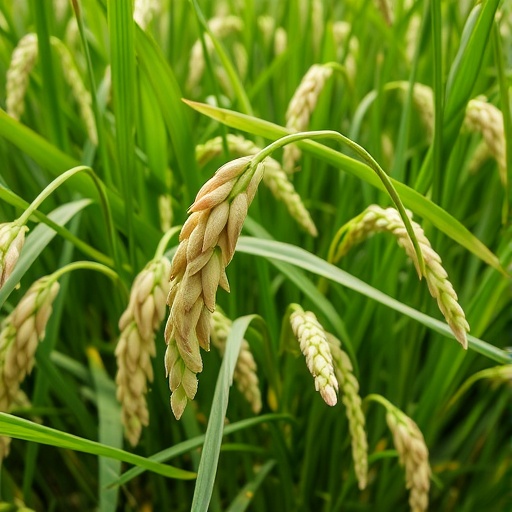
Long-Read Sequencing Exposes a Hidden Wealth of Genetic Instructions in Wild Rice
The wild relatives of rice have long been treated as a genetic reserve — a pool of untapped traits that breeders can draw upon to help one of humanity’s most important staple crops withstand drought, disease and heat. A new study published in Genome Biology suggests that reserve is far richer than any existing record indicates. Using single-molecule long-read sequencing, researchers at the University of Queensland have generated the most complete portrait yet of the transcriptomes of two Australian wild rice species, identifying 48,876 transcript isoforms in the Australian Oryza rufipogon-like species, known as O. rufipogon Aus, and 69,180 in Oryza meridionalis. Those counts far exceed the transcript diversity captured in current reference annotations, in which only about 10 percent of genes are listed as having alternative isoforms. The work, led by Nurmansyah of the Queensland Alliance for Agriculture and Food Innovation at the University of Queensland and Universitas Gadjah Mada in Indonesia, together with Agnelo Furtado and Robert James Henry, does more than lengthen a database. It substantially rewrites the annotation of two wild genomes and demonstrates that the molecular machinery governing grain development is far more varied than domesticated rice alone can reveal.
The choice of species was deliberate. The Australian plants described in the study as O. rufipogon Aus belong to the lineage closest to Asian domesticated rice, Oryza sativa, sharing the same AA genome composition. Oryza meridionalis, by contrast, is the most phylogenetically distant member of that AA-genome group — the circle of wild species that can still, in principle, exchange genes with cultivated rice. Wild rice species are known to harbor extensive transcriptional diversity that underpins key agronomic traits, yet most of that diversity has never been characterized at the transcript level. By sequencing the transcriptomes of species that bracket the lineage, the researchers could begin to separate transcript features that are ancient and shared across the group from those that arose along individual branches. That distinction matters for crop improvement: variants present in the closest relatives are easier to move into cultivated backgrounds through crossing, while variants in more distant relatives point to functions that might be introduced through wider hybridization or genome editing.
To appreciate why the discovery required new technology, it helps to separate two concepts that are often conflated. A genome is the complete archive of DNA carried by an organism; a transcriptome is the working set of RNA molecules that cells copy from that archive and actually use. Each gene is first transcribed into a precursor messenger RNA, and through a process called alternative splicing, different combinations of exons — the segments that survive into the mature message — are stitched together. A single gene can therefore yield several distinct transcripts, or isoforms, each potentially encoding a protein with different properties, or a non-coding RNA with a regulatory role of its own. Alternative isoforms allow one genome to produce a far larger and more flexible protein repertoire than its gene count alone would suggest. Yet genome annotations, the official lists of genes and transcripts attached to every sequenced genome, have historically captured only a fraction of this diversity, particularly in non-model species where annotation leans heavily on projection from a related reference such as cultivated rice.
The dominant method for surveying transcriptomes, short-read RNA sequencing, breaks RNA molecules into fragments of roughly one hundred to a few hundred bases and reads them in massive parallel batches. Reassembling those fragments into complete isoforms is computationally treacherous, because many transcripts share exons and the true connectivity of the pieces is destroyed the moment a molecule is shattered. The Queensland team instead deployed Iso-Seq, a single-molecule long-read approach in which individual RNA molecules are converted into DNA copies and each copy is sequenced from one end to the other as a single molecule in real time. Because a read spans the entire transcript, the exact chain of exons is preserved, revealing full-length isoforms that short-read methods can only infer. Long reads of this kind routinely stretch across multiple kilobases, long enough to cover even sprawling plant transcripts complete with their untranslated regions. The researchers then integrated the Iso-Seq data with conventional short-read RNA-seq, using the depth of the short reads to quantify transcript abundance and refine splice junctions across the two genomes.
The scale of what the long reads captured was striking. In O. rufipogon Aus, the analysis resolved 48,876 transcript isoforms; in O. meridionalis, 69,180. More than 60 percent of the genes annotated in these genomes were detected in the long-read data, and more than 40 percent of those genes were shown to produce multiple isoforms. Existing reference annotations attribute alternative isoforms to only about 10 percent of genes, meaning the new data roughly quadrupled the documented transcript diversity in these species. The transcripts included full-length structures with complete untranslated regions, enabling the team to describe not merely which genes are switched on but in precisely which molecular form their messages are delivered. For genomes whose gene catalogues had been assumed essentially complete, the discovery that tens of thousands of message forms had gone unnoticed underscores how much biology short-read surveys have left on the table, and how differently the cells of these plants are behaving compared with what their official records implied.
The practical payoff was a substantial upgrade to the genome annotations themselves. Long-read transcripts restored untranslated regions — the flanking segments at either end of a messenger RNA that do not encode protein but carry regulatory signals controlling translation efficiency, message stability and cellular localization — that had been missing or truncated in earlier annotation. Gene and transcript models increased in number and accuracy, and benchmarking with BUSCO, a standard metric that assesses annotation completeness by searching for conserved genes expected to occur as single copies in related organisms, showed clear improvement. The analysis also identified 2,021 genes in O. rufipogon Aus and 2,645 in O. meridionalis that previous annotations had missed entirely. In addition, the team resolved hundreds of fusion genes — cases in which two genuinely separate genes had been incorrectly stitched together into a single entry, a well-known artifact of assembling large, repetitive plant genomes from short reads. Left uncorrected, such fusions can corrupt downstream analyses by attributing functions to genes that do not actually exist.
Not all of the newly documented transcripts encode proteins. The study catalogued species-specific protein-coding transcripts, found in one wild species but not the other, alongside thousands of long non-coding RNAs — RNA molecules longer than about 200 nucleotides that are transcribed from the genome but never translated into protein. Many long non-coding RNAs act as regulators, tuning the expression of neighboring or distant genes, guiding chemical modifications of chromatin, or serving as scaffolds for protein complexes. Including them in the annotation extends the functional description of these wild genomes well beyond protein-coding space and supplies candidates for future studies of traits that cannot be explained by protein sequence alone. Comparative analyses spanning the three species — O. sativa, O. rufipogon and O. meridionalis — further charted how gene families have expanded, contracted and diverged along each lineage, adding an evolutionary dimension to the transcript-level picture and helping to place the new Australian data in context alongside the cultivated reference.
To connect transcript diversity with biology, the team examined three well-characterized grain-size regulators: OsMADS1, GS1 and SGW5. OsMADS1 encodes a MADS-box transcription factor, a type of DNA-binding protein that orchestrates developmental programs; in rice it is central to flower and grain development, and variants of the gene are associated with grain length and shape. GS1 and SGW5 are established contributors to grain size in cultivated rice. The long-read data revealed substantial isoform diversity for all three genes in the wild species. Most strikingly, functional OsMADS1 and GS1 isoforms previously identified in domesticated rice populations were also detected in the wild relatives — evidence that multiple functional transcript variants existed before humans began selecting rice for larger, plumper grains. Domestication, on this reading, did not invent new molecular solutions so much as draw upon variation already circulating in the ancestral gene pool, a conclusion that widens the search space for breeders seeking to fine-tune grain morphology in the crop.
The study also delivered a concrete link between transcript variation and a visible trait. Oryza rufipogon Aus is distinguished by its narrow grains, and the researchers found that this species carries its own splice variants of SGW5 alongside reduced expression of the gene. That association suggests the narrow-grain phenotype may trace back to transcript-level differences — altered splicing and lowered expression — rather than a straightforward change in the protein-coding sequence. The finding also illustrates the value of studying wild species on their own terms rather than as mere donors of single genes: phenotypic differences between wild and cultivated rice can emerge from regulatory and splicing architecture as much as from protein sequence. For breeders, the implication is that grain architecture can be adjusted not only by editing proteins but by shifting which isoforms a gene produces, or how much of each — a finer-grained set of targets than classical genetics typically offers, and one that only becomes visible with full-length transcript data.
Beyond its specific findings, the study delivers a resource. The transcript catalogues, refined gene models and species-specific isoform lists are intended to support functional transcript studies and precise isoform-level quantification in rice and its relatives, providing a reference framework for experiments that were previously impossible in these species. The research was funded through the Australian Research Council’s Centre of Excellence for Plant Success in Nature and Agriculture, and the paper is published open access in Genome Biology. It arrives amid a broader transition in genomics: as long-read technologies mature, they are steadily exposing the gap between what genome assemblies once recorded and what living cells actually produce. For a crop that feeds billions of people, the message from its untamed relatives is humbling. Hidden within their slender grains and unassuming grasses lies a repertoire of genetic instructions of remarkable depth — and scientists are only now learning to read those messages in full.
Cite Scienmag News
Alan Morgan. (August 30, 2026). Long-read sequencing unveils wild rice transcriptome complexity and refines annotation. Scienmag. https://scienmag.com/long-read-sequencing-unveils-wild-rice-transcriptome-complexity-and-refines-annotation/
Alan Morgan. "Long-read sequencing unveils wild rice transcriptome complexity and refines annotation." Scienmag, 30 August 2026, https://scienmag.com/long-read-sequencing-unveils-wild-rice-transcriptome-complexity-and-refines-annotation/. Accessed 30 August 2026.
Alan Morgan. "Long-read sequencing unveils wild rice transcriptome complexity and refines annotation." Scienmag. August 30, 2026. https://scienmag.com/long-read-sequencing-unveils-wild-rice-transcriptome-complexity-and-refines-annotation/


