


The Unseen Labor That Keeps Forests Alive: Scientists Call for a Radical Rethink of What Counts as a Forest
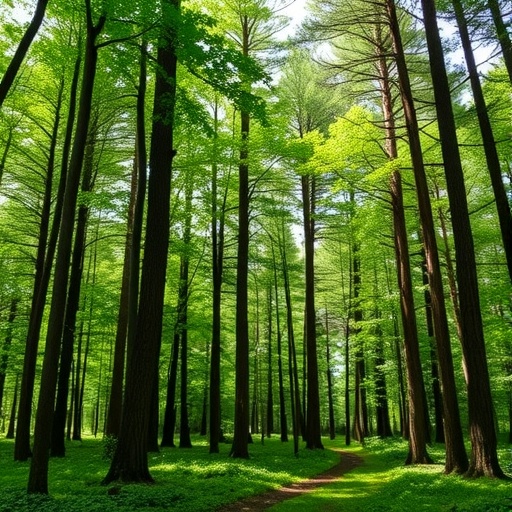
By the numbers that govern the world’s forests, a forest is a cold statistical artifact: any land larger than half a hectare, covered by trees capable of reaching at least five meters in height, with a canopy shading more than ten percent of the ground. That definition, set by the Food and Agriculture Organization of the United Nations and adopted as a blueprint by the European Union and national governments, has quietly shaped everything from carbon accounting to restoration targets. Now a provocative perspective article published on 28 August 2026 in the journal Ambio argues that this arithmetic is doing invisible, corrosive damage. Seema Arora-Jonsson, a researcher at the Swedish University of Agricultural Sciences in Uppsala, contends that the official lens renders invisible the vast reservoir of unpaid, largely unrecognized — and often feminized — labor of care and everyday organizing that actually brings forest landscapes into being and keeps them alive. Until governance learns to see that work, she argues, forest policy will keep producing conflict, injustice, and ecological failure.
The technical machinery of modern forestry is built on biophysical metrics. Under the FAO’s Global Forest Resources Assessment framework of 2020, forests are categorized primarily by tree canopy cover and height, and forest work is understood as the management of those tree resources for economic ends. Under the Convention on Biological Diversity, forests appear instead as ecosystems valued for biodiversity and conservation. Countries operating under UN climate frameworks may nudge the thresholds, adjusting size or canopy criteria, but the core idea persists: a forest is a tree-dominated ecosystem defined by minimum size, height, and canopy measurements, not by who owns it, who lives in it, or what it means to them. What both framings share is a striking omission. What appears in the official ledger is trees and biomass — to be logged for commercial purposes, cleared to make way for resource extraction, or preserved for carbon sequestration. What disappears is the social world in which those trees are embedded.
Arora-Jonsson’s argument, synthesizing decades of research across the Global South and North, is that this omission is not a minor accounting flaw but a structural blind spot with measurable consequences. Two strands of forest life are systematically elided from definitions and policy. The first is the everyday work of care: the tending, nurturing, planting, gathering, and maintenance — much of it unpaid and disproportionately performed by women — that shapes what forests physically look like and underpins their futures. The second is the quiet, informal organizing through which people maintain forest and community life, resist encroachment and violence, and negotiate the power dimensions of gender, indigeneity, class, and ethnicity that cut across every forest landscape. Drawing on feminist, postcolonial, indigenous, and science-and-technology-studies scholarship, the article proposes reframing forests as “lived landscapes” — entities entangled with social reproduction, cultural meaning, spiritual values, and affective ties — rather than as stands of timber or stocks of carbon.
How did such a blind spot arise? The paper traces it to what scholars call the “rendering technical” of complex forest lives: the reduction of governance to measurable outputs such as timber yield, carbon sequestration rates, and biodiversity indices, regulated primarily through markets. Critics describe the result as a plantationocene — a continuing colonial legacy in which landscapes are simplified, abstracted from their place-based relations, and rearranged for production at a global scale. Forest bureaucracies reinforce the template; research describes their culture as hierarchical, masculine, and in places authoritarian, rooted in the natural sciences and skeptical of lay knowledge. In Nepal, the bureaucratization of forest knowledge undermined the democratic basis of community forestry; in the European Union’s forest partnership with Laos, technical capacity-building discourse converted civil society into state-monitored service providers rather than democratic participants. Even digital technologies amplify the problem: ever more granular data on trees and carbon strips forests of context — a process researchers term “singularization” — while conservation drones can become instruments of gendered surveillance.
The costs of these blind spots are increasingly quantifiable. Climate programs such as REDD+ — designed to reduce emissions from deforestation and forest degradation — focused on carbon and frequently excluded social concerns, treating gendered issues as co-benefits rather than foundational design questions. In a multi-country study of REDD+ sites, women’s well-being declined relative to control villages, largely because conservation restrictions increased their labor burden while reducing their access to forest resources. The paradox is stark: policies marketed as sustainability instruments ended up exacerbating gendered vulnerability and fueling conflict. Data compiled in the Environmental Justice Atlas and a World Resources Institute conflict indicator show environmental conflicts rising across high-, middle-, and low-income countries alike. While violence is concentrated in the Global South, reforms, production targets, and intrusions on rural land drive disputes in the North too — disputes that research shows are embedded not merely in technical disagreement but in worldviews, identities, responsibilities, and emotions.
What does the invisible work actually look like? In Aotearoa New Zealand, park rangers protecting the iconic kauri forests performed extensive care labor — tending the health of parks and people — that formed the very basis of their scientific work yet was never counted as “work” at all. In many northern countries, immigrant seasonal workers do most tree planting, and their hands-on knowledge of the landscape exceeds, and diverges from, the digital maps relied upon by companies and owners. In Oregon, matsutake mushroom foragers tend clear-cut and abandoned forests that everyone else has written off. In long-term ethnographic research in India and Sweden, Arora-Jonsson followed women’s groups that organized festivals, repaired water tanks, built a ski slope, and planted trees — weaving ecological and social care together long before “sustainability” entered forestry discourse. As one woman in a Swedish village put it: “We need to think about the forests as part of the big thought — the future of the countryside.”
Such care is inseparable from a quiet politics of organizing. Local forest action is usually imagined as dramatic — tree-sitting protests, hunger strikes, transnational campaigns — but these are only the visible tip. A hunger strike erupts after months of quiet negotiation; a tree-hugging protest follows years of planting saplings and organizing festivals. Research in Peru and Ecuador shows women weaving resistance to mining into the rhythms of care — cooking for meetings, tending children while negotiating with officials — an embeddedness that made their activism resilient under intimidation. The risks are real: ridicule, accusations of immorality, ostracism, and violence; a global analysis published in Nature Sustainability documented widespread violence against women defenders in environmental conflicts. Yet these informal networks often achieve what official committees cannot, mobilizing across caste, class, and ethnic divides and sustaining engagement over years — a “politics of the possible” that state agencies and market logics rarely recognize, because, unnamed in policy, it officially does not exist.
The article is careful to avoid romanticizing. Cultures and communities are political, not homogeneous, and tradition can mask discrimination. When sacred groves enter policy discourse in India, research finds, the conversations rarely acknowledge women’s restricted access or the conservation work they perform within those spaces. Nor can policymakers assume that women are natural environmentalists: studies in Canada found working women to be staunch supporters of production forestry, and Finnish research shows women forest owners hold diverse objectives shaped by age, education, class, and social norms as much as by gender. Cultures themselves are always changing — an assumption of fixity, the paper warns, sabotages well-meaning interventions. There is also a colonial asymmetry in how the “social” is treated: Swedish officials readily acknowledge social and cultural contexts when working in the Global South, yet at home the conviction that Sweden is already democratic leaves little room for alternative approaches — a blind spot with detrimental effects on both sides of the divide.
Out of this diagnosis, the article builds a four-part agenda for just forestry. First, care work in forests and communities should be explicitly valued in governance, shifting attention from fixed social categories to the work itself — including the unrecognized care performed by officials. Second, informal organizing must be recognized as a legitimate part of decision-making, not dismissed as peripheral to formal committees dominated by elite actors. Third, policy must embrace plural values, accepting that forests are simultaneously sources of timber and carbon credits, medicine, spirituality, and identity — often for the same people in different contexts. Fourth, governance needs a systemic lens, coordinating across sectors far beyond forestry — water security, health, education, even violence prevention — and across scales from the household to international climate programs, in line with the integrated ambitions of the Sustainable Development Goals. Encouragingly, practice is already outpacing definitions: Finland’s participatory pilots and the collaborative frameworks of Canada and New Zealand that embed indigenous knowledge and cultural protocols show that new directions are possible.
The signal for change may be coming from below. In a 2024 briefing, the World Rainforest Movement conceded that the FAO definition has long been recognized as an obstacle to halting forest loss — yet continues to circulate unchallenged, even in the materials of civil society organizations and social movements. Several indigenous peoples rooted in forest territories, the briefing noted, have simply refused to translate “forest” into their languages or have adopted their own definitions, because for them a forest is never a fixed inventory of tree cover but a transforming relationship with the people living and working there. Arora-Jonsson’s conclusion is unsparing: sustainable and just forestry cannot be achieved through metrics of biomass, carbon, or biodiversity alone. Forests are not merely stands of trees but storied landscapes — repositories of memory, spirits, and meaning — sustained by labor that official definitions have rendered invisible. Making that labor visible, the paper argues, is not just a matter of justice. It is a condition for the survival of forests themselves.
Cite Scienmag News
Eleanor C. (August 29, 2026). Unseen everyday forests prompt conceptual shift toward socially just forestry. Scienmag. https://scienmag.com/unseen-everyday-forests-prompt-conceptual-shift-toward-socially-just-forestry/
Eleanor C. "Unseen everyday forests prompt conceptual shift toward socially just forestry." Scienmag, 29 August 2026, https://scienmag.com/unseen-everyday-forests-prompt-conceptual-shift-toward-socially-just-forestry/. Accessed 29 August 2026.
Eleanor C. "Unseen everyday forests prompt conceptual shift toward socially just forestry." Scienmag. August 29, 2026. https://scienmag.com/unseen-everyday-forests-prompt-conceptual-shift-toward-socially-just-forestry/


