


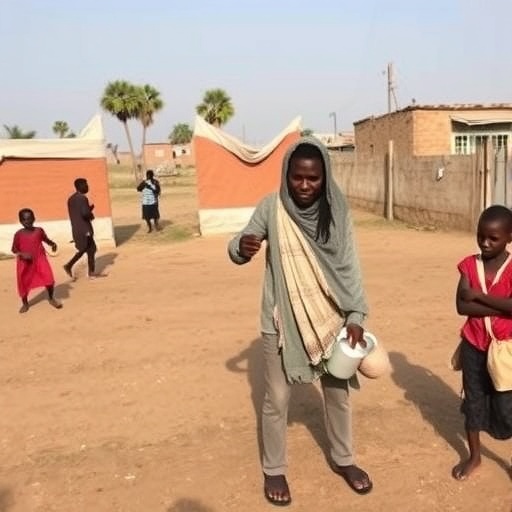
Somalia’s hunger crisis is no longer following the familiar pattern of a devastating drought followed by a long period of recovery. Instead, the country is entering what a new analysis describes as a compressed and persistent cycle of food insecurity, in which one emergency arrives before families, markets and institutions have recovered from the last. The warning, published in Regional Environmental Change, traces the transformation from the 1974–1975 Dabadheer drought-famine through the civil-war famine of 1991–1992, the catastrophe of 2011–2012, the drought of 2016–2017, the prolonged crisis of 2020–2024 and renewed famine risk in 2025–2026. Its central conclusion is stark: famine in Somalia cannot be explained by rainfall failure alone. Climate change is colliding with conflict, displacement, market disruption, political marginalization, weak public institutions and shrinking humanitarian finance, leaving people increasingly exposed to shocks that are arriving faster than they can rebuild their lives.
The distinction between an episodic disaster and a persistent crisis is more than a change in wording. In an episodic famine, an extreme event can overwhelm otherwise functioning livelihoods, but households may have time to restore herds, plant crops, rebuild homes and replenish savings before the next major shock. Recovery acts as a buffer against future disruption. In a persistent crisis, that buffer steadily disappears. Livestock losses reduce pastoralists’ ability to generate income during the next drought; repeated displacement prevents families from returning to farms or grazing land; debt accumulates as food must be purchased at high prices; and children who experience malnutrition face lasting effects on growth, health and learning. Each emergency therefore begins from a lower baseline. The result is not necessarily a sequence of separate famines, but a continuously elevated risk in which millions remain trapped in severe food insecurity even when conditions temporarily improve.
The analysis uses Somalia’s famine history to show how this transition unfolded. The Dabadheer drought and famine of the mid-1970s represented an earlier model of crisis, when drought could devastate rural communities but was followed by a comparatively longer interval before another nationwide emergency. The 1991–1992 famine emerged under radically different conditions, as civil war, state collapse and population displacement disrupted food production, trade and access to assistance. Mortality rose not simply because crops failed or animals died, but because conflict restricted movement, severed markets and prevented people from reaching food and health services. The 2011–2012 famine again demonstrated how environmental stress becomes lethal when households have exhausted their coping strategies. The later droughts of 2016–2017 and 2020–2024 showed that Somalia was not returning to a stable post-famine trajectory. Instead, droughts and other shocks were becoming part of a recurring system of deprivation.
Technically, food insecurity is produced through several linked pathways rather than a single environmental trigger. Rainfall deficits can reduce pasture and crop yields, lowering the supply of food and the income available to farming and pastoral households. When many communities experience drought simultaneously, livestock prices may fall because families are forced to sell animals at the same time, while cereal prices rise because local production and regional supplies are reduced. The terms of trade deteriorate: a household may need to sell more goats or cattle to purchase the same quantity of grain. Conflict magnifies this pressure by restricting access to fields, grazing routes, water points, roads and urban markets. Displacement adds another layer, separating people from productive assets and placing them in settlements where food, sanitation and health services are limited. These mechanisms interact, creating a feedback loop in which environmental stress increases poverty and insecurity, while insecurity makes recovery from environmental stress more difficult.
The paper also addresses a common misunderstanding about modern famine warnings. Somalia now has sophisticated early-warning systems that combine rainfall and vegetation observations, market prices, crop and livestock assessments, nutrition surveys, displacement data and mortality estimates. Satellite-derived rainfall products, for example, can identify broad patterns of precipitation failure across regions that are difficult to monitor from the ground. The Integrated Food Security Phase Classification, or IPC, then translates evidence about food consumption, livelihoods, nutrition and mortality into a standardized scale. At its most severe levels, the framework identifies conditions in which households face extreme food deficits, acute malnutrition becomes widespread and death rates rise. Improved monitoring can make a crisis appear more visible than historical crises were, but the analysis argues that Somalia’s repeated warnings should not be dismissed as a product of better surveillance. Prolonged periods at IPC Phase 3 or worse, mass displacement and repeated estimates of excess mortality indicate that the underlying crisis is real and enduring.
The human cost of that persistence is visible in mortality estimates associated with recent drought. A United Nations assessment cited in the analysis estimated that approximately 43,000 excess deaths may have occurred during 2022, while another estimate placed drought-related excess deaths between 2022 and 2024 at about 71,000. Such figures represent deaths above the number expected under normal conditions, rather than a simple count of people who died directly from hunger. They can include deaths from infectious disease, untreated illness and complications of malnutrition, all of which become more likely when people lose access to food, clean water and medical care. The 2011 famine and earlier crises produced similarly devastating consequences, including an estimated death toll approaching 260,000, roughly half of them children, according to United Nations reporting. Mortality is therefore not only an indicator of food supply; it is also a measure of whether people can access assistance, move safely, sell assets, obtain health care and protect children from disease.
Displacement has become one of the most important mechanisms locking households into this cycle. Families who flee drought or conflict often arrive in cities or informal settlements without livestock, land, tools or reliable employment. Their food security depends heavily on markets and humanitarian distributions, leaving them vulnerable to price spikes and aid interruptions. At the same time, displacement can be cumulative: people may move repeatedly as camps become unaffordable, insecurity spreads or water sources fail. A household that has sold animals to finance an earlier escape may have no productive assets left when the next drought strikes. Research on climate-related displacement in Somalia has shown how environmental conditions and population movements can be tracked together using remote sensing, but the new commentary emphasizes that the drivers are inseparable in practice. A drought may initiate movement, yet conflict, land access, governance and the availability of assistance determine whether displacement becomes temporary or permanent.
The analysis identifies humanitarian financing as another critical pressure point. Emergency relief can prevent famine when it arrives early and at sufficient scale, but short funding cycles encourage a response model that activates after conditions have already deteriorated. If international assistance is reduced while millions remain in severe food insecurity, households may cut meals, withdraw children from school, sell breeding animals, borrow at high interest or undertake dangerous journeys in search of support. Those decisions can preserve survival in the short term while destroying the assets needed for recovery. When financing resumes during the next emergency, aid agencies are then responding to deeper poverty and larger displaced populations. The cycle becomes more expensive and less effective over time. Humanitarian access is equally important: insecurity and contested governance can prevent organizations from reaching the communities most at risk, meaning that a national estimate of need may coexist with highly uneven access to food, water and health services on the ground.
The policy implications extend well beyond delivering food after a famine has begun. The paper calls for anticipatory action based on forecasts and early-warning signals, allowing cash, livestock protection, water support and nutritional services to reach communities before assets are lost. Livelihood protection could include animal health programs, support for drought-resistant crops, water infrastructure and measures that help pastoralists maintain access to grazing corridors. Climate adaptation is essential because repeated rainfall shocks are likely to impose greater stress on systems already weakened by poverty and conflict. Inclusive social protection could provide regular assistance between emergencies, preventing families from exhausting their savings and productive assets. Conflict prevention, stronger local institutions and improved humanitarian access would address the political and security conditions that turn drought into famine. Sustained financing is the thread connecting all of these measures: without predictable support between crises, prevention remains an aspiration rather than a functioning system.
Somalia’s experience offers a broader lesson for famine science and humanitarian policy. A famine warning is not merely a forecast of a future food shortage; it is a signal that environmental, economic, political and public-health systems are approaching a threshold beyond which ordinary coping strategies fail. Waiting for that threshold to be crossed makes intervention slower, costlier and less likely to prevent death. The new analysis argues that the country’s most dangerous trend is not simply that droughts are recurring, but that the intervals between shocks are no longer long enough for recovery. Early-warning technology can identify danger with increasing precision, but detection alone cannot rebuild herds, restore markets or make roads safe. Preventing the next famine will require treating food insecurity as a chronic systems problem—one driven by climate change and sustained by conflict, displacement, fragile governance and inadequate investment—rather than as a series of isolated disasters.
Cite Scienmag News
Hazel L. (August 29, 2026). Somalia’s Food Insecurity Shifts From Episodic Famine to Persistent Crisis. Scienmag. https://scienmag.com/somalias-food-insecurity-shifts-from-episodic-famine-to-persistent-crisis/
Hazel L. "Somalia’s Food Insecurity Shifts From Episodic Famine to Persistent Crisis." Scienmag, 29 August 2026, https://scienmag.com/somalias-food-insecurity-shifts-from-episodic-famine-to-persistent-crisis/. Accessed 29 August 2026.
Hazel L. "Somalia’s Food Insecurity Shifts From Episodic Famine to Persistent Crisis." Scienmag. August 29, 2026. https://scienmag.com/somalias-food-insecurity-shifts-from-episodic-famine-to-persistent-crisis/


