

Ethiopia’s Giant Open Dump Has a Hidden Risk Map—and Water Pollution Tops It
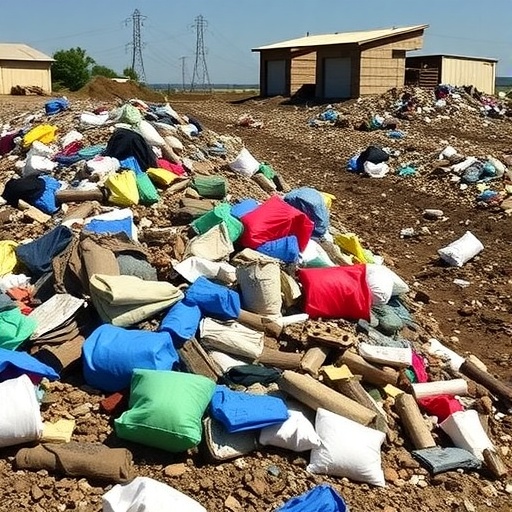
Every day, roughly 3,000 tonnes of municipal waste arrive at Repi, an open dumpsite on the southwestern edge of Addis Ababa. The site has operated since 1964, when it stood well outside the capital’s built-up area. Today, homes and communities surround the 37-hectare waste mountain, transforming what was once a remote disposal ground into a sprawling environmental and public-health hazard. A new expert assessment has now ranked the dangers at Repi, identifying downstream contamination of rivers and groundwater as the site’s most urgent environmental threat, while placing occupational hazards faced by informal waste pickers at the top of the health-and-safety risks.
The study, published in Case Studies in Chemical and Environmental Engineering, combines two decision-making tools rarely used together for open dumpsites: fuzzy analytical hierarchy process, or FAHP, and bow-tie modeling. The first method converts uncertain expert judgments into numerical priorities; the second maps how hazards arise, how they can trigger a central “top event,” and where preventive or protective barriers could interrupt the chain. Together, the techniques turn a long list of possible dangers into a ranked intervention plan. The researchers identified 54 potential risks from literature, field observations and community-risk studies, then screened these down to 28 critical risks across environmental, health and safety, and socio-economic categories.
Repi lacks several features expected at an engineered landfill, including an impermeable liner, a functioning leachate collection and treatment system, gas extraction, planned waste cells and adequate fencing. These omissions matter because waste does not simply remain where it is deposited. Rainwater moving through decomposing organic material can dissolve chemicals and carry suspended particles into leachate, a dark, polluted liquid containing organic compounds, inorganic salts, heavy metals and microorganisms. Without a liner and drainage network, leachate can percolate through soil toward groundwater or flow across the surface into nearby waterways. At Repi, the assessed pathway extends about 1.9 kilometres downstream to the Jemo River, raising concern for drinking-water sources, irrigation, aquatic ecosystems and communities living along the drainage route.
The ranking reflects more than theoretical modeling. Previous measurements around Repi have reported extremely high organic pollution in leachate, including chemical oxygen demand values reaching 19,600 milligrams per litre and five-day biochemical oxygen demand of up to 2,000 milligrams per litre. COD estimates the oxygen required to chemically oxidize pollutants, while BOD5 measures the oxygen consumed by microorganisms as they break down biodegradable material; high values can strip oxygen from receiving waters and stress aquatic life. Studies have also detected metals and microbial contamination, with reported concentrations of copper, iron and zinc in leachate and high total and faecal coliform levels. Groundwater investigations have found elevated electrical conductivity and several metals, including chromium, lead, mercury, cadmium and arsenic, with many measurements exceeding international or Ethiopian drinking-water standards. The new assessment therefore places “contamination of rivers and groundwater in the downstream direction” first, with a normalized FAHP weight of 0.12445.
The FAHP result is designed to handle a problem that conventional risk scoring often hides: experts may agree that one hazard is more serious than another without being able to assign a perfectly precise number to that judgment. In the study, ratings from a nine-point importance scale were converted into triangular fuzzy numbers, written as a lower, middle and upper value. An expert selecting a rating of five, for example, was represented by the range (4, 5, 6), capturing uncertainty around the most likely assessment. The researchers aggregated judgments from 16 experts using geometric means, calculated relative weights and then converted the fuzzy results into single values using the center-of-area method. The resulting rankings were highly consistent, with consistency ratios of 0.00534 for environmental risks, 0.00343 for health and safety, and 0.0028 for socio-economic risks—each well below the commonly accepted threshold of 0.10.
The environmental ranking was closely clustered. After downstream water contamination came degradation of surrounding soil and water quality combined with the site’s unaesthetic appearance, weighted 0.12284. Uncontrolled burning of plastic waste ranked third, at 0.11931, because combustion can generate fine particles and toxic compounds, including dioxins and furans, depending on the materials and burning conditions. Poor leachate collection, storage and treatment followed, while smoke, dust and foul odour ranked fifth. The ordering echoes what nearby residents have reported: polluted water, scattered waste, persistent smells and visible environmental decline are not separate experiences but overlapping symptoms of a disposal system without effective containment or daily operational controls.
The health-and-safety results shift attention from the landscape to the people working inside it. Occupational health risks to waste pickers ranked first, with a weight of 0.10039. Informal waste pickers may encounter broken glass, sharp metal, needles, contaminated medical waste, pathogens and chemically hazardous materials, often without gloves, boots, protective clothing, training or formal occupational-health services. Cuts and puncture wounds can create direct routes for infection, while repeated lifting and sorting can cause musculoskeletal injury. Vector- and rodent-borne diseases ranked second, followed by smoke-, dust- and odour-related respiratory illness. The researchers emphasized that different groups face different exposure pathways: waste pickers experience intense, direct contact with waste, whereas nearby residents may be more affected by air pollution, contaminated water, insects, rodents and longer-term environmental exposure.
Socio-economic risks were also substantial, and the highest-ranked item was not a conventional financial measure. Loss of aesthetic value affecting the city’s beauty and tourism ranked first, with a weight of 0.13597, followed by declining quality of life for nearby residents at 0.13378. Lack of government attention ranked third. These findings suggest that an open dumpsite can impose costs through damaged city image, social stigma, psychological stress, fear of fires or landslides, reduced wellbeing and money spent managing illness, even when those costs are difficult to capture in a standard economic ledger. Repi has already experienced the consequences of physical instability: a 2017 waste landslide killed more than 115 people, reinforcing residents’ concerns about disasters as well as their frustration over unfulfilled relocation promises.
To translate the rankings into action, the researchers built bow-tie diagrams for the highest-priority hazards. On the left side of each diagram, fault-tree logic identifies threats that could lead to a central adverse event, such as leachate reaching a river. On the right, event-tree logic follows the possible consequences and shows where mitigation could reduce harm. Proposed preventive barriers for water contamination include engineered liners, leachate collection and treatment, storm-water drainage, restrictions on dumping near waterways, daily soil cover, site fencing and stronger enforcement. Mitigation measures include routine water and soil monitoring, water treatment, sanitation improvements, epidemiological studies and early-warning systems. For waste pickers, suggested barriers include personal protective equipment, safety training, health checks, first-aid services and occupational-health monitoring. Vector risks could be reduced through drainage, removal of stagnant water, waste cover, vector control, organic-waste segregation and recycling.
The researchers stress that these are candidate interventions, not guaranteed solutions. Their assessment was based primarily on expert judgment, field observations and published community-risk perceptions rather than a new epidemiological survey or a complete set of direct environmental measurements. The panel included academics, government officials, researchers and an NGO representative, but not waste pickers or community members directly. That limitation matters because people living and working around the site may identify hazards or practical obstacles that outside experts miss. Even so, the rankings proved remarkably stable. When the researchers widened or narrowed the fuzzy uncertainty ranges by 50 percent, the top three risks in every domain remained unchanged. When individual factor weights were increased or decreased by 20 percent, the same top-three ordering persisted, with changes in leading weights remaining below 5.7 percent. The study’s authors say the framework could be adapted to other rapidly urbanizing cities, but each site would need new local data, community participation and feasibility testing before decisions are made.
Cite this news
SCIENMAG. (August 28, 2026). Fuzzy AHP and bow-tie analysis prioritize risks at Ethiopia’s largest urban dumpsite. https://scienmag.com/fuzzy-ahp-and-bow-tie-analysis-prioritize-risks-at-ethiopias-largest-urban-dumpsite/
SCIENMAG. "Fuzzy AHP and bow-tie analysis prioritize risks at Ethiopia’s largest urban dumpsite." Scienmag, 28 August 2026, https://scienmag.com/fuzzy-ahp-and-bow-tie-analysis-prioritize-risks-at-ethiopias-largest-urban-dumpsite/. Accessed 28 August 2026.
SCIENMAG. "Fuzzy AHP and bow-tie analysis prioritize risks at Ethiopia’s largest urban dumpsite." Scienmag. August 28, 2026. https://scienmag.com/fuzzy-ahp-and-bow-tie-analysis-prioritize-risks-at-ethiopias-largest-urban-dumpsite/


