


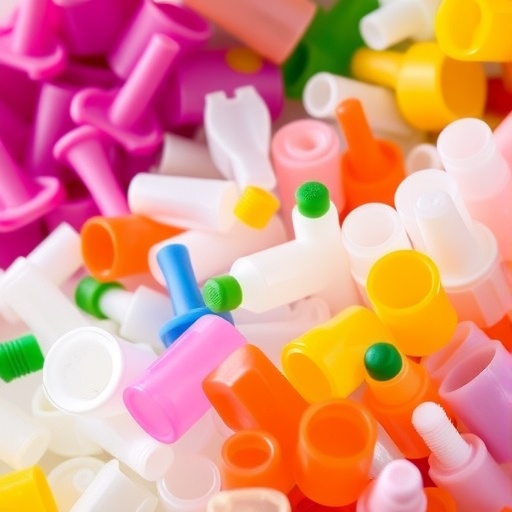
The next generation of recycled plastic may not come from sorting everything more aggressively—or from adding more chemicals to every batch—but from combining both strategies with far greater precision. A study of post-consumer polypropylene (PP), one of the most widely used plastics in rigid packaging, has shown that the quality of recycled material depends on a delicate balance between how deeply waste is sorted and how intelligently the resulting recyclate is modified. The findings suggest that recycling systems could produce higher-performance materials by first reducing the variability of waste streams and then using carefully selected impact modifiers and virgin polypropylene to fine-tune the remaining weaknesses.
The issue is becoming increasingly urgent. European legislation, including the Packaging and Packaging Waste Regulation, is pushing manufacturers toward higher recycled content in plastic packaging while demanding that recycled materials meet increasingly demanding performance requirements. Polypropylene is found in transport boxes, household containers, caps, closures, and many other rigid products. Yet post-consumer PP recyclates are usually made from mixtures of different PP grades, colors, additives, labels, and packaging formats. These materials may all be classified as polypropylene, but they do not behave identically. Some are stiff and brittle, others are tougher and more flexible, while their melt flow behavior can vary substantially. When they are processed together, their properties become averaged, producing a material that may be adequate for low-demand applications but unsuitable for products expected to match virgin plastic.
The researchers compared two recyclates made from the same light-colored post-consumer PP waste stream. The first, called rPP-base, underwent an industrial cold-washing process without additional sorting. The second, rPP-sort, was subjected to several additional separation steps designed to isolate rigid white polypropylene. These steps included sensor-based object sorting using near-infrared hyperspectral and color cameras, shredding, repeated friction washing, drying, size screening, magnetic separation, air classification, and final flake-level sorting. The two materials were then processed under identical conditions in an industrial recycling extruder, allowing the influence of sorting depth to be compared without confounding differences in extrusion.
The contrast between the two feedstocks was striking. The low-sorting stream contained 47.8 percent rigid white flakes, 26.4 percent rigid clear flakes, 3.0 percent rigid colored flakes, and 22.8 percent flexible material. After the additional separation stages, the high-sorting stream consisted of 97.1 percent rigid white flakes, with only small amounts of non-white rigid material and almost no flexible packaging. Thermal analysis confirmed that the changes were not merely visual. Both recyclates were dominated by polypropylene, which melted at approximately 162 to 163 degrees Celsius. However, rPP-base also displayed a clear polyethylene melting peak, indicating contamination associated with flexible packaging. The polyethylene signal was almost absent in rPP-sort, demonstrating that the deeper sorting process had removed much of this unwanted material.
Those compositional differences translated directly into performance. The virgin benchmark, a block-copolymer PP grade used in rigid transport packaging, had a Charpy notched impact strength of 7.3 kilojoules per square meter, a tensile modulus of 1320 megapascals, and a melt flow rate of 19 grams per 10 minutes. Impact strength measures how much energy a notched specimen can absorb before breaking, while tensile modulus indicates stiffness and melt flow rate provides a practical measure of how readily molten plastic can be processed. The rPP-base recyclate reached only 4.6 kilojoules per square meter, had a modulus of 1260 megapascals, and showed a relatively low melt flow rate of 10.4 grams per 10 minutes. By contrast, rPP-sort achieved an impact strength of 5.0 kilojoules per square meter, a modulus of 1520 megapascals, and a melt flow rate of 18.5 grams per 10 minutes. Sorting therefore reduced the initial performance gap, especially in stiffness and processability, although neither recyclate matched the benchmark in impact resistance.
To close that gap, the researchers tested three commercially available ethylene-based elastomeric impact modifiers. These rubber-like materials are designed to absorb energy during sudden loading, improving toughness but generally reducing stiffness. The modifiers differed in their chemical structures, incorporating ethylene with octene or butene units. Each was added at concentrations of 2, 5, and 10 weight percent to both recyclates and four virgin PP grades: two block copolymers, a random copolymer, and a homopolymer. The experiments revealed that no single modifier was universally best. In the low-sorting recyclate, one modifier increased impact strength by as much as 0.42 kilojoules per square meter for every additional weight percent added. In the high-sorting material, the strongest response reached 0.35 kilojoules per square meter per weight percent. The virgin block copolymers also responded strongly, whereas random copolymer and homopolymer matrices showed weaker toughening.
The trade-off was equally clear. As impact modifier concentration increased, tensile modulus declined almost linearly. In some formulations, stiffness fell by more than 28 megapascals for every additional weight percent of elastomer. The homopolymer showed the steepest reductions, while the sorted recyclate and block copolymers experienced more moderate losses. This behavior reflects the physical role of elastomers: they improve energy absorption because their flexible domains deform during impact, but those same domains reduce the rigidity of the overall material. The results also showed why recyclate composition matters. The less-sorted rPP-base responded strongly to modifiers, but it started from such a low stiffness and melt flow rate that its improved toughness could not compensate for its other shortcomings. The better-sorted rPP-sort, despite showing a somewhat lower incremental toughening response, began from a much more favorable property profile.
The team then used mathematical mixing rules to design compounds aimed at matching the virgin benchmark while retaining at least 50 percent recyclate. For impact strength, an Arrhenius relationship was used, which predicts the logarithm of the blend property from the logarithms of the component properties. Tensile modulus was estimated using a linear rule, while melt flow rate was modeled with a three-component Arrhenius equation involving recyclate, modifier, and virgin PP. Rather than extrapolating mechanical properties to a hypothetical pure-modifier phase, the researchers represented the mechanical behavior as a blend between unmodified recyclate and a virgin PP compound containing 10 percent impact modifier. This created a practical, experimentally accessible basis for predicting ternary formulations.
The modeling exposed a fundamental difference between the two recycled materials. For rPP-base, impact strength could be raised to the benchmark under some conditions, but stiffness remained below the target because the recyclate itself was already less stiff than the virgin reference. Adding impact-modified virgin PP could not restore the modulus while retaining the required recycled content. Its low melt flow rate also remained difficult to correct: even using a higher-flow virgin grade, the calculated formulation at 50 percent recyclate did not reach the benchmark processing value. For rPP-sort, the situation was more promising. Its high intrinsic stiffness created room for elastomer addition without falling below the modulus target. The researchers identified a narrow feasible window, particularly when using the third modifier, in which both impact strength and stiffness could meet or exceed the virgin benchmark at approximately 60 percent recyclate.
Experimental validation largely confirmed the predictions. Two compounds based on rPP-base were produced at 50 percent recyclate, but neither fulfilled all three requirements simultaneously. One formulation achieved the target impact strength while remaining too stiff—or rather, not stiff enough—and too slow-flowing compared with the benchmark. A second formulation improved melt flow using a higher-flow virgin PP grade, but still failed to reach the required impact strength, modulus, and flowability together. In contrast, all three compounds based on rPP-sort met the mechanical targets. They contained between 50 and 60 percent recyclate and used approximately 4 to 4.5 percent impact modifier. Their melt flow rates did not exactly match the virgin reference, showing that mechanical equivalence does not automatically guarantee identical processing behavior. The researchers suggest that slightly reducing modifier content could improve flow and stiffness while preserving sufficient impact resistance.
The study’s broader message is that recycled plastic quality cannot be solved by a single intervention. Deeper sorting can reduce the spread of polymer types, additives, colors, and degradation histories, but it requires additional equipment, energy, labor, and material handling—and may increase losses. Compounding can restore toughness and adjust processability, but impact modifiers are substantially more expensive than recyclate and virgin PP, and excessive use can undermine stiffness, cost, or future recyclability. The most effective strategy is therefore a systems approach: sort waste deeply enough to create a stable and predictable material fraction, then modify it only as much as necessary to meet a clearly defined application target. For polypropylene packaging, that balance could determine whether recycled content remains confined to low-performance products or becomes a realistic substitute for virgin plastic in demanding applications.
Cite Scienmag News
Sloane Callahan. (August 26, 2026). Optimizing Recycled Polypropylene Performance by Balancing Sorting and Modification. Scienmag. https://scienmag.com/optimizing-recycled-polypropylene-performance-by-balancing-sorting-and-modification/
Sloane Callahan. "Optimizing Recycled Polypropylene Performance by Balancing Sorting and Modification." Scienmag, 26 August 2026, https://scienmag.com/optimizing-recycled-polypropylene-performance-by-balancing-sorting-and-modification/. Accessed 4 September 2026.
Sloane Callahan. "Optimizing Recycled Polypropylene Performance by Balancing Sorting and Modification." Scienmag. August 26, 2026. https://scienmag.com/optimizing-recycled-polypropylene-performance-by-balancing-sorting-and-modification/


