


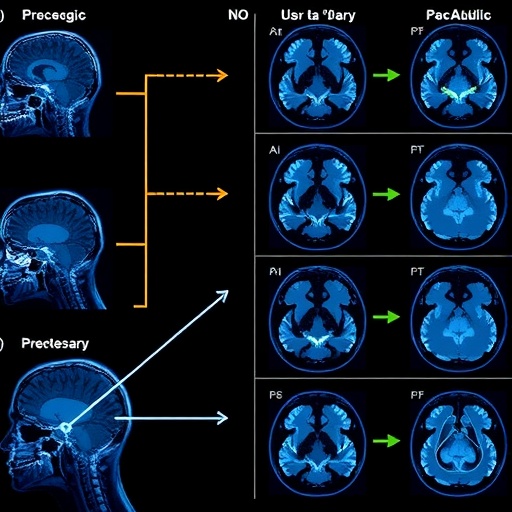
A new international workgroup has proposed a harmonised bedside protocol for using the pressure reactivity index, or PRx, in adults and children with traumatic brain injury who are undergoing intracranial pressure monitoring. Published in Neurocritical Care, the framework brings together practices from nine clinical centres and aims to make cerebral autoregulation monitoring easier to interpret and implement. Rather than presenting a formal guideline or claiming that PRx-guided treatment has already been proven to improve survival, the authors describe the protocol as a practical map of how experienced teams are currently using the technology. Its publication arrives as intensive-care specialists increasingly seek ways to move beyond one-size-fits-all blood-pressure and intracranial-pressure targets and toward treatment tailored to each injured brain’s physiological response.
The protocol was developed through the CLINICCA initiative, a global effort focused on the clinical use of continuous cerebral autoregulation information. A 2023 survey of 44 experts found that approximately half were already using an autoregulation index to influence clinical decisions, but only 39% of those clinicians had incorporated the information into a written local protocol. PRx was the most frequently used index among respondents. The new workgroup therefore invited clinicians who used PRx or PRx-derived cerebral perfusion pressure targets in adult or paediatric traumatic brain injury to edit a common template, share examples of local practice and, where available, submit written protocols. Eight invited experts responded from centres with established protocols or structured practice, while two additional clinicians contributed paediatric applications. After excluding practices unrelated to traumatic brain injury, the authors synthesised the feedback into a five-part framework.
PRx is designed to provide a continuous estimate of how well cerebral blood vessels react to changes in perfusion pressure. Under normal conditions, small arteries and arterioles in the brain constrict or dilate to help maintain relatively stable blood flow despite fluctuations in arterial blood pressure. This buffering process is known as cerebral autoregulation. When autoregulation is impaired after traumatic brain injury, changes in arterial pressure may be transmitted more directly to the cerebral circulation, increasing the risk of inadequate perfusion or pressure-driven swelling. PRx is calculated from slow waves in arterial blood pressure and intracranial pressure, using a moving Pearson correlation over roughly five minutes. A positive correlation generally suggests impaired pressure reactivity, whereas a lower or negative value is more consistent with preserved vascular responsiveness. Because the calculation is global and depends on high-quality, continuously streamed physiological signals, PRx should not be interpreted as a direct measurement of regional blood flow or tissue oxygenation.
The first component of the harmonised protocol uses an elevated or persistently abnormal PRx value as a trigger for clinical review. In the participating centres, a threshold near 0.3 was commonly used, although published studies have examined values ranging from approximately 0.2 to 0.5. When PRx indicates impaired reactivity, clinicians may check the patient’s head and neck position, verify arterial and intracranial pressure transducers, inspect signal quality and review intracranial pressure, cerebral perfusion pressure, carbon dioxide and brain-tissue oxygenation. Other possible contributors include fever, sedation changes, ventilator alterations, seizures, systemic hypotension and evolving intracranial pathology. The workgroup stresses that an abnormal PRx is a warning signal rather than an automatic instruction to intervene. If conventional physiological variables remain acceptable and no corroborating evidence of cerebral hypoperfusion or dangerous intracranial hypertension is present, some centres would continue observation rather than launch a treatment escalation.
The second component concerns intracranial hypertension management and reflects a counterintuitive feature of autoregulation-guided care. When PRx is impaired, raising arterial pressure may not produce the expected reduction in intracranial pressure and can potentially increase cerebral blood volume or worsen pressure transmission. Several contributors therefore consider reducing arterial pressure, cautiously and under defined safety conditions, when impaired reactivity accompanies intracranial hypertension. By contrast, preserved PRx may support a carefully monitored increase in arterial pressure or cerebral perfusion pressure as part of a “MAP or CPP challenge.” If the cerebrovascular bed can constrict appropriately, increasing perfusion pressure may improve vascular tone and help lower intracranial pressure. The protocol does not present either strategy as universal. Each decision must be considered alongside the patient’s neurological examination, imaging, systemic circulation, oxygen delivery and other neuromonitoring data.
The third and fourth components address cerebral perfusion pressure targets derived from PRx. Cerebral perfusion pressure is commonly approximated as mean arterial pressure minus intracranial pressure, and it is a key determinant of the pressure gradient driving blood through the brain. A fixed target may be useful, but it cannot account for the changing autoregulatory state that often follows severe brain injury. One derived target is CPPopt, or optimal cerebral perfusion pressure, the pressure associated with the lowest PRx over a range of observed perfusion pressures. Other approaches estimate the lower limit of reactivity, where autoregulatory capacity begins to fail, or the upper limit of reactivity, where pressure may become excessive. More than half of the contributing centres reported using one or more derived targets to optimise cerebrovascular physiology, although the specific algorithms, thresholds, timing and degree of clinical reliance varied substantially.
The protocol also recognises that perfusion targets may be used to reduce treatment burden rather than simply maximise physiological measurements. If a patient maintains stable cerebral autoregulation and other monitoring signals at a lower pressure, clinicians may be able to avoid unnecessary fluid loading, high doses of vasopressors or prolonged exposure to interventions that can damage the heart, lungs or kidneys. This approach seeks a balance between supporting the injured brain and limiting harm elsewhere in the body. However, the authors caution that PRx is a global summary measure and may behave differently in diffuse injury compared with focal contusions, haematomas or areas of infarction. A pressure that appears favourable globally may not guarantee adequate perfusion in every vulnerable region. For that reason, derived targets should be treated as dynamic decision-support information, not as rigid numbers that override the clinical picture.
The fifth component places PRx within multimodality monitoring, combining it with measurements such as brain-tissue oxygen tension, transcranial Doppler, near-infrared spectroscopy, electroencephalography, arterial carbon dioxide and end-tidal carbon dioxide. In one possible decision pathway, a low brain-tissue oxygen signal accompanied by impaired PRx could prompt assessment of perfusion pressure, oxygen delivery and intracranial pressure together rather than isolated treatment of any single value. Preserved PRx may support a cautious perfusion-pressure challenge when oxygen delivery appears pressure-dependent. Paediatric centres described particularly intensive use of multimodal information, including PRx, transcranial Doppler, near-infrared spectroscopy and brain-tissue oxygenation, to balance sufficient cerebral perfusion against control of intracranial volume. Yet multimodal strategies were among the least consistently adopted elements of the survey, reflecting differences in equipment, staffing, expertise and confidence in how the signals should be combined.
A major message from the workgroup is that technical reliability is inseparable from clinical interpretation. PRx requires continuous acquisition of arterial blood pressure and intracranial pressure at adequate sampling rates, correct signal calibration, reliable time synchronisation and effective removal or recognition of artefacts. Disconnections, damping, flushing, waveform distortion, patient movement and abrupt therapeutic changes can create misleading correlations. The calculation also depends on slow spontaneous fluctuations; a flat or highly unstable signal may generate a number without providing meaningful physiological information. Derived CPP targets can be similarly unreliable when the data contain insufficient variation, when autoregulation is changing rapidly or when the algorithm is applied without quality-control indicators. The supplementary technical addendum accompanying the article provides practical advice for data acquisition, preprocessing and bedside interpretation, but the authors note that standardisation across devices and software remains incomplete.
The workgroup’s findings are likely to attract attention because they capture a field already moving into clinical practice before definitive outcome evidence has arrived. Observational studies have linked cerebrovascular reactivity with prognosis after traumatic brain injury, and a phase-two randomised feasibility trial found that targeting CPPopt was safe and feasible in selected adults. Nevertheless, no strong evidence yet demonstrates that treating patients according to PRx improves long-term neurological outcomes compared with conventional management. The new protocol therefore serves two purposes: it offers clinicians a transparent starting point for local implementation, and it exposes the areas where practice is most uncertain. Agreement was strongest around using PRx to prompt reassessment and to inform intracranial-hypertension management. The greatest variation involved CPP-derived targets and multimodal algorithms. By making these differences visible, the CLINICCA workgroup hopes to encourage collaboration, improve reproducibility and support future prospective trials capable of testing whether autoregulation-guided care can change the course of traumatic brain injury.
Cite Scienmag News
Harold Sullivan. (August 26, 2026). Harmonized PRx Protocol for Adult and Pediatric TBI with ICP Monitoring. Scienmag. https://scienmag.com/harmonized-prx-protocol-for-adult-and-pediatric-tbi-with-icp-monitoring/
Harold Sullivan. "Harmonized PRx Protocol for Adult and Pediatric TBI with ICP Monitoring." Scienmag, 26 August 2026, https://scienmag.com/harmonized-prx-protocol-for-adult-and-pediatric-tbi-with-icp-monitoring/. Accessed 4 September 2026.
Harold Sullivan. "Harmonized PRx Protocol for Adult and Pediatric TBI with ICP Monitoring." Scienmag. August 26, 2026. https://scienmag.com/harmonized-prx-protocol-for-adult-and-pediatric-tbi-with-icp-monitoring/


