

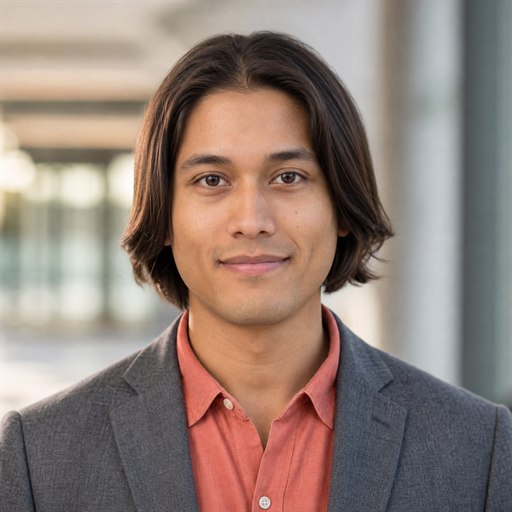
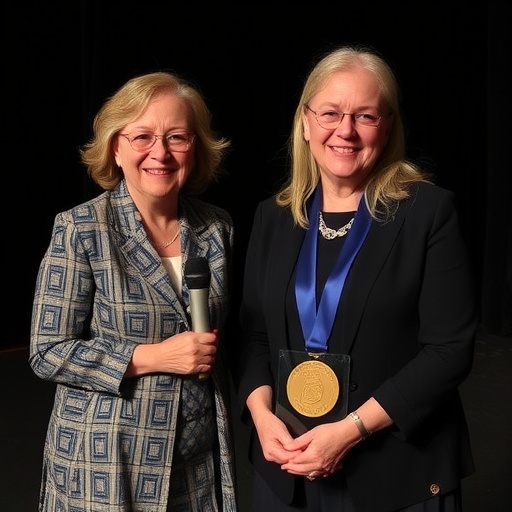
Professor Mari Lundström has received the Royal Society of Chemistry’s Faraday Medal in Electrochemistry for developing technologies that could change how the world recovers metals essential to the clean-energy transition. The award was presented in York, United Kingdom, on 24 August, recognising Lundström’s pioneering research in hydrometallurgy and sustainable electrochemical processing. Based at Aalto University in Finland, Lundström has focused her career on a challenge that is becoming increasingly urgent: how to obtain critical metals from raw materials that contain less of them, more impurities and a greater environmental cost. Her work combines chemical engineering, electrochemistry and resource recovery to create methods that can extract valuable elements from ores and recycled materials while reducing dependence on hazardous chemical reagents.
The medal comes as demand for metals continues to rise across technologies such as batteries, renewable energy systems, electric vehicles, electronics and power networks. These applications require large quantities of materials including copper, nickel, cobalt, lithium, silver and platinum-group metals. At the same time, many easily accessible, high-grade deposits are being depleted, forcing industry to process ores in which valuable metals are present at extremely low concentrations. Such materials are more difficult and expensive to treat because large volumes of rock or industrial waste must be processed to recover relatively small quantities of metal. Lundström argues that the transition to a circular economy will depend not only on recycling more products, but also on developing efficient technologies capable of recovering metals from increasingly complex and dilute sources.
Traditional hydrometallurgy commonly uses aqueous chemical solutions to dissolve metals and separate them from unwanted components. Although these processes are well established, they can require substantial quantities of reagents and may generate waste streams that must be treated before disposal. Electrometallurgy offers another route by using electrical current to drive chemical reactions. In an electrochemical cell, metal ions dissolved in a liquid electrolyte can be reduced at an electrode, where they gain electrons and form solid metal. The process can be controlled through voltage, current, electrode material and solution chemistry. Because electricity directly drives the separation, electrometallurgical systems can potentially operate with fewer chemical inputs and can be powered by renewable electricity, linking metal production more closely to the energy transition.
Among Lundström’s most important innovations is a patented process known as Electrodeposition-Redox Replacement, or EDRR. The technique is designed to recover precious metals such as gold, silver and platinum from solutions in which their concentrations are far below the levels typically handled by conventional separation methods. EDRR combines two electrochemical steps. During electrodeposition, electrical energy is used to concentrate metal ions onto an electrode. A subsequent redox replacement stage enables a more noble metal to be deposited through a spontaneous electron-transfer reaction involving a less noble metal. By repeating and controlling these cycles, the process can selectively accumulate extremely small quantities of valuable material, improving the prospects for recovering metals that might otherwise remain in solution or be lost in waste streams.
The technical significance of EDRR lies in its ability to address the “last mile” of metal recovery. Conventional processes can become inefficient when the concentration of a target element falls below a certain threshold, even if the remaining quantity is economically or environmentally important. EDRR is designed to work at these very low concentrations, allowing recovery from dilute process solutions, industrial residues and recycled materials. Its electrochemical nature also avoids the need for volatile chemicals, a feature that could simplify handling and reduce risks associated with some conventional extraction systems. The technology does not eliminate the environmental impacts of mining or metal production, but it offers a way to recover more of the material already extracted and to reduce losses during processing.
Lundström’s research reflects a wider shift in the way scientists view mineral resources. Instead of treating mining, refining and recycling as separate activities, researchers are increasingly examining the entire life cycle of metals. Waste from one industrial process may contain valuable elements that can serve as feedstock for another, while discarded electronics, batteries and other products can become secondary sources of raw materials. Recovering these elements is technically difficult because recycled materials often contain complex mixtures, surface coatings, contaminants and metals present in small amounts. Selective electrochemical methods could help separate valuable components without requiring the same sequence of energy-intensive and chemically demanding steps used for primary ores.
In 2022, Lundström co-founded Elmery, a spin-out company established to commercialise EDRR and continue its development with industrial partners around the world. The creation of the company illustrates the path from laboratory research to industrial deployment, where performance must be demonstrated under real processing conditions and at commercially relevant scale. Industrial systems must operate reliably with variable feed materials, maintain high recovery rates and produce metals of sufficient purity. They must also be economically competitive and integrate with existing refining and recycling infrastructure. Collaboration with industry can provide the diverse materials, operating data and engineering expertise needed to test whether a promising electrochemical method can function beyond controlled laboratory experiments.
The Faraday Medal is awarded by the Royal Society of Chemistry to a mid-career researcher working outside the United Kingdom and Ireland whose contributions to electrochemistry have produced outstanding advances in research and innovation. It is named after Michael Faraday, the English physicist and chemist whose discoveries in electromagnetic induction, diamagnetism and electrolysis shaped modern science and technology. Lundström is the first Finnish researcher to receive the honour. Previous recipients have included Millennium Technology Prize winners and scientists who later supervised Nobel laureates, placing her recognition within a distinguished history of electrochemical research. For Lundström, the award also highlights the growing importance of expertise in metal recovery at a time when the availability of raw materials is becoming a strategic concern.
Lundström has emphasised that metal production will continue to have environmental consequences, even as new technologies make it more efficient. The central goal, she says, should be to make production as sustainable as possible rather than shifting environmental damage from one region or stage of the supply chain to another. Her work therefore addresses both a technical and societal problem: how to supply the metals needed for decarbonisation without reproducing the environmental pressures that the green transition is intended to reduce. By combining low-concentration recovery, recycling potential and direct use of electricity, EDRR represents one possible component of a more circular metals economy. The Faraday Medal recognises Lundström’s contribution at a moment when breakthroughs in electrochemistry could determine whether the world has enough responsibly sourced materials to build its clean-energy future.
Web References: Aalto University news and events
References: Royal Society of Chemistry Faraday Medal in Electrochemistry; Aalto University; research and commercialisation activities associated with Professor Mari Lundström and Elmery.
Keywords
Mari Lundström, Aalto University, Faraday Medal, electrochemistry, hydrometallurgy, Electrodeposition-Redox Replacement, EDRR, metal recovery, recycling, critical raw materials, sustainable mining, electrometallurgy, gold recovery, silver recovery, platinum recovery, circular economy, green transition
Cite Scienmag News
Benjamin Clark. (August 25, 2026). Faraday Medal Honors Circular Economy Pioneer Mari Lundström. Scienmag. https://scienmag.com/faraday-medal-honors-circular-economy-pioneer-mari-lundstrom/
Benjamin Clark. "Faraday Medal Honors Circular Economy Pioneer Mari Lundström." Scienmag, 25 August 2026, https://scienmag.com/faraday-medal-honors-circular-economy-pioneer-mari-lundstrom/. Accessed 4 September 2026.
Benjamin Clark. "Faraday Medal Honors Circular Economy Pioneer Mari Lundström." Scienmag. August 25, 2026. https://scienmag.com/faraday-medal-honors-circular-economy-pioneer-mari-lundstrom/


