


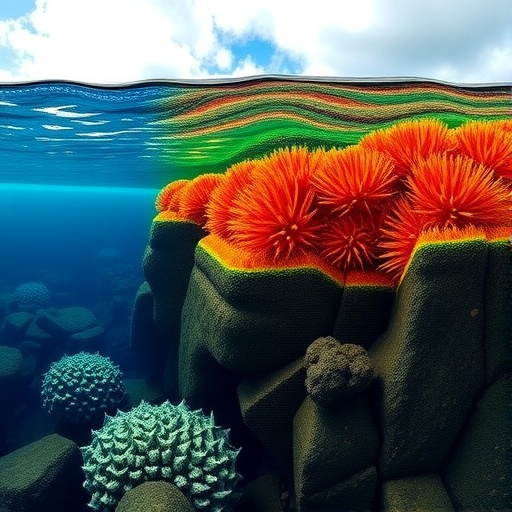
A new study of the Kermadec Trench has revealed how microbial life can persist in one of Earth’s most nutrient-starved environments: by exploiting organic molecules according to the chemical conditions layered through the seafloor. The research, published in Nature Communications, shows that the degradation of biological macromolecules is organized by redox conditions, creating a sequence of microbial energy opportunities beneath the deep Pacific. In sediments where sunlight never reaches, fresh organic matter is scarce, oxygen is rapidly consumed, and the pressure is extreme, this chemical partitioning may provide the key to long-term survival.
The Kermadec Trench, northeast of New Zealand, plunges more than 10 kilometers below the ocean surface and is among the deepest environments on the planet. Its sediments are considered oligotrophic, meaning that they receive relatively little organic carbon and other nutrients compared with more productive coastal and surface-ocean ecosystems. Material sinking from above is extensively diluted before it reaches the trench floor, while much of the most readily degradable organic matter is consumed during its descent. Yet the sediment remains inhabited by microbial communities capable of maintaining metabolism under conditions that appear, at first glance, nearly incompatible with active life.
The new work focuses on macromolecules, including proteins, carbohydrates, lipids and nucleic acids. These large biological compounds cannot always be transported directly into microbial cells. Instead, they must first be broken into smaller units through hydrolysis, a process often driven by extracellular enzymes released into the surrounding sediment. The resulting amino acids, sugars, fatty acids and nucleotides can then be taken up and metabolized. In deep-sea sediments, however, the efficiency and pathway of this degradation depend strongly on which electron acceptors are available. These oxidizing compounds allow microbes to extract energy as organic molecules are chemically transformed.
Redox conditions change with depth because microbes consume electron acceptors in a predictable sequence. Oxygen, when present, is generally used first because it provides a high energetic return. Once oxygen is depleted, microorganisms may turn to nitrate, metal oxides such as manganese and iron, sulfate and, ultimately, carbon dioxide during methanogenesis. Each transition creates a distinct geochemical zone. The Kermadec Trench sediments therefore function not as a chemically uniform habitat, but as a stack of microscopic ecosystems. The study indicates that macromolecule degradation follows this redox architecture, with different types of organic substrates being processed under different chemical conditions.
This organization is important because the most energy-rich reactions are not necessarily the only ones that matter for survival. In an oligotrophic sediment, microbial populations cannot afford to waste accessible carbon, even if the energy yield from its degradation is small. Enzymes and metabolic pathways may be distributed across redox layers, allowing communities to continue processing complex organic material after oxygen has disappeared. Some microorganisms can use alternative electron acceptors, while others may rely on metabolic partnerships in which one species produces compounds that another consumes. Such exchanges can sustain a low but persistent flow of energy through the sediment.
The findings also clarify why macromolecules can remain biologically significant long after they have arrived on the ocean floor. Organic material is often described as “refractory” when it resists rapid decomposition, but resistance is not absolute. A molecule that is difficult to degrade under one redox condition may become more accessible under another, especially after partial breakdown by a different microbial group. This means that the apparent stability of sedimentary organic matter may reflect chemical context rather than permanent protection. Redox stratification can repeatedly expose macromolecules to new enzymatic and respiratory processes as they move downward.
For the microbes living in the trench, this strategy may resemble a form of biochemical resource management. Rather than depending on a continuous supply of fresh food, they exploit a chemically changing inventory of old organic compounds. Proteins may be hydrolyzed into amino acids; polysaccharides may be converted into smaller sugars; lipids may be released as fatty acids; and nucleic acids may yield nitrogen- and phosphorus-containing compounds. These products can support biosynthesis as well as energy production. In environments where cell division is slow and maintenance is more important than growth, even modest amounts of usable carbon can make the difference between persistence and disappearance.
The study carries implications beyond the Kermadec Trench. Hadal trenches are among the least explored ecosystems on Earth, but they are connected to global carbon and nutrient cycles. Organic matter buried in their sediments can be preserved, transformed or returned to the wider ocean as dissolved compounds and gases. Microbial degradation influences how much carbon remains locked away and how much is converted into carbon dioxide or methane. It also controls the release and transformation of nitrogen, sulfur, phosphorus and metals. By showing that these processes are structured by redox layers, the research provides a framework for understanding how deep sediments contribute to the chemistry of the ocean over geological timescales.
The findings may also help scientists interpret life in other energy-limited settings, including deep continental aquifers, polar subglacial environments and potentially extraterrestrial habitats. Wherever liquid water, organic molecules and changing chemical gradients coexist, microorganisms may survive by dividing metabolism across microscopic zones. The Kermadec Trench demonstrates that scarcity does not necessarily mean biochemical inactivity. Instead, life can persist by matching specific molecules to specific electron acceptors, using successive reactions to extract value from material that appears chemically depleted. In the darkness of the deepest ocean, survival may depend less on abundance than on the ability to recognize and exploit every available redox opportunity.
Cite Scienmag News
Violet Maxwell. (August 25, 2026). Redox layering drives macromolecule breakdown, sustaining microbes in nutrient-poor Kermadec Trench sediments. Scienmag. https://scienmag.com/redox-layering-drives-macromolecule-breakdown-sustaining-microbes-in-nutrient-poor-kermadec-trench-sediments/
Violet Maxwell. "Redox layering drives macromolecule breakdown, sustaining microbes in nutrient-poor Kermadec Trench sediments." Scienmag, 25 August 2026, https://scienmag.com/redox-layering-drives-macromolecule-breakdown-sustaining-microbes-in-nutrient-poor-kermadec-trench-sediments/. Accessed 3 September 2026.
Violet Maxwell. "Redox layering drives macromolecule breakdown, sustaining microbes in nutrient-poor Kermadec Trench sediments." Scienmag. August 25, 2026. https://scienmag.com/redox-layering-drives-macromolecule-breakdown-sustaining-microbes-in-nutrient-poor-kermadec-trench-sediments/


