


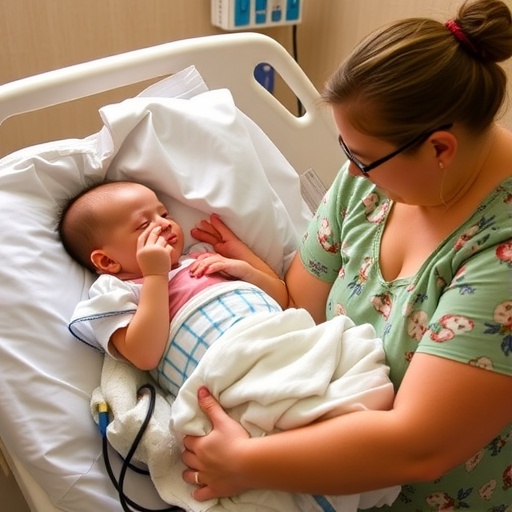
A new study is turning attention to a powerful but rarely measured part of the journey home from the neonatal intensive care unit: hope. Published in the Journal of Perinatology, the cross-sectional study, led by C. Arnold, R. Birrer and K. Odermatt, explores hope among parents of infants discharged from neonatal intensive care. The research arrives at a moment when advances in neonatal medicine are allowing more extremely premature and medically fragile infants to survive, while also leaving families to manage complex care far beyond the hospital walls. The paper’s focus suggests that discharge is not simply the end of an intensive medical episode. It is also a psychological transition, one in which relief, uncertainty, responsibility and expectations about the future can collide.
Neonatal intensive care units, or NICUs, provide highly specialized treatment for newborns who require support with breathing, circulation, nutrition, infection control or development. Infants may leave the unit while still needing medication, feeding assistance, oxygen, monitoring or frequent specialist appointments. For parents, the moment of discharge can therefore feel contradictory. Their child is well enough to leave the hospital, yet may remain vulnerable and require care that is unfamiliar and technically demanding. Hope in this setting is not necessarily simple optimism. In psychological and health research, it can refer to the perceived ability to identify meaningful goals, imagine pathways toward them and maintain motivation despite obstacles. Studying that experience may reveal dimensions of recovery that clinical measurements alone cannot capture.
The study is described as cross-sectional, meaning that researchers examined participants at a particular point or period rather than following them over an extended timeline. This design can provide a snapshot of parents’ experiences after their infants leave intensive care. It may help identify how hope is distributed across a group and whether it appears alongside factors such as perceived support, confidence in caregiving, emotional strain or concerns about the infant’s health. At the same time, a cross-sectional study cannot establish how hope changes over time or prove that one factor causes another. A parent who reports stronger hope may also be receiving more practical assistance, experiencing fewer medical complications or benefiting from a different discharge process. Those relationships require longitudinal research to untangle.
The importance of the topic lies partly in the gap between survival and wellbeing. Neonatal medicine has transformed outcomes for babies born very early or with serious illness, but survival can be followed by prolonged developmental monitoring and repeated interactions with healthcare systems. Parents may need to interpret warning signs, administer treatments, coordinate appointments and make decisions under conditions of incomplete information. These tasks can affect sleep, employment, finances and family relationships. A measure of hope could help researchers and clinicians understand whether families feel able to imagine a manageable future and whether they believe they have the resources to move toward it. Such information could complement assessments of depression, anxiety, stress and post-traumatic symptoms without treating hope as a substitute for mental-health screening.
The concept also has a technical distinction that matters in clinical research. Hope is not identical to happiness, confidence or a favorable prognosis. A parent may feel hopeful while still recognizing significant risks, and may remain deeply worried while holding a strong sense of purpose. Hope can be directed toward several targets at once: the infant’s growth, the family’s ability to cope, a return to ordinary routines or access to dependable professional support. Researchers therefore need carefully designed instruments and clearly defined outcomes if hope is to become useful in practice. The study’s title indicates that the authors are examining this construct directly in parents of discharged NICU infants, a population whose emotional needs can be obscured once the immediate medical crisis appears to have passed.
The findings could be relevant to the design of discharge programs, although the citation supplied for the study does not provide the sample size, measurement tools or numerical results. In a clinical setting, a structured conversation about parents’ expectations and worries might identify families who need additional education, home nursing, social work, peer support or psychological care. Preparation could include demonstrations of equipment, written action plans, emergency guidance and opportunities to practice caregiving before leaving the hospital. Clear communication may be particularly important because discharge instructions are often delivered after an exhausting hospitalization, when parents may be attempting to absorb complex information while managing fear and fatigue. Hope-oriented care would not mean offering unrealistic reassurance. It would mean helping families develop credible pathways through foreseeable challenges.
The research may also contribute to a broader shift in how neonatal outcomes are understood. Traditional measures often emphasize survival, length of hospitalization, weight gain, respiratory support or later developmental scores. These indicators are essential, but they describe only part of the experience. Family-reported outcomes can show how medical care is interpreted and sustained in everyday life. Parents are not passive observers of neonatal recovery; they become central members of the care team, often learning specialized skills under pressure. Their emotional state can influence how confidently they navigate follow-up care, although the direction and strength of any such relationship must be demonstrated rather than assumed. By placing hope within the research agenda, the study invites a more comprehensive view of recovery that includes both infant health and family adaptation.
The timing of the research is significant because the transition from hospital to home is increasingly recognized as a distinct phase of neonatal care rather than a single discharge event. Continuity between NICU teams, pediatricians, community nurses, therapists and family services can reduce fragmentation. Digital tools, telehealth appointments and remote monitoring may offer additional support, but they do not automatically solve problems of access, digital literacy or unequal resources. Hope may be shaped by whether parents believe help will be available when complications arise, whether they can afford transportation and medication, and whether their concerns are taken seriously. Future studies could follow families from hospitalization through the first months at home, compare different discharge models and examine how social and economic conditions influence both hope and health outcomes.
For now, Arnold, Birrer, Odermatt and colleagues’ study highlights a question with broad implications: what does it mean for parents to go home after neonatal intensive care, and what helps them believe that the future is navigable? The answer cannot be reduced to a single emotional score. Hope may be fragile, realistic, shared, culturally shaped and responsive to the quality of support surrounding a family. Treating it as a legitimate subject of scientific investigation could encourage healthcare systems to look beyond the hospital exit and invest in the period that follows. As neonatal survival continues to improve, understanding how families rebuild confidence after intensive care may become an increasingly important part of delivering care that is not only life-saving, but sustainable at home.
Cite Scienmag News
Harold Sullivan. (August 21, 2026). Study explores hope among parents after infants leave neonatal intensive care. Scienmag. https://scienmag.com/study-explores-hope-among-parents-after-infants-leave-neonatal-intensive-care/
Harold Sullivan. "Study explores hope among parents after infants leave neonatal intensive care." Scienmag, 21 August 2026, https://scienmag.com/study-explores-hope-among-parents-after-infants-leave-neonatal-intensive-care/. Accessed 3 September 2026.
Harold Sullivan. "Study explores hope among parents after infants leave neonatal intensive care." Scienmag. August 21, 2026. https://scienmag.com/study-explores-hope-among-parents-after-infants-leave-neonatal-intensive-care/


