


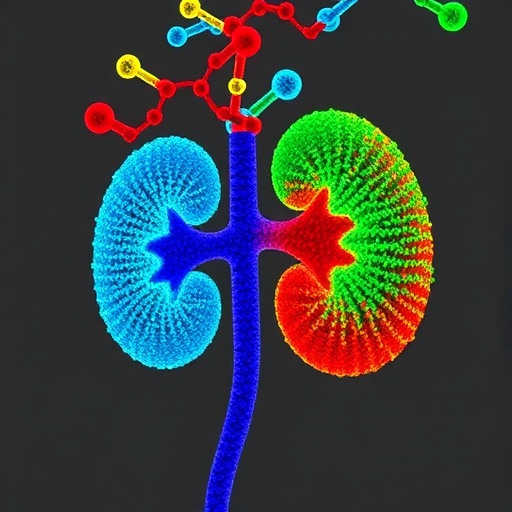
A new study published in Nature Communications reports that sepsis-associated acute kidney injury, one of the most dangerous complications of severe infection, is not a single biological condition. Using plasma proteomics, an international research team led by Marc Legrand, Huy Nguyen and Carolyn S. Calfee identified two reproducible molecular subphenotypes among patients whose kidneys became acutely injured during sepsis. The two groups were associated with different clinical outcomes, offering evidence that patients who currently receive a broadly similar diagnosis may in fact be experiencing markedly different biological processes.
Sepsis occurs when the body’s response to infection becomes dysregulated, triggering inflammation, vascular injury, altered circulation and widespread organ dysfunction. The kidneys are particularly vulnerable because they depend on a tightly controlled balance of blood flow, oxygen delivery, filtration and tubular transport. When acute kidney injury develops during sepsis, patients face increased risks of prolonged intensive-care treatment, dialysis and death. Yet clinicians often diagnose sepsis-associated acute kidney injury using measurements such as serum creatinine and urine output, indicators that describe impaired function but reveal little about the molecular events causing the damage.
The new work focuses on plasma proteomics, a technology that measures large numbers of proteins circulating in the blood. Plasma contains proteins released by immune cells, endothelial cells, injured tissues and organs responding to infection. Their concentrations and patterns can reflect inflammation, coagulation, vascular permeability, metabolism, tissue repair and cell death. Instead of examining one biomarker at a time, proteomic analyses compare coordinated protein signatures across many patients. Computational methods can then identify groups of patients whose molecular profiles resemble one another, potentially exposing biologically meaningful subtypes hidden within a conventional clinical diagnosis.
According to the study, this approach separated patients with sepsis-associated acute kidney injury into two subphenotypes that could be reproduced across analyses or patient groups. Reproducibility is a critical feature in biomarker research. A molecular pattern found in one hospital or one dataset may reflect local treatment practices, differences in patient selection or random statistical variation. A signature that persists under independent testing is more likely to represent a genuine feature of disease biology. The finding that two subphenotypes could be consistently recognized suggests that the division is not simply an artifact of a single experimental cohort.
The distinction is important because kidney injury during sepsis can arise through several overlapping mechanisms. Reduced effective circulation may limit oxygen delivery, while inflammatory signaling can disrupt the microcirculation and alter the behavior of endothelial cells lining blood vessels. Immune activation may damage the kidney directly or indirectly, and the kidney’s filtration units and tubular cells can respond differently to stress. At the same time, mitochondrial dysfunction, changes in cellular energy use, coagulation abnormalities and the accumulation of toxic metabolic products may contribute to declining renal function. Two patients with similar creatinine levels may therefore have very different combinations of these processes.
The study’s association between the two proteomic subphenotypes and distinct outcomes adds clinical weight to the molecular classification. The result indicates that the protein patterns were not merely descriptive labels; they corresponded to meaningful differences in how patients fared. The available citation does not specify the exact outcomes or the individual proteins defining each group, but the central message is clear: sepsis-associated acute kidney injury contains biologically distinct forms with different prognostic trajectories. That observation could eventually help clinicians identify patients at higher risk before conventional measures show the full extent of organ damage.
A major challenge in treating sepsis-associated kidney injury is that many interventions are applied to broad patient populations. Fluid administration, vasopressors, antimicrobial therapy and kidney replacement therapy are essential in appropriate circumstances, but the balance between benefit and harm may vary according to the underlying biological state. Excessive fluid can worsen tissue edema, while inadequate circulation can intensify kidney stress. Similarly, an anti-inflammatory or endothelial-targeted therapy might help one molecular subgroup but offer little benefit—or cause harm—in another. Proteomic subphenotyping could provide a framework for testing such treatments in more precisely defined populations.
The findings also illustrate why modern critical-care research is moving beyond single laboratory values. Creatinine rises slowly, is influenced by muscle mass and fluid balance, and may lag behind structural kidney injury. Urine output is clinically useful but can be affected by medications, hemodynamics and fluid management. A blood-based molecular signature could complement these measures by capturing active biological pathways closer to the time they begin. However, a proteomic classifier would need extensive validation before it could guide routine decisions. It would have to be rapid, affordable, standardized across laboratories and reliable in patients with different infections, ages, comorbidities and treatment exposures.
The study does not mean that sepsis-associated acute kidney injury can immediately be divided into two simple categories in everyday clinical practice. Proteomic patterns may represent points along a biological spectrum rather than completely separate diseases, and patients may shift from one state to another as infection and organ dysfunction evolve. Future investigations will need to identify the proteins and pathways that define the subphenotypes, determine when the signatures emerge, and establish whether they can predict outcomes early enough to change treatment. Researchers will also need to test whether matching therapies to molecular subgroups improves survival, accelerates kidney recovery or reduces the need for dialysis.
Even with those questions unresolved, the report marks an important step toward precision medicine in critical care. By showing that sepsis-associated acute kidney injury contains reproducible molecular subphenotypes with distinct outcomes, Legrand, Nguyen, Calfee and colleagues provide a more detailed map of a condition traditionally treated as one broad syndrome. The work may help explain why clinical trials in sepsis and acute kidney injury often produce inconsistent results: biologically different patients may have been grouped together under the same diagnosis. As proteomic technologies become faster and more accessible, blood-based molecular classification could help transform sepsis care from a largely uniform response into treatment guided by the specific biology unfolding inside each patient.
Cite Scienmag News
Kenneth Gardner. (August 19, 2026). Proteomics identifies two reproducible sepsis-associated kidney injury subtypes with distinct outcomes. Scienmag. https://scienmag.com/proteomics-identifies-two-reproducible-sepsis-associated-kidney-injury-subtypes-with-distinct-outcomes/
Kenneth Gardner. "Proteomics identifies two reproducible sepsis-associated kidney injury subtypes with distinct outcomes." Scienmag, 19 August 2026, https://scienmag.com/proteomics-identifies-two-reproducible-sepsis-associated-kidney-injury-subtypes-with-distinct-outcomes/. Accessed 4 September 2026.
Kenneth Gardner. "Proteomics identifies two reproducible sepsis-associated kidney injury subtypes with distinct outcomes." Scienmag. August 19, 2026. https://scienmag.com/proteomics-identifies-two-reproducible-sepsis-associated-kidney-injury-subtypes-with-distinct-outcomes/


