


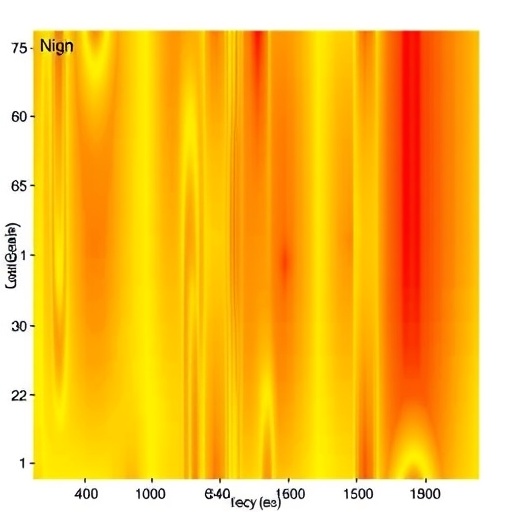
A new machine-learning approach could give acoustic engineers a faster way to predict how microslit panels behave when air rushes across their surfaces, a condition that has long complicated the design of quieter aircraft, vehicles, ventilation systems, and industrial machinery. In a study published in Communications Engineering, Zhang, Song, Liu and colleagues present a model designed to predict the surface impedance of microslit panels exposed to grazing flow. The research addresses a problem at the intersection of acoustics, fluid dynamics, and artificial intelligence: materials that can absorb sound effectively in still air may respond very differently when airflow moves tangentially across them. By learning the relationship between panel design, airflow, frequency, and acoustic response, the new method aims to make advanced noise-control systems easier to design and optimize.
Microslit panels are thin acoustic structures containing extremely narrow openings. Although they may look simple, their microscopic geometry can strongly influence how sound interacts with them. When a sound wave reaches the panel, air oscillates inside and around the slits. Friction and viscous effects convert part of the acoustic energy into heat, while the air trapped within or behind the panel can contribute a spring-like response. Together, these processes determine whether the panel reflects, transmits, or absorbs incoming sound. The key quantity used to describe this interaction is surface impedance, a complex acoustic parameter that combines resistance with reactance. Resistance represents energy dissipation, while reactance describes energy temporarily stored and released by the structure.
The challenge becomes substantially greater under grazing flow, in which the airflow travels parallel, or nearly parallel, to the panel surface. This configuration appears in many real-world environments, including aircraft surfaces, high-speed trains, engine nacelles, ducts, and other systems in which sound travels alongside a perforated or slotted material. The moving air can alter the pressure field near the openings, modify the boundary layer, and change the way acoustic energy enters the panel. It can also create additional aerodynamic noise and make measurements more difficult. As a result, a panel characterized in a quiet laboratory may not perform in the same way once exposed to operational airflow. Accurate prediction therefore requires more than a conventional sound-absorption estimate.
Traditionally, engineers have relied on analytical equations, numerical simulations, and experimental measurements to determine acoustic impedance. Each approach has advantages, but each can become costly or restrictive when many design variables must be considered. Detailed simulations may need to resolve complicated interactions between small slit dimensions, viscous flow, structural geometry, and sound waves. Experiments conducted in grazing-flow facilities can provide essential data, yet they often require specialized equipment and careful control of flow speed, frequency, pressure, and panel construction. These demands make it difficult to explore large design spaces quickly. A machine-learning model offers a different strategy: once trained on reliable data, it can approximate the underlying relationship and produce predictions far more rapidly than repeating a full simulation or experiment for every candidate design.
The model described by the researchers is intended to capture the nonlinear connection between the operating conditions of a microslit panel and its resulting surface impedance. In practical terms, such a system can be supplied with relevant information about the panel and its acoustic environment, then generate an estimate of how the panel will respond across the frequencies of interest. The value of this approach lies not in replacing physics, but in compressing complex physical behavior into a computationally efficient predictive tool. Machine learning can identify patterns that are difficult to express in a single simple formula, especially when several parameters interact simultaneously. For acoustic designers, that could mean testing more geometries, flow conditions, and material configurations during the early stages of development.
Surface impedance is particularly useful because it connects the microscopic behavior of a panel to the performance of a larger acoustic system. In models of sound propagation, designers can represent a panel through its impedance rather than calculating every detail of the air motion inside each slit. If the impedance is known accurately, it can be incorporated into simulations of ducts, cavities, aircraft components, or other sound-producing environments. This makes impedance prediction a critical step in designing liners and absorbers. A reliable prediction under grazing flow could help engineers identify when a microslit panel will maintain its acoustic function, when its absorption will deteriorate, and how its geometry might be adjusted to compensate for the effects of moving air.
The study is significant because it applies data-driven modeling to a configuration that is both technologically important and physically difficult. The behavior of microslit panels depends on parameters such as slit size, spacing, panel thickness, backing conditions, sound frequency, and flow velocity. The interaction among these variables can produce highly frequency-dependent changes in impedance. A model that learns from representative acoustic and flow data may provide a practical route toward rapid optimization, particularly when combined with engineering constraints. Designers could use such predictions to screen concepts before fabricating prototypes, focus experiments on the most promising candidates, or develop adaptive systems whose acoustic properties are tuned for different operating conditions.
The broader implications extend beyond one class of acoustic panels. Noise reduction is becoming increasingly important as transportation networks expand, urban environments become denser, and industries seek to meet stricter environmental requirements. Effective absorbers must work not only in ideal laboratory conditions but also in the moving, turbulent, and often unpredictable airflows found in real machines. By improving the speed at which these materials can be evaluated, machine-learning tools could accelerate the development of quieter aircraft cabins, cleaner ventilation systems, less disruptive industrial equipment, and more comfortable high-speed transport. The approach may also support digital design workflows in which artificial intelligence proposes panel geometries, physics-based calculations verify them, and targeted experiments refine the final design.
The researchers’ work also highlights an important principle for artificial intelligence in science: predictive power depends on the quality and scope of the physical data used to train a model. A machine-learning system can be extremely fast, but it must be tested against conditions that reflect the environments in which it will ultimately be used. For microslit panels, that includes changes in frequency, flow speed, geometry, and boundary conditions. The most useful future systems will likely combine data-driven prediction with established acoustic theory, uncertainty estimates, and experimental validation. Even so, the new model points toward a compelling possibility: microscopic openings engineered to control sound could soon be designed with the help of algorithms capable of navigating their complex behavior in flowing air, bringing quieter technology closer to everyday life.
Cite Scienmag News
Blake Davidson. (August 18, 2026). Machine Learning Predicts Microslit Panel Surface Impedance in Grazing Flow. Scienmag. https://scienmag.com/machine-learning-predicts-microslit-panel-surface-impedance-in-grazing-flow/
Blake Davidson. "Machine Learning Predicts Microslit Panel Surface Impedance in Grazing Flow." Scienmag, 18 August 2026, https://scienmag.com/machine-learning-predicts-microslit-panel-surface-impedance-in-grazing-flow/. Accessed 4 September 2026.
Blake Davidson. "Machine Learning Predicts Microslit Panel Surface Impedance in Grazing Flow." Scienmag. August 18, 2026. https://scienmag.com/machine-learning-predicts-microslit-panel-surface-impedance-in-grazing-flow/


