


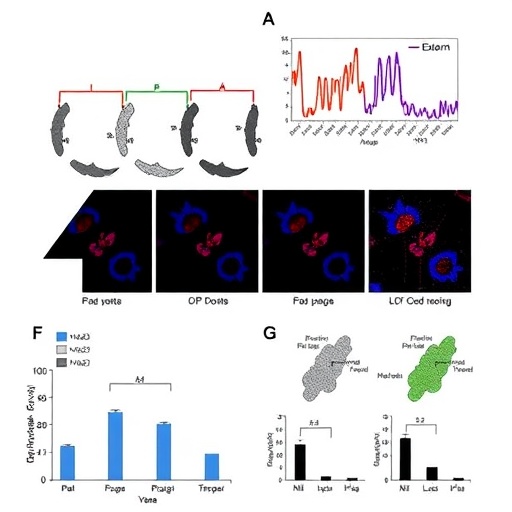
A new study reports that where people deliberately direct their attention may influence how their immune systems respond during an acute challenge, adding human evidence to the growing view that the brain and immune system communicate continuously rather than operating as separate biological worlds. Published in Nature Human Behaviour, the work by N. Mizrachi, M. Rottem and L. Rozenkrantz examines voluntary attention as a potentially active regulator of short-term immune activity. The finding is significant because attention is usually discussed as a mechanism for selecting information, guiding behaviour or shaping perception. The new research places it within a broader physiological framework, suggesting that the mental act of focusing on—or disengaging from—particular bodily or external signals may be associated with measurable changes in immune function.
The immune system is not a single switch that turns on during illness. It is a distributed network involving immune cells, signalling molecules, blood vessels, the nervous system and endocrine organs. During an acute response, immune cells can release cytokines and other mediators that coordinate inflammation, alter metabolism and recruit additional defences. These processes are essential for controlling infection and repairing tissue, but their intensity and timing matter. An insufficient response can leave threats unchecked, while excessive or poorly regulated inflammation can damage healthy tissue. Because the brain receives information about immune activity and can alter autonomic and hormonal states, scientists have increasingly investigated whether cognitive processes can influence this balance. Mizrachi and colleagues focus on voluntary attention as one such process: a mental operation that can be intentionally directed and sustained.
The study’s central question is more precise than whether “positive thinking” improves immunity. It concerns whether attention itself can act as a regulatory input during an immediate immune response. Voluntary attention requires the brain to allocate limited processing resources toward selected information while reducing the priority of competing signals. When this allocation is directed toward bodily sensations, internal physiological information may become more salient. When attention is directed elsewhere, signals from the body may be processed differently, even though they do not disappear. In principle, these changes could affect autonomic pathways linking the brain to organs and immune tissues, as well as the hypothalamic–pituitary–adrenal axis, which coordinates stress-related hormonal responses. The research therefore addresses a mechanistic question at the intersection of cognitive neuroscience, psychophysiology and immunology.
Acute immune responses are especially useful for testing this relationship because they unfold over a defined period and can be measured through biological markers. Researchers can examine changes in circulating immune cells, cytokines, inflammatory proteins or other physiological indicators before and after an experimentally controlled challenge. Such measurements do not simply reveal whether the immune system is “strong” or “weak”; they provide a time-sensitive picture of how the response develops. A change in one marker may reflect altered immune activation, redistribution of cells between tissues and blood, or a shift in inflammatory signalling. Interpreting these results requires careful attention to timing, baseline differences and the distinction between correlation and causation. The importance of the new work lies in testing a cognitive variable under conditions in which immune activity can be observed directly, rather than relying only on long-term associations between psychological traits and health outcomes.
The proposed link between attention and immunity may operate through several biological routes. The autonomic nervous system can influence immune organs through sympathetic and parasympathetic signalling, changing the release of neurotransmitters and the behaviour of immune cells. Stress hormones can also modify cytokine production and alter the movement of immune cells through the bloodstream. In addition, attention can change breathing, muscle tension, heart rate and the interpretation of bodily sensations, all of which may feed back into physiological regulation. These pathways are not independent. A person who focuses on an internal sensation may notice it more clearly, experience it as more intense or interpret it differently; each of those responses can influence autonomic state. The study does not imply that attention can consciously command every immune cell. Rather, it suggests that deliberate mental allocation may enter existing regulatory circuits connecting cognition, physiology and inflammation.
The findings are likely to attract attention because they challenge a familiar division between “mental” and “physical” health. Modern medicine already recognises that sleep, stress, pain, emotion and social experience can influence inflammatory biology. However, voluntary attention is a particularly interesting factor because it is, at least in principle, trainable in real time. Practices such as mindfulness, focused breathing and certain forms of biofeedback are built around directing attention, but their biological effects have often been difficult to separate from relaxation, expectation, breathing changes or broader reductions in stress. By isolating attention as a behavioural variable, the research may help scientists determine which components of these practices matter, for whom and under what circumstances. The result is not a prescription to concentrate on illness, but a possible clue about how mental training could be studied with the same experimental precision applied to drugs and other interventions.
At the same time, the findings should not be inflated into a claim that people can think themselves healthy or that attention can replace vaccination, antimicrobial treatment or clinical care. Acute immune regulation is not equivalent to protection from infection, and a laboratory change in an inflammatory marker does not automatically translate into fewer illnesses or faster recovery. Immune responses are context-dependent: a reaction beneficial during one challenge may be harmful during another. The direction, size and duration of any attention-related effect are therefore crucial. It is also possible that attention influences subjective symptoms more strongly than underlying pathology, or that biological changes occur without a meaningful effect on health outcomes. These distinctions will need to be tested in larger studies with diverse participants, repeated measurements and clinically relevant endpoints.
Future research may also clarify whether the effect depends on what people attend to, how long they sustain attention and how they interpret the signals they notice. Attention to bodily sensations is not identical to worry, rumination or deliberate nonjudgmental observation. Each may engage overlapping but distinct neural and physiological processes. Researchers will need to distinguish attention from expectation, perceived control, emotional arousal and changes in breathing or movement. Neuroimaging, continuous heart-rate and respiratory monitoring, endocrine measurements and detailed immune profiling could help map the pathway from an instruction in the laboratory to a change in immune biology. Studies conducted during vaccination, controlled inflammatory challenges or naturally occurring infections could establish whether the phenomenon generalises beyond a single experimental setting. It will also be important to determine whether training produces lasting changes or only short-lived responses during the task itself.
The broader message is that the immune system may be more dynamically integrated with conscious behaviour than traditional diagrams suggest. The brain constantly receives information from the body, while the body responds to signals generated by neural activity, hormones and behaviour. Voluntary attention may be one of the mechanisms that adjusts this two-way exchange, not by overriding immune biology but by changing the conditions under which immune responses are initiated and regulated. Mizrachi, Rottem and Rozenkrantz’s study offers a framework for investigating that possibility in humans, where cognition, physiology and disease risk are inseparable in everyday life. The next challenge is to determine how robust the effect is, which biological pathways carry it and whether carefully designed attention-based interventions can produce reliable benefits without oversimplifying the extraordinary complexity of the immune system.
Mizrachi, N., Rottem, M. & Rozenkrantz, L. Voluntary attention regulates acute immune responses in humans. Nat Hum Behav (2026). https://doi.org/10.1038/s41562-026-02541-1
Cite Scienmag News
Kristina Jarvis. (August 17, 2026). Voluntary Attention Modulates Acute Immune Responses in Humans. Scienmag. https://scienmag.com/voluntary-attention-modulates-acute-immune-responses-in-humans/
Kristina Jarvis. "Voluntary Attention Modulates Acute Immune Responses in Humans." Scienmag, 17 August 2026, https://scienmag.com/voluntary-attention-modulates-acute-immune-responses-in-humans/. Accessed 4 September 2026.
Kristina Jarvis. "Voluntary Attention Modulates Acute Immune Responses in Humans." Scienmag. August 17, 2026. https://scienmag.com/voluntary-attention-modulates-acute-immune-responses-in-humans/


