


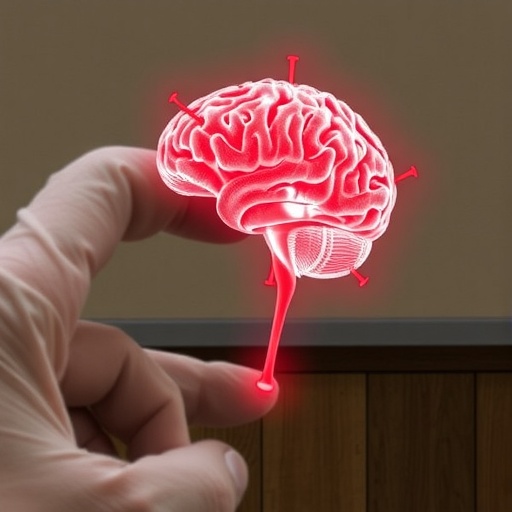
A new study suggests that attention is not merely a way for the brain to interpret sensations from the body. It may also act as a biological control signal, influencing how the immune system responds to injury. Researchers at Bar-Ilan University’s Azrieli Faculty of Medicine report that when healthy volunteers deliberately focused on sensations arising from a small, inflamed area of skin, their acute inflammatory responses became smaller and returned toward baseline more quickly than when their attention was directed elsewhere.
The findings, published in Nature Human Behaviour, challenge the familiar idea that bodily sensations travel in a one-way direction from tissue to brain. Pain, heat, pressure and itching are commonly understood as signals generated in the body and interpreted centrally. The new research indicates that the direction of communication may also run from the brain back to the tissues that generated the signals. By selecting which bodily information to prioritize, attention may influence the neural and autonomic processes that regulate inflammation.
The study was led by Dr. Nofar Mizrachi in the laboratory of Dr. Liron Rozenkrantz, in collaboration with clinical immunologist Prof. Menachem Rottem. Across three preregistered experiments, the researchers studied 57 healthy volunteers. Each participant underwent a standardized procedure designed to produce a small, temporary inflammatory response in the skin of the arm. The model allowed the team to observe the early stages of inflammation under controlled laboratory conditions while participants performed different attention tasks.
After inflammation was induced, volunteers were instructed either to focus deliberately on sensations coming from the affected area or to shift their attention away from the arm and toward unrelated information. The researchers monitored the response for 20 minutes, tracking changes in the local inflammatory reaction as it developed and subsided. They also recorded physiological signals associated with autonomic regulation, including heart-rate variability, skin temperature and other measures of bodily arousal. These measurements enabled the investigators to examine not only whether attention changed the immune response, but also how the effect might be linked to neural control of the body.
The difference between the two attention conditions appeared within minutes. Nearly 90 percent of participants showed a smaller inflammatory response when they focused on the affected region. Overall, responses were approximately 1.5-fold smaller during internal attention than during distraction, and the inflammation also displayed faster recovery dynamics. In other words, attention directed toward the inflamed tissue was associated with both a reduced peak response and a more rapid movement back toward the physiological baseline.
The result is notable because attention directed toward a painful or irritated body part is often assumed to intensify the experience. In everyday life, people may be advised to distract themselves from pain or itching because concentrating on those sensations can make them feel more prominent. Previous research has established that attention can alter the subjective intensity of bodily sensations. The new experiments suggest that the consequences may extend beyond perception: the act of monitoring a bodily signal may feed back into the biological process producing that signal.
The researchers identified evidence for two complementary pathways. The first depended on sensory information arriving from the inflamed tissue. Signals generated by local immune activity and changes in the skin can travel through peripheral nerves to the brain, where they contribute to the conscious experience of the affected area. The brain can then use that information to adjust descending neural commands. Such commands may influence autonomic activity, blood flow and other processes that help regulate the intensity and duration of inflammation.
The second pathway remained detectable when sensory signaling from the affected area was reduced with a local anesthetic. Because anesthetic treatment dampens the transmission of signals from peripheral nerves, the persistence of an attentional effect under those conditions suggests that attention does not require a complete, uninterrupted sensory representation of the inflamed tissue. Instead, top-down processes may allow the brain to maintain a prioritized representation of the body region and use it to regulate physiological activity. This distinction is important because it separates attention from simple amplification of incoming sensory signals.
Inflammation is an essential defense mechanism, but it must be carefully controlled. In the short term, immune cells, blood vessels and chemical mediators work together to contain tissue damage and initiate repair. Excessive or prolonged inflammation, however, can damage healthy tissue and contribute to disease. The present study examined only a controlled form of acute skin inflammation in healthy adults, so it does not show that attention can treat chronic inflammatory disease, autoimmune disorders or wounds. It also does not establish that focusing on symptoms will always reduce inflammation, or that the same response would occur in every organ and clinical condition.
Dr. Rozenkrantz said the most striking finding was that directing attention toward the inflamed region altered not only what participants experienced but also the inflammatory response itself. The researchers now plan to investigate the specific brain circuits, autonomic pathways and immune mechanisms responsible for the effect. Future work will need to determine whether similar attention-dependent regulation occurs during chronic inflammation, wound healing and other physiological processes. If the mechanism can be clarified and reliably reproduced, it could eventually inform behavioral interventions designed to complement medical treatment. For now, the study provides evidence that conscious attention is more than a spotlight for perception: it may be part of the body’s active regulatory system.
News Publication Date: 17-Aug-2026
Web References: https://www.nature.com/articles/s41562-026-02541-1
References: Nature Human Behaviour; study conducted by researchers at Bar-Ilan University’s Azrieli Faculty of Medicine.
Cite Scienmag News
Cassandra Pierce. (August 17, 2026). Bar-Ilan Study Finds Attention Can Regulate Acute Inflammation in Humans. Scienmag. https://scienmag.com/bar-ilan-study-finds-attention-can-regulate-acute-inflammation-in-humans/
Cassandra Pierce. "Bar-Ilan Study Finds Attention Can Regulate Acute Inflammation in Humans." Scienmag, 17 August 2026, https://scienmag.com/bar-ilan-study-finds-attention-can-regulate-acute-inflammation-in-humans/. Accessed 3 September 2026.
Cassandra Pierce. "Bar-Ilan Study Finds Attention Can Regulate Acute Inflammation in Humans." Scienmag. August 17, 2026. https://scienmag.com/bar-ilan-study-finds-attention-can-regulate-acute-inflammation-in-humans/


