


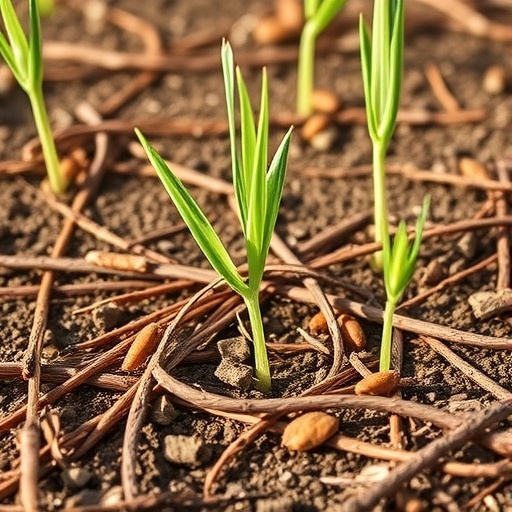
Oklahoma’s winter wheat fields may be influenced by an invisible biological network beneath the soil, according to a new study in Scientific Reports. Researchers D. Ramos-Lopez, D. Carrera-Lopez, D. Bravo-Padilla and colleagues examined how the rhizosphere—the narrow zone of soil directly shaped by plant roots—can affect winter wheat performance and yield. Their work also describes the development of diagnostic probes designed to detect beneficial microorganisms associated with the crop. The study brings together two rapidly expanding areas of agricultural science: the use of soil microbiology to understand yield differences and the development of molecular tools capable of identifying helpful microbes without relying solely on traditional cultivation methods. For wheat producers facing drought, declining soil health and unpredictable growing conditions, the findings point toward a future in which crop management may depend not only on fertilizers and weather forecasts, but also on the biological communities living around every root.
The rhizosphere is far more than a physical interface between roots and soil. Plant roots release a complex mixture of sugars, amino acids, organic acids and other compounds known collectively as root exudates. These molecules act as chemical signals and energy sources, selectively attracting or encouraging certain bacteria, fungi and other microorganisms. In return, some members of this microbial community can improve nutrient availability, stimulate root development, suppress disease-causing organisms or help plants tolerate environmental stress. Other microbes may compete with the plant or consume resources without providing a measurable benefit. The composition of this underground community can therefore influence how efficiently wheat captures nitrogen, phosphorus and water. In the Oklahoma production environment, where winter wheat is exposed to shifting temperatures, limited moisture and variable soil conditions, these microbial interactions may become especially important for determining whether plants reach their full yield potential.
Ramos-Lopez and colleagues focused on the relationship between rhizosphere-mediated biological effects and winter wheat yield. The study’s central premise is that yield should not be viewed only as a product of seed genetics, fertilizer inputs and above-ground weather conditions. Instead, the plant’s performance may also reflect the structure and activity of the microbial community surrounding its roots. By examining wheat-associated microorganisms and their potential contributions to plant growth, the researchers offer a more detailed explanation for why fields managed under apparently similar conditions can produce different results. Soil microbial communities are highly sensitive to moisture, temperature, crop history, tillage, nutrient availability and the chemistry of root exudates. These factors can create small biological zones in which beneficial organisms become abundant, disappear or change their behavior. Understanding those shifts could help scientists explain yield variation that conventional soil testing does not detect.
A major feature of the work is the development of diagnostic probes targeting beneficial microorganisms. In molecular biology, a probe is a designed DNA or RNA sequence that binds to a complementary genetic signature in a target organism or group of organisms. When paired with techniques such as polymerase chain reaction, fluorescence-based detection or other nucleic-acid assays, a probe can reveal whether a microorganism is present and, in some cases, estimate its abundance. This approach is significant because many soil microbes are difficult or impossible to grow under laboratory conditions. Culture-based methods can therefore provide only a partial view of the rhizosphere. Diagnostic probes allow researchers to search directly for genetic markers in soil or root samples, offering a faster and more precise way to track organisms believed to support plant health. The probes described in the study are intended to focus attention on microorganisms with potential agricultural value rather than treating the entire soil microbiome as an undifferentiated mass.
The ability to identify beneficial microbes could eventually transform how biological products and soil treatments are evaluated. Agricultural inoculants, microbial amendments and biostimulants are often marketed on the assumption that particular organisms will colonize roots and improve plant performance. Yet their success can vary widely from one field to another because native microbial communities, soil chemistry and weather conditions influence whether an introduced organism survives and functions. A reliable diagnostic tool could help determine whether a target microbe is already present, whether it has established itself after application and whether its abundance changes alongside plant growth or yield. Such information could move microbial agriculture away from broad claims and toward measurable, field-specific management. The study does not suggest that a single organism will provide a universal solution. Rather, it contributes to the technical foundation needed to connect microbial identity with actual plant outcomes.
For winter wheat, these questions are particularly relevant during the crop’s long growing cycle. Wheat is typically established in autumn, survives winter dormancy and resumes active growth in spring before producing grain. During this period, the plant’s roots encounter major changes in temperature and soil moisture. Microorganisms that support nutrient cycling or root protection may be valuable during one stage of development but less influential at another. The rhizosphere also changes as roots grow, branch and release different compounds. By linking microbial detection with wheat development and final yield, the Oklahoma research highlights the possibility that beneficial interactions are dynamic rather than fixed. A microbe detected near young roots may not remain dominant later in the season, and a community that appears modest in abundance may still have a substantial effect if it produces potent growth-promoting compounds or improves access to limiting nutrients.
The study’s implications extend beyond Oklahoma because the biological principles involved are relevant to wheat-growing regions worldwide. Soil is a living system, and agricultural practices can shape microbial communities over years or decades. Crop rotation, residue management, reduced tillage, irrigation and fertilizer strategy may all influence which organisms thrive around roots. However, translating microbial knowledge into practical recommendations requires robust detection methods and carefully validated links to yield. Diagnostic probes can help provide that evidence by allowing scientists to compare microbial populations across fields, seasons and management systems. They may also support the development of precision agriculture tools in which biological measurements are combined with soil nutrient maps, remote sensing and weather data. In such a system, farmers could eventually receive recommendations based not only on how much nitrogen is in a field, but also on whether the microbial functions needed to make that nitrogen accessible are present.
The research arrives as scientists increasingly describe the rhizosphere as an agricultural control point: a small but powerful zone where plant biology, soil chemistry and microbial activity converge. Its findings suggest that future improvements in winter wheat productivity may come from managing relationships rather than inputs alone. The diagnostic probes developed by the team provide a way to investigate those relationships with molecular precision, potentially helping researchers distinguish beneficial organisms from the enormous background diversity found in soil. More work will be needed to determine how consistently the targeted microbes influence yield under different weather patterns, soil types and farming systems, and whether probe-based monitoring can be integrated into routine field decisions. Even so, the study offers a compelling message for modern agriculture: beneath Oklahoma’s wheat fields, microscopic communities may be quietly shaping the harvest, and new genetic tools are beginning to make that hidden biology visible.
Cite Scienmag News
Alan Morgan. (August 16, 2026). Rhizosphere Effects on Oklahoma Winter Wheat Yield Drive Probes for Beneficial Microbes. Scienmag. https://scienmag.com/rhizosphere-effects-on-oklahoma-winter-wheat-yield-drive-probes-for-beneficial-microbes/
Alan Morgan. "Rhizosphere Effects on Oklahoma Winter Wheat Yield Drive Probes for Beneficial Microbes." Scienmag, 16 August 2026, https://scienmag.com/rhizosphere-effects-on-oklahoma-winter-wheat-yield-drive-probes-for-beneficial-microbes/. Accessed 4 September 2026.
Alan Morgan. "Rhizosphere Effects on Oklahoma Winter Wheat Yield Drive Probes for Beneficial Microbes." Scienmag. August 16, 2026. https://scienmag.com/rhizosphere-effects-on-oklahoma-winter-wheat-yield-drive-probes-for-beneficial-microbes/


