


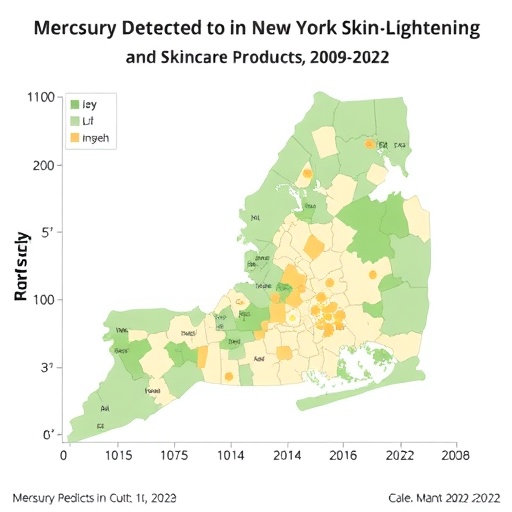
Mercury, a metal associated with industrial pollution, neurological damage and kidney disease, has resurfaced in an unexpected place: products sold for brighter, smoother-looking skin. A study published in the Journal of Exposure Science & Environmental Epidemiology has examined skin-lightening and skin-care products purchased in New York City over a 13-year period, from 2009 through 2022. The research found that mercury contamination remained a persistent concern in products available to consumers, despite regulations designed to restrict the use of mercury in cosmetics. Its findings point to a continuing public-health problem that can hide behind attractive packaging, imported beauty trends and labels that do not clearly reveal the presence of toxic ingredients.
Skin-lightening products are marketed with promises of reducing dark spots, evening skin tone or creating a brighter complexion. They may be sold as creams, lotions, soaps, serums or treatments applied directly to the face and body. Mercury can be added because certain mercury compounds interfere with the production of melanin, the pigment responsible for skin, hair and eye color. In particular, inorganic mercury compounds can inhibit tyrosinase, an enzyme required for melanin synthesis. That chemical effect may produce a lighter appearance, but it can also expose users to a metal capable of entering the body through the skin or by accidental ingestion from contaminated hands. Repeated application can transform a cosmetic routine into a chronic exposure pathway.
The New York City investigation is significant because it spans more than a decade rather than representing a single market snapshot. Researchers analyzed products obtained in the city between 2009 and 2022, allowing them to assess whether mercury contamination declined, disappeared or continued despite public-health interventions. The products included items marketed for skin lightening as well as skin-care products that might not openly advertise a bleaching effect. Laboratory testing was used to identify mercury, a method that is essential because the metal may not be listed on the label and cannot be reliably detected by appearance, smell or texture. A product can look entirely ordinary while containing a chemically significant contaminant.
The study’s broader message is that regulation alone does not guarantee safety at the point of sale. In the United States, mercury compounds are generally prohibited or tightly restricted in cosmetic products, with limited exceptions for specific uses. Yet products can enter local markets through international supply chains, informal retail networks, online sellers, specialty stores and personal imports. Labels may be incomplete, written in languages unfamiliar to consumers, or deliberately misleading. Some products may also be repackaged after manufacture, making it difficult to identify the original source. The researchers’ long-term findings suggest that enforcement and surveillance remain necessary because banned ingredients can persist in commerce long after rules are introduced.
The health risks depend on the chemical form of mercury, the concentration in a product, the amount applied and the duration of exposure. Inorganic mercury used in skin-lightening creams is especially concerning for the kidneys, where it can accumulate and interfere with filtration. Exposure may contribute to protein loss in urine, inflammation and other signs of renal injury. Mercury can also affect the nervous system, producing symptoms such as tremors, irritability, memory problems or changes in sensation in cases of substantial or prolonged exposure. Pregnant people face an additional concern because mercury exposure can affect fetal development, while infants and children may be more vulnerable to toxic effects because their bodies and nervous systems are still developing.
The danger is not limited to the person who purchases a contaminated product. Mercury from a cream can spread to towels, bedding, clothing, bathroom surfaces and household dust. Family members may encounter residues through shared spaces, and children can be exposed when they touch contaminated surfaces and then place their hands in their mouths. Some users may apply products several times a day, cover the treated skin or use them over large areas, conditions that can increase absorption. If a product is applied to damaged or irritated skin, the barrier that normally limits chemical penetration may be weakened. These exposure routes make contaminated cosmetics an environmental-health issue as well as an individual consumer-safety problem.
The research also highlights the social forces behind the demand for skin-lightening products. Colorism, discrimination based on skin tone, and beauty standards that favor lighter complexions can pressure people to alter their appearance, often beginning at a young age. Advertising may frame lighter skin as more professional, attractive or socially desirable, while products are promoted through communities that have historically been underserved by mainstream health information. That context matters because warnings that simply tell consumers to stop using a product may fail to address why it was purchased in the first place. Effective prevention may require culturally informed education, stronger regulation of marketing claims and public-health campaigns that challenge the idea that one skin tone is healthier or more valuable than another.
For consumers, the study reinforces a basic but important rule: a product that promises dramatic lightening, rapid fading of pigmentation or permanent correction of dark spots deserves careful scrutiny. Ingredients such as mercury, mercurous chloride, mercuric chloride, ammoniated mercury or simply “mercury” may appear on some labels, but the absence of those terms does not prove that a product is safe. Unlabeled or suspiciously labeled products should not be tested at home, and users who suspect exposure should stop using the product and seek advice from a clinician or poison-control service. Health professionals can evaluate symptoms and, when appropriate, order tests for mercury exposure. Products should be sealed in a bag and kept away from children rather than poured down a drain or discarded in a way that could spread contamination.
The New York City findings make mercury in cosmetics a particularly vivid example of how old hazards can survive inside modern consumer markets. The metal is not a mysterious new contaminant; its toxicity has been recognized for centuries. What is new is the scale and speed of global commerce, which can move products across borders and into homes before regulators can identify them. By examining products collected over 13 years, Fitzstevens, Alex-Oni, Sedlar and their colleagues show why continued laboratory surveillance matters. The research turns an invisible chemical threat into a measurable public-health warning: beauty products are not automatically benign, and protecting consumers requires persistent testing, transparent labeling, effective enforcement and a broader effort to dismantle the social pressures that make skin lightening seem necessary.
Cite Scienmag News
Ophelia Keating. (August 15, 2026). Mercury Detected in New York City Skin-Lightening and Skincare Products, 2009–2022. Scienmag. https://scienmag.com/mercury-detected-in-new-york-city-skin-lightening-and-skincare-products-2009-2022/
Ophelia Keating. "Mercury Detected in New York City Skin-Lightening and Skincare Products, 2009–2022." Scienmag, 15 August 2026, https://scienmag.com/mercury-detected-in-new-york-city-skin-lightening-and-skincare-products-2009-2022/. Accessed 3 September 2026.
Ophelia Keating. "Mercury Detected in New York City Skin-Lightening and Skincare Products, 2009–2022." Scienmag. August 15, 2026. https://scienmag.com/mercury-detected-in-new-york-city-skin-lightening-and-skincare-products-2009-2022/


