


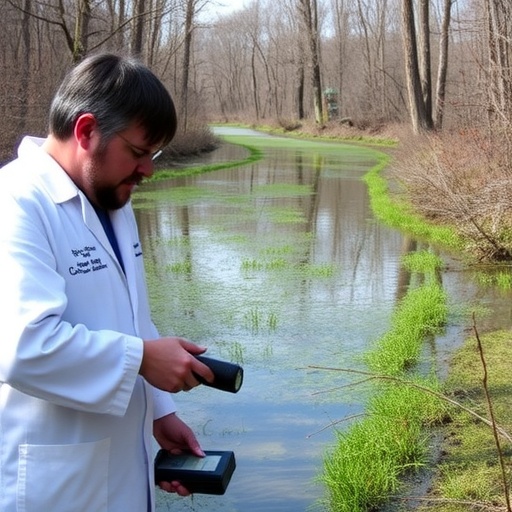
Watershed Health Cannot Be Measured by Water Quality Alone, Scientists Warn
Aquatic ecosystems around the world are approaching a diagnostic crisis. Rivers, lakes, wetlands, and connected watersheds are being reshaped by climate change, urban expansion, agricultural runoff, dams, pollution, and increasingly extreme floods and droughts. Yet many assessments still examine water chemistry, aquatic organisms, or physical habitat as separate pieces of evidence. A new review published in Water & Ecology argues that this fragmented approach can miss the deeper processes driving ecosystem decline—and may prevent scientists and policymakers from recognizing collapse before it becomes difficult or impossible to reverse.
Led by Qiuwen Chen of the Nanjing Hydraulic Research Institute, the research team proposes that watershed aquatic ecosystem health should be understood as a dynamic social–ecological property rather than as a score produced by adding together isolated indicators. In this view, a healthy river system is not simply one with acceptable nutrient concentrations or a high number of species. It is a system whose hydrology, chemistry, organisms, habitats, human uses, institutions, and ecological processes continue to interact in ways that support resilience. The authors describe this perspective as process-based because it focuses not only on the condition of an ecosystem at a particular moment, but also on how that condition is produced and how it may change in the future.
“The main problem is fragmented diagnosis,” Chen says. “We track chemistry, species loss, and physical damage separately, yet none of these snapshots can reveal why the system is failing or where it is heading. We must treat the watershed as a coupled social–ecological system.” That distinction is important because environmental damage often emerges through interactions that cannot be detected by a single measurement. For example, altered river flow can change sediment transport, which can reshape habitat, reduce spawning areas, modify oxygen conditions, and favor pollution-tolerant species. At the same time, water withdrawals, land-use decisions, and economic demands may intensify the pressure. An assessment that records only one of these changes can underestimate the system’s overall vulnerability.
To examine how the field has developed, the researchers drew on bibliometric evidence from the Web of Science and the China National Knowledge Infrastructure. They reviewed the growth of major assessment frameworks, including the United States Rapid Bioassessment Protocol, the European Union Water Framework Directive, and China’s evolving river-health initiatives. These programs have broadened environmental monitoring by incorporating biological communities, habitat condition, ecological function, and human pressures. However, the review identifies three continuing obstacles. Short-term observations at individual sites often fail to capture processes operating across decades and entire river basins. Scientists still have an incomplete mechanistic understanding of how hydrological, biogeochemical, and ecological processes influence one another. And research findings are not consistently translated into decisions about restoration, water allocation, pollution control, or land management.
The authors argue that these challenges reflect a mismatch between the way watersheds function and the way they are commonly studied. Rivers are connected systems: what happens upstream can influence water quality, sediment movement, flood risk, habitat, and public health far downstream. A local improvement may therefore be offset by deterioration elsewhere in the basin, while a restoration project may not succeed if the hydrological or social conditions supporting it remain unchanged. The review brings together three research strands that are often treated separately—biological integrity, habitat structure, and governance. Biological integrity examines whether communities of fish, invertebrates, algae, microbes, and other organisms resemble those expected under relatively healthy conditions. Habitat assessment considers flow, channel form, connectivity, substrate, riparian vegetation, and the availability of refuges. Governance addresses the institutions, policies, economic incentives, and public values that determine how water and land are used. The researchers say that only their integration can move assessment from static reporting toward anticipatory decision-making.
Climate change makes this shift especially urgent because historical environmental baselines are becoming less reliable. Traditional assessments often compare current conditions with a fixed reference state based on past temperature, rainfall, streamflow, or species distributions. But warming temperatures, changing precipitation patterns, altered snowmelt, sea-level rise, and more frequent extreme events mean that the past may no longer provide a stable template for the future. A river that once experienced predictable seasonal flows may now alternate between prolonged low water and intense floods. Under these conditions, ecosystem health must be assessed against non-stationary baselines that recognize changing climate conditions while still distinguishing natural adjustment from damage caused by human activity. This requires longer-term monitoring, better climate–ecology models, and indicators capable of detecting changes in resilience, recovery, and ecological function rather than merely measuring whether a threshold has been crossed.
The review also examines the expanding role of artificial intelligence and remote sensing. Satellites, drones, automated sensors, and high-frequency monitoring stations can generate information across much larger areas and more rapidly than conventional field surveys. Machine-learning systems may help identify patterns in water temperature, turbidity, chlorophyll, vegetation cover, channel change, or biodiversity that would be difficult to detect manually. They may also help predict nonlinear responses, such as sudden oxygen depletion or rapid habitat loss after a flood. But the researchers caution that artificial intelligence cannot replace ecological understanding. A model may accurately recognize a pattern without explaining the mechanism behind it, and a black-box prediction can fail when environmental conditions shift beyond the data used for training. For AI to support reliable watershed management, the authors say, it must be linked to process-based hydrological, biogeochemical, and ecological knowledge, with transparent validation and continuous field verification.
Molecular ecology is another technology reshaping the way aquatic ecosystems can be monitored. Environmental DNA, or eDNA, allows researchers to detect genetic material released by organisms into water through skin cells, mucus, scales, feces, pollen, or decomposing tissue. By analyzing these traces, scientists can identify a broad range of species without capturing them individually, including rare, elusive, invasive, or difficult-to-survey organisms. Across large river basins, eDNA could provide a faster picture of biodiversity distribution and reveal biological changes that conventional sampling misses. However, the technique still requires careful interpretation. DNA can be transported by flowing water, persist for different lengths of time under different conditions, or originate from organisms that are present only upstream. Sampling design, laboratory controls, reference databases, and integration with physical observations are therefore essential. The review presents eDNA not as a replacement for ecological surveys, but as a powerful component of a broader monitoring system.
The authors also highlight a major change in restoration philosophy: the growing use of nature-based solutions. Conventional water management has often emphasized engineered structures and pollution treatment, such as channels, barriers, concrete banks, and centralized facilities. These tools can be effective for specific problems, but they may also simplify habitats, disconnect rivers from floodplains, and weaken the ecological processes that allow ecosystems to regulate themselves. Nature-based approaches seek to restore those processes through measures such as wetland protection, floodplain reconnection, riparian vegetation recovery, ecological flow management, and the rebuilding of habitat complexity. Their objective is not merely to create a visually improved landscape, but to recover functions such as nutrient retention, carbon processing, flood buffering, sediment exchange, and biodiversity support. The researchers emphasize that such interventions must be evaluated over time because ecological recovery depends on interactions among flow, organisms, sediment, climate, and human management.
The need for an integrated approach is particularly pronounced in China, where heavily engineered rivers, multiple pollution sources, rapid urbanization, water-resource demands, and climate extremes create difficult trade-offs. Large-scale restoration and digital-twin technologies—virtual representations of physical river systems that combine data, models, and real-time observations—are advancing quickly. Yet Chen and colleagues argue that assessment must move beyond single-objective engineering, in which success is defined by one parameter such as flood control, nutrient reduction, or water supply. “While China has advanced in digital twins and large-scale restoration, assessment must evolve from single-objective engineering to process-oriented governance that coordinates water resources, environments, and ecosystems across entire basins,” Chen explains. A digital model can support that goal only if it represents ecological interactions and social decisions as well as hydraulic conditions.
Ultimately, the review calls for a new definition of aquatic ecosystem health—one that links structure with process, scientific evidence with governance, and upstream protection with downstream well-being. Under this framework, a watershed is healthy when its ecological functions, biological communities, physical habitats, and human institutions can respond to disturbance without losing their essential organization and capacity for recovery. That condition cannot be captured by a single number or by monitoring one location at one point in time. It requires coordinated observations across scales, mechanistic models, molecular and remote-sensing tools, long-term biological records, and decisions that account for both ecological limits and public needs. The authors warn that the future of river management will depend on recognizing that aquatic health is not a biophysical scorecard. It emerges from the continuous interaction of ecology, land use, economics, institutions, and public values.
Web References: https://doi.org/10.1016/j.wateco.2026.100050
References: The U.S. Rapid Bioassessment Protocol, the European Union Water Framework Directive, and China’s river health assessment initiatives, as discussed in the reviewed article.
Cite Scienmag News
Courtney Benton. (August 14, 2026). Scientists Redefine Aquatic Ecosystem Restoration Through Watershed-Scale Governance. Scienmag. https://scienmag.com/scientists-redefine-aquatic-ecosystem-restoration-through-watershed-scale-governance/
Courtney Benton. "Scientists Redefine Aquatic Ecosystem Restoration Through Watershed-Scale Governance." Scienmag, 14 August 2026, https://scienmag.com/scientists-redefine-aquatic-ecosystem-restoration-through-watershed-scale-governance/. Accessed 3 September 2026.
Courtney Benton. "Scientists Redefine Aquatic Ecosystem Restoration Through Watershed-Scale Governance." Scienmag. August 14, 2026. https://scienmag.com/scientists-redefine-aquatic-ecosystem-restoration-through-watershed-scale-governance/


