


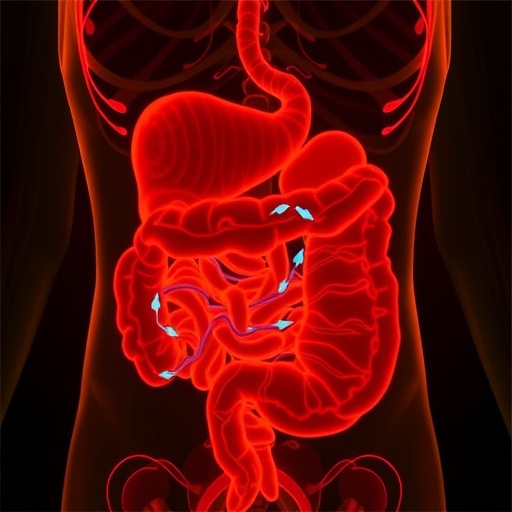
A new study has identified a molecular chain that may help explain how chronic inflammation gradually ages the intestine from within. Published in Nature Aging, the research by Wang, Tabrizian, Wang and colleagues links signaling through tumor necrosis factor receptor 1, or TNFR1, to a failure in fatty acid oxidation inside intestinal stem cells. According to the study, this metabolic disruption weakens the cells responsible for renewing the intestinal lining, connecting an immune signal associated with inflammation to the loss of regenerative capacity that characterizes intestinal aging.
The intestine is one of the body’s most rapidly renewing tissues. Its lining is continuously rebuilt by intestinal stem cells located near the base of microscopic structures called crypts. These stem cells generate the various cell types needed to absorb nutrients, produce mucus, regulate immune interactions and maintain the barrier separating the body from the enormous microbial population in the gut. With age, however, intestinal stem cells become less efficient. Their ability to divide, differentiate and repair damaged tissue declines, increasing the risk of barrier failure and intensifying the biological effects of inflammation.
The new work places cellular metabolism at the center of this process. Fatty acid oxidation is the series of biochemical reactions through which cells break down fatty acids to produce energy, largely through the mitochondrial tricarboxylic acid cycle and oxidative phosphorylation. Although stem cells are often associated with flexible or relatively restrained metabolic programs, their energy requirements change as they respond to injury, nutrient signals and inflammatory stress. The study indicates that TNFR1 signaling interferes with the stem cells’ ability to use fatty acids efficiently, producing a metabolic state that is unfavorable for long-term tissue maintenance.
TNFR1 is one of the principal receptors for tumor necrosis factor, a powerful inflammatory cytokine released by immune cells and other tissues. When TNF binds to TNFR1, the receptor can activate several intracellular pathways, including nuclear factor kappa B and mitogen-activated protein kinase signaling. These pathways regulate genes involved in inflammation, cell survival and stress responses. In acute infection or injury, this activation can be protective. Persistent stimulation, however, may impose a chronic burden on tissues. The findings suggest that intestinal stem cells are not merely damaged by inflammation in a general sense; they receive a specific TNFR1-dependent signal that reshapes how they generate and use energy.
That distinction is important because inflammation and metabolism are tightly connected. A cell under inflammatory pressure may redirect resources away from maintenance and toward immediate defense or survival. If fatty acid oxidation is suppressed, mitochondria may produce less usable energy from lipid substrates, while fatty acids or their intermediate metabolites can accumulate or be diverted into alternative pathways. Such changes can affect mitochondrial function, redox balance and gene regulation. In stem cells, even a subtle loss of metabolic flexibility could reduce the ability to respond to injury, preserve the stem-cell pool or produce healthy daughter cells.
The study’s central concept is therefore a chain reaction: inflammatory signaling through TNFR1 alters fatty acid oxidation, the metabolic disturbance drives dysfunction in intestinal stem cells, and the resulting loss of regenerative performance contributes to aging of the intestinal tissue. This framework helps connect two features of aging that are often studied separately. One is “inflammaging,” the persistent, low-grade inflammatory state that becomes more common with age. The other is the decline of tissue stem cells. By showing how an inflammatory receptor can influence a defined metabolic program, the research offers a mechanistic bridge between these phenomena.
The implications extend beyond the intestine. Many tissues depend on stem or progenitor cells whose function is shaped by mitochondrial metabolism, nutrient availability and inflammatory signals. If similar receptor-to-metabolism connections operate elsewhere, chronic cytokine exposure could contribute to aging by gradually changing the energy systems of regenerative cells. The intestinal system is especially revealing because its stem cells are exposed to dietary nutrients, microbial products and immune activity at the same time. It provides a living example of how environmental stress and intracellular metabolism can converge on the machinery of tissue renewal.
The findings also raise the possibility of therapeutic strategies that do more than suppress inflammation broadly. Blocking TNFR1 signaling, preserving fatty acid oxidation or restoring mitochondrial metabolic flexibility could, in principle, protect intestinal stem cells while avoiding the consequences of indiscriminate immune suppression. Such approaches would require careful testing. TNF pathways are essential for defense against infection and for normal immune coordination, while fatty acid metabolism is involved in many tissues and physiological processes. A treatment that improves stem-cell function but disrupts host protection or systemic energy balance could create new risks.
For now, the study provides a detailed biological hypothesis for why prolonged inflammatory signaling may accelerate intestinal aging. It suggests that the crucial damage may occur before visible tissue failure, at the level of how stem cells fuel themselves and interpret metabolic stress. Understanding this sequence could help researchers identify early biomarkers of intestinal decline and determine whether metabolic intervention can restore regenerative capacity. It may also clarify why aging, inflammation and intestinal dysfunction frequently reinforce one another in chronic disease.
The work ultimately presents intestinal aging as a dynamic process rather than an unavoidable disappearance of stem cells. In this view, inflammatory receptors, mitochondrial fuel use and stem-cell behavior form an interconnected system that can potentially be interrupted. TNFR1 signaling does not simply mark inflammation; it may help translate inflammation into a metabolic program that weakens the intestine’s renewal engine. By revealing that connection, the study opens a path toward treatments designed to preserve tissue resilience at the point where immune signals and cellular energy production meet.
Cite Scienmag News
Drew Townsend. (August 14, 2026). TNFR1 Connects Inflammation, Fatty Acid Oxidation Failure to Intestinal Stem Cell Aging. Scienmag. https://scienmag.com/tnfr1-connects-inflammation-fatty-acid-oxidation-failure-to-intestinal-stem-cell-aging/
Drew Townsend. "TNFR1 Connects Inflammation, Fatty Acid Oxidation Failure to Intestinal Stem Cell Aging." Scienmag, 14 August 2026, https://scienmag.com/tnfr1-connects-inflammation-fatty-acid-oxidation-failure-to-intestinal-stem-cell-aging/. Accessed 4 September 2026.
Drew Townsend. "TNFR1 Connects Inflammation, Fatty Acid Oxidation Failure to Intestinal Stem Cell Aging." Scienmag. August 14, 2026. https://scienmag.com/tnfr1-connects-inflammation-fatty-acid-oxidation-failure-to-intestinal-stem-cell-aging/


