


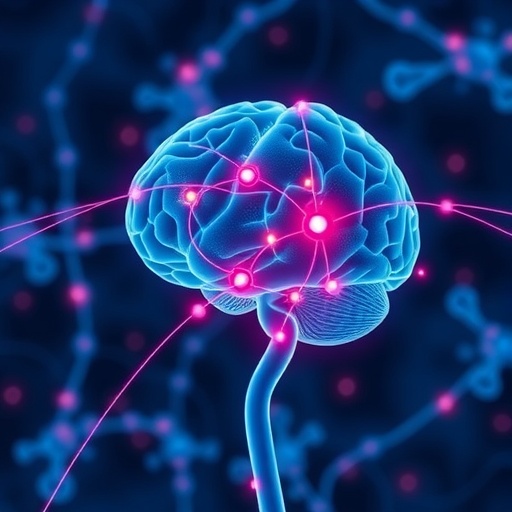
Cancer immunotherapy has transformed treatment for many patients, yet its success remains uneven. Tumors that appear highly vulnerable to immune attack can resist checkpoint inhibitors, while cancers with similar genetic features may respond very differently in different patients. A review published in Experimental & Molecular Medicine argues that one underappreciated factor may help explain this variation: the nervous system. In “Neural regulation of tumor immunity: emerging opportunities to enhance cancer immunotherapy,” Chen, Zou, Li and colleagues examine how electrical signals, neurotransmitters and neuroimmune interactions influence the behavior of tumors and the immune cells surrounding them.
The central idea is that cancer does not develop in isolation from the body’s regulatory networks. Tumors are innervated by nerve fibers and exist within a complex microenvironment that includes blood vessels, fibroblasts, cancer-associated macrophages, lymphocytes and soluble signaling molecules. Neural inputs can alter blood flow, tissue metabolism, inflammation and immune-cell activity, while immune and tumor cells can in turn release growth factors that attract or remodel nerves. This creates a dynamic communication system in which the nervous system may shape whether immune responses become destructive, exhausted or effectively suppressed.
The review focuses particularly on the sympathetic and parasympathetic branches of the autonomic nervous system, as well as sensory nerves that detect tissue stress and transmit signals to the brain. Sympathetic nerves release catecholamines, including norepinephrine, which act through adrenergic receptors on tumor cells, endothelial cells and immune populations. Depending on the tissue and cellular context, adrenergic signaling can influence tumor proliferation, angiogenesis, migration and the production of immunoregulatory factors. It may also affect the movement and function of natural killer cells, T cells, macrophages and dendritic cells, potentially changing the strength and location of antitumor immunity.
Parasympathetic signaling adds another layer of complexity. Acetylcholine and related pathways can regulate inflammation, epithelial behavior and immune-cell activity, although their effects vary across organs and disease settings. Neural regulation is therefore unlikely to operate as a simple “good” or “bad” switch for cancer. The same neurotransmitter pathway may suppress inflammation in one context, support tumor growth in another or alter treatment sensitivity without directly changing tumor-cell division. Understanding these differences will be essential if neural pathways are to be manipulated safely in patients.
A major focus of the review is the tumor microenvironment, where neural signals can influence immune suppression through several interconnected mechanisms. Norepinephrine, for example, can activate adrenergic receptors that alter cytokine production and cellular trafficking. These changes may favor the accumulation or activity of immunosuppressive populations such as regulatory T cells, myeloid-derived suppressor cells and tumor-associated macrophages. At the same time, neural cues may affect dendritic-cell maturation and antigen presentation, two processes required to initiate effective T-cell responses. If tumor antigens are not efficiently presented, or if activated T cells are prevented from entering the tumor, immune checkpoint blockade may have limited impact.
The nervous system may also regulate the physical conditions that determine whether immune cells can reach malignant tissue. Neural effects on blood vessels can change endothelial adhesion molecules, vascular permeability and local perfusion. These factors influence the passage of immune cells from the bloodstream into the tumor. Nerve-derived growth signals can additionally promote changes in stromal cells and extracellular matrix, creating barriers or routes for immune-cell movement. Such mechanisms could help explain why a tumor may contain immune cells at its margins but remain largely devoid of them at its core, a pattern often associated with poor responses to immunotherapy.
The review places these mechanisms in the context of current cancer treatments, including immune checkpoint inhibitors and cellular therapies such as chimeric antigen receptor T-cell treatment. Checkpoint inhibitors release molecular brakes imposed by pathways such as PD-1 and PD-L1, but they cannot guarantee that T cells will be present, metabolically functional or properly activated inside a tumor. Neural signals could influence each of these conditions. They may affect T-cell exhaustion, the availability of nutrients, inflammatory cytokine networks and the activity of suppressive myeloid cells. In principle, therapies that modify neural regulation could complement checkpoint blockade by changing the environment in which reinvigorated T cells operate.
Pharmacological drugs that target adrenergic or cholinergic receptors therefore represent one possible route toward combination therapy. Some medicines affecting these pathways are already used clinically for cardiovascular, psychiatric or inflammatory conditions, raising the possibility that existing drugs could be evaluated for immunotherapy combinations. However, the review emphasizes that repurposing such agents will require careful investigation. Blocking a receptor throughout the body may produce cardiovascular, neurological or metabolic effects, and a drug that changes immune activity in one organ may have a different outcome in another. Dose, treatment timing, tumor type and the patient’s pre-existing medications could all influence the result.
Stress biology is another important dimension of the neural–tumor relationship. Psychological stress and chronic activation of the sympathetic nervous system have been associated with changes in immune regulation, although the clinical significance of these observations remains difficult to define. Stress-related hormones can affect inflammatory signaling, immune-cell distribution and tissue repair, but cancer outcomes are also shaped by disease burden, treatment access, sleep, nutrition and many other variables. The review supports a biological investigation of these links without reducing cancer prognosis to emotional state or implying that patients are responsible for the behavior of their disease. A scientifically useful model must distinguish measurable neural mechanisms from broad claims about stress and cancer.
One emerging opportunity is the use of technologies that can map neural and immune activity within tumors at high resolution. Single-cell sequencing, spatial transcriptomics, multiplex imaging and advanced neural tracing could reveal which receptors are expressed by specific immune populations and where nerve fibers are positioned relative to tumor cells and immune niches. Functional experiments using genetic receptor deletion, selective nerve stimulation or localized drug delivery may then test whether a pathway is causally important. Such work could support biomarkers based on neural density, neurotransmitter signatures or receptor expression, helping identify patients most likely to benefit from neuroimmune combination strategies.
The field also faces substantial obstacles. Tumor innervation differs among organs, and neural signals can vary according to cancer stage, treatment history and the composition of the surrounding tissue. Human tumors may not reproduce the neural architecture observed in mouse models, while drugs that appear promising in laboratory systems may influence immunity indirectly through changes in circulation or behavior. Researchers will need well-designed clinical trials that measure both cancer outcomes and neural, immune and physiological effects. The review’s broader message is that the nervous system should be considered part of the tumor ecosystem rather than an external influence. By decoding the conversation among nerves, cancer cells and immune populations, scientists may find new ways to turn immunologically resistant tumors into environments where immune therapies can work more effectively.
Cite Scienmag News
Nathaniel Bowman. (August 14, 2026). How Neural Signals Could Boost Tumor Immunity and Improve Cancer Immunotherapy. Scienmag. https://scienmag.com/how-neural-signals-could-boost-tumor-immunity-and-improve-cancer-immunotherapy/
Nathaniel Bowman. "How Neural Signals Could Boost Tumor Immunity and Improve Cancer Immunotherapy." Scienmag, 14 August 2026, https://scienmag.com/how-neural-signals-could-boost-tumor-immunity-and-improve-cancer-immunotherapy/. Accessed 3 September 2026.
Nathaniel Bowman. "How Neural Signals Could Boost Tumor Immunity and Improve Cancer Immunotherapy." Scienmag. August 14, 2026. https://scienmag.com/how-neural-signals-could-boost-tumor-immunity-and-improve-cancer-immunotherapy/


