


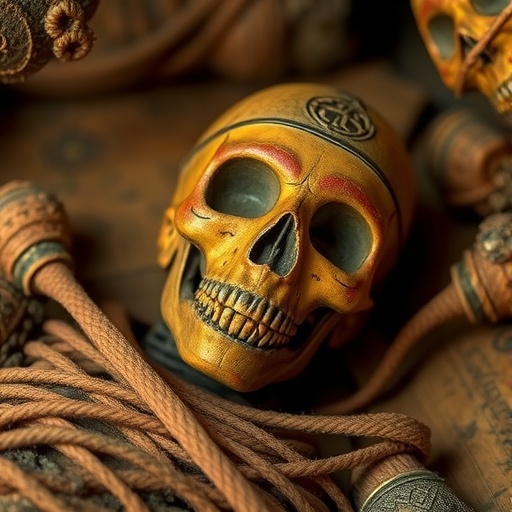
The ancient dead are finding a new life online—and researchers warn that the trade in mummified human and animal remains may be creating a modern public-health hazard. A new study led by the University of Staffordshire has identified signs of biological deterioration on preserved remains advertised through internet marketplaces and auction listings, raising concerns about fungal growth, toxic embalming compounds and the largely unregulated shipment of human material across borders. The researchers say the danger is not limited to collectors. Sellers, buyers, postal workers, customs officers and members of the public who encounter poorly packaged remains could all be exposed to biological or chemical hazards. Their findings suggest that the growing online demand for unusual cultural objects is outpacing the rules and safety practices intended to govern their handling.
The study, published in the International Journal of Cultural Property, examined 128 online posts and auction listings offering mummified human or animal remains. The material included isolated body parts, complete or partial heads, and specimens in widely differing states of preservation. Hands and feet were among the most frequently advertised human remains, while more than half of the listings involved heads, ranging from relatively complete specimens to fragmentary or heavily deteriorated examples. The researchers assessed the descriptions, photographs, stated storage conditions and apparent handling practices associated with each listing. Although the analysis was based on publicly available online material rather than controlled laboratory testing of every specimen, the images and descriptions provided evidence of biodeterioration in some cases. Biodeterioration is the breakdown of organic material through the activity of microorganisms such as fungi and bacteria, and it can continue even when a specimen appears superficially dry or intact.
Mummification slows decomposition, but it does not necessarily sterilise tissue. Ancient preservation methods varied considerably and could involve drying, salting, resins, oils, plant extracts or mineral compounds. Later embalming practices sometimes introduced substances such as arsenic, mercury and lead, all of which can remain in preserved tissues or surrounding materials for long periods. At the same time, mummified remains may retain collagen, skin, hair and other organic substrates that can support microbial activity when moisture becomes available. Changes in humidity, temperature, packaging or ventilation can create conditions in which dormant fungi become active. The resulting growth may produce spores that disperse through the air when a specimen is moved, unwrapped, brushed or otherwise disturbed. Crucially, researchers note that microbial colonisation is not always visible, so a dry, clean-looking object cannot automatically be considered safe.
The online listings revealed a market in which information about health protection was often minimal or absent. Sellers generally provided little guidance on the use of gloves, masks, ventilation, cleaning procedures or specialist containment. Some photographs appeared to show people handling mummified human remains with bare hands, a practice that can transfer contaminants between the object, the handler and nearby surfaces. Direct contact is only one potential route of exposure. Fungal spores or fine particles may become airborne during transportation or examination, while residues from historical embalming materials could be transferred to skin or inhaled as dust. The researchers stress that the presence of a hazard does not mean that every specimen will cause illness, but the absence of reliable provenance, conservation records and safety information makes it difficult for buyers or authorities to assess the level of risk.
The problem may become more serious when remains are sent through ordinary postal and courier networks. The analysis found indications that mummified remains were being mailed nationally and internationally, despite possible conflicts with postal, customs and biosecurity regulations. Inadequate packaging can expose specimens to heat, moisture and physical damage, accelerating deterioration during transit. A broken container or poorly sealed parcel could also expose workers to dust, fragments or contaminated packing material. Packages crossing borders may be opened for inspection, placing customs officials in direct contact with materials whose biological and chemical properties are unknown. The researchers argue that clearer rules are needed to prevent sellers from exploiting gaps or ambiguities in shipping policies, especially when regulations differ between countries and may not explicitly address preserved human tissue.
The potential danger of disturbed ancient remains has precedent. Fungal spores belonging to the genus Aspergillus have been associated with deaths among conservation scientists who opened the tomb of King Casimir IV Jagiellon in Kraków during the 1970s. Ten of the twelve scientists involved reportedly died after the tomb was entered, although the precise causes and contributing factors have been debated. Aspergillus species are widespread environmental fungi, and their spores are commonly present in soil and dust. For most healthy people, ordinary exposure does not lead to severe disease, but inhalation can cause serious infection or allergic illness in individuals with weakened immune systems or underlying lung conditions. Invasive aspergillosis occurs when fungal growth spreads into tissues, often affecting the lungs and potentially other organs. Historical accounts have also connected the death of Lord Carnarvon, who helped finance the excavation of Tutankhamun’s tomb, with severe aspergillosis, although that explanation remains unproven.
The researchers emphasise that the so-called “mummy’s curse” is better understood through microbiology, conservation science and occupational safety than through supernatural explanations. Spores can remain dormant for long periods when conditions are dry and unfavourable. Once humidity rises or a protective environment is disrupted, fungi may begin to grow or release particles into the surrounding air. Repeated handling can break fragile tissues into dust, while poor storage can introduce moisture from condensation or damp environments. Some embalming chemicals may also present independent toxicological concerns. Arsenic, mercury and lead can affect the nervous system, kidneys and other organs, depending on the dose, chemical form and route of exposure. Without laboratory analysis, however, it is impossible to determine the exact hazards posed by any individual specimen, making precautionary containment essential.
Lead author Dr Kirsty Squires, Professor of Human Bioarchaeology at the University of Staffordshire, said the expansion of social media and online commerce had amplified international trafficking and increased demand for unusual cultural heritage objects. In her assessment, the market combines limited awareness of biohazards with financial incentives that may encourage sellers to overlook health and safety obligations. The study also raises ethical and cultural concerns beyond physical danger. Human remains may have been removed from archaeological sites, museums, tombs or communities without consent, documentation or respect for cultural law. Selling body parts as curiosities can sever them from the historical and social contexts that give them meaning, while international trade may make repatriation or scholarly study more difficult. The researchers therefore frame the issue as both a public-health challenge and a threat to archaeological heritage.
The authors call for stronger oversight across digital marketplaces, auction platforms, postal and courier services, customs agencies and professional bodies. Online platforms could require detailed provenance records, restrict listings involving human remains and establish procedures for reporting suspicious sales. Postal and customs authorities could clarify how preserved human and animal material should be declared, packaged, labelled and transported. Museums, conservators and bioarchaeologists may also help develop practical guidance for inspection and emergency handling, including sealed containment, protective equipment, ventilation and specialist assessment. The researchers say members of the public should avoid handling questionable remains and report suspected sales to relevant authorities rather than attempting to investigate or dispose of them independently. Their central warning is straightforward: preservation is not the same as decontamination, and an object that looks ancient, dry and harmless may still carry biological or chemical risks.
As the digital marketplace continues to turn rare and disturbing artefacts into easily accessible commodities, the study highlights a hidden consequence of online trade: hazards can travel invisibly inside ordinary parcels. A mummified specimen may cross several countries before anyone determines where it came from, how it was treated or whether it contains active fungal growth or toxic residues. The researchers argue that improved education and enforcement are needed before a preventable exposure occurs. For buyers, the appeal of possessing a fragment of the past may be powerful, but the scientific reality is more complicated. Mummified remains are biological materials altered by time, preservation chemistry and environmental change—not inert decorations. Treating them as such could place both human health and irreplaceable cultural heritage at risk.
News Publication Date: 5-Aug-2026
References: International Journal of Cultural Property; DOI: 10.1017/S0940739126100393
Cite Scienmag News
Courtney Benton. (August 13, 2026). Real mummy’s curse fuels commercial trade in mummified remains, study reveals. Scienmag. https://scienmag.com/real-mummys-curse-fuels-commercial-trade-in-mummified-remains-study-reveals/
Courtney Benton. "Real mummy’s curse fuels commercial trade in mummified remains, study reveals." Scienmag, 13 August 2026, https://scienmag.com/real-mummys-curse-fuels-commercial-trade-in-mummified-remains-study-reveals/. Accessed 4 September 2026.
Courtney Benton. "Real mummy’s curse fuels commercial trade in mummified remains, study reveals." Scienmag. August 13, 2026. https://scienmag.com/real-mummys-curse-fuels-commercial-trade-in-mummified-remains-study-reveals/


