


Non-functional pancreatic neuroendocrine tumors (NF-PanNETs) are often described as relatively indolent cancers, but that broad label conceals a striking range of clinical behavior. Some tumors remain confined to the pancreas for years and grow slowly, while others invade surrounding tissues, recur after surgery or spread to distant organs. Nearly 90% of NF-PanNETs are diagnosed as World Health Organization grade 1 or 2, yet patients assigned to the same grade can experience dramatically different outcomes. A new multidisciplinary study published in Science Bulletin offers a possible explanation for this diversity by identifying a particularly aggressive population of tumor cells and tracing its behavior to a regulatory protein that may also represent a therapeutic target.
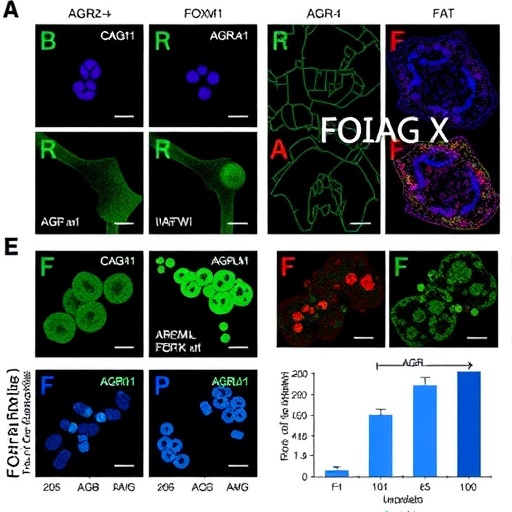
The research, led by Yupei Zhao’s team at Peking Union Medical College Hospital in collaboration with scientists at The Chinese University of Hong Kong, Peking University Cancer Hospital and other institutions, focused on the cellular complexity hidden within NF-PanNETs. Rather than treating each tumor as a uniform mass, the investigators used single-cell RNA sequencing and single-cell chromatin-accessibility analysis to examine the molecular programs active in individual cells. Their analysis included transcriptomic data from 10 patients, chromatin data from four patients and bulk RNA-sequencing data from 77 additional samples. This integrated approach revealed an endocrine tumor-cell subpopulation with unusually high expression of AGR2, a gene associated with protein folding and endoplasmic-reticulum function that has also been linked to malignant behavior in several cancers.
The AGR2-high population stood out from other endocrine cells because it carried multiple molecular signs of biological aggression. These cells showed higher copy-number variation scores, indicating greater genomic instability, and displayed increased activity in genes involved in DNA replication, chromosome segregation and cell division. They were also enriched for a metastasis-like primary signature, a gene-expression pattern associated with tumors that possess features of metastatic disease. Importantly, the AGR2-high state was more common in high-grade NF-PanNETs, suggesting that it may represent a clinically meaningful cellular program rather than a minor molecular variation with no impact on disease progression.
To determine whether AGR2 could help predict patient outcomes, the researchers examined tumor tissue from a two-center cohort of 167 patients who had undergone surgical resection. Immunohistochemistry, a widely used pathology technique that detects specific proteins in tissue sections, was used to measure AGR2 expression. AGR2-positive tumors were associated with larger primary tumors, higher WHO grade and a greater frequency of synchronous metastasis, meaning metastatic disease present at the time of the initial diagnosis. Among patients who had no synchronous distant metastasis, those with AGR2-positive tumors experienced significantly shorter progression-free survival. The association remained informative within the difficult-to-stratify grade 2 group, where conventional grading alone often fails to distinguish tumors with sharply different risks.
The findings suggest that AGR2 immunohistochemistry could offer a comparatively simple way to add biological information to standard pathology assessments. WHO grade is primarily based on proliferative activity and other established pathological measurements, but tumors with the same grade may contain different proportions of aggressive cell states. Detecting AGR2 may help identify patients whose tumors appear intermediate-risk under conventional criteria but already contain a highly proliferative, metastasis-associated population. Such information could eventually support closer surveillance, more individualized decisions about postoperative treatment or enrollment in clinical trials, although prospective studies will be needed before AGR2 testing can be incorporated routinely into patient care.
The study then turned to the mechanism that sustains the AGR2-high state. By analyzing single-cell chromatin accessibility, the investigators identified FOXM1 as a prominent candidate transcriptional regulator. Transcription factors such as FOXM1 control gene activity by binding regulatory DNA and coordinating the expression of groups of genes that define a cell’s behavior. FOXM1 is already recognized as a central driver of cell-cycle progression in many malignancies, but its role in the AGR2-high compartment of NF-PanNETs had not been clearly established. The researchers found that FOXM1 activity was linked to a proliferative gene network including CENPA, CENPN, PLK1, CDCA2 and TOP2A, genes required for chromosome organization, mitosis and accurate cell division.
Additional experiments supported a direct regulatory relationship rather than a simple correlation. FOXM1 was shown to control the transcriptional program that enables AGR2-high cells to divide rapidly. When FOXM1 was disrupted, the expression of key cell-division genes declined and tumor growth was suppressed. These results place FOXM1 downstream of the aggressive cellular state identified by the single-cell analysis and suggest that the AGR2-high population depends on a coordinated FOXM1-driven program to maintain its malignant properties.
The therapeutic implications were tested across several experimental systems. FOXM1 disruption inhibited the growth of NF-PanNET tumor cells, while two compounds reported to inhibit FOXM1 activity, FDI-6 and thiostrepton, produced antitumor effects in cultured cells. The investigators also observed suppression of tumor growth in patient-derived organoids and xenograft models. Patient-derived organoids are three-dimensional cultures established from tumor tissue that preserve some of the architecture and molecular characteristics of the original cancer. Xenografts, in contrast, allow human tumor cells or tissue to grow in living animals, providing a way to assess treatment responses in a biological setting more complex than a dish. Activity across these models strengthens the case that FOXM1 is more than a laboratory marker, although the compounds used in the study are not yet established treatments for patients with NF-PanNETs.
Together, the results outline a potential progression from cellular identity to clinical behavior and therapeutic vulnerability. A subset of NF-PanNET cells becomes AGR2-high, acquires genomic and proliferative features associated with aggressive disease, and activates a FOXM1-centered transcriptional network that drives cell division. AGR2 may therefore serve as a practical tissue marker for identifying high-risk tumors, while FOXM1 could provide a molecular target for therapies designed to restrain tumor growth. The work does not eliminate the biological complexity of NF-PanNETs, and further research will be required to determine how AGR2-high cells arise, whether they directly seed metastases and which FOXM1-directed strategies can be safely developed. Nevertheless, the study offers a detailed molecular framework for explaining why tumors with similar conventional grades can behave so differently and opens a path toward more precise prognostic and treatment approaches.
Web References: https://doi.org/10.1016/j.scib.2026.06.017
References: Science Bulletin, DOI: 10.1016/j.scib.2026.06.017.
Cite Scienmag News
Nathaniel Bowman. (August 13, 2026). AGR2-high cells fuel FOXM1-driven malignancy and predict outcomes in pancreatic neuroendocrine tumors. Scienmag. https://scienmag.com/agr2-high-cells-fuel-foxm1-driven-malignancy-and-predict-outcomes-in-pancreatic-neuroendocrine-tumors/
Nathaniel Bowman. "AGR2-high cells fuel FOXM1-driven malignancy and predict outcomes in pancreatic neuroendocrine tumors." Scienmag, 13 August 2026, https://scienmag.com/agr2-high-cells-fuel-foxm1-driven-malignancy-and-predict-outcomes-in-pancreatic-neuroendocrine-tumors/. Accessed 3 September 2026.
Nathaniel Bowman. "AGR2-high cells fuel FOXM1-driven malignancy and predict outcomes in pancreatic neuroendocrine tumors." Scienmag. August 13, 2026. https://scienmag.com/agr2-high-cells-fuel-foxm1-driven-malignancy-and-predict-outcomes-in-pancreatic-neuroendocrine-tumors/


