


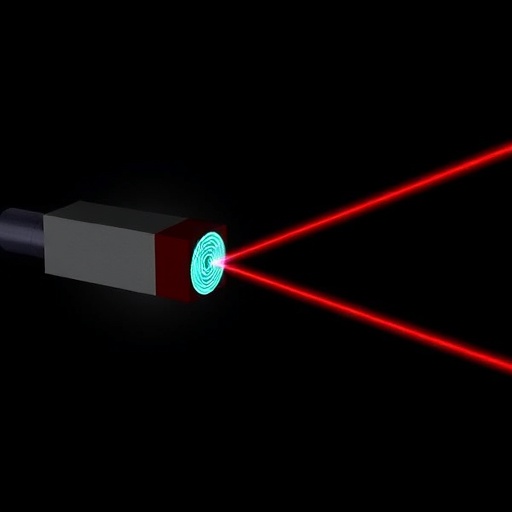
On-chip lasers are moving from laboratory demonstrations toward technologies that could reshape coherent communications, advanced displays, precision sensing, imaging and large-scale photonic systems. Yet as these devices become smaller, they must preserve more than just low power consumption and high optical efficiency. They must also deliver a stable, well-defined beam, ideally with a single frequency and a uniform state of polarization. A new study reports a compact laser that addresses one of the most persistent challenges in this field: producing highly pure linearly polarized light directly from a bound-state-in-the-continuum, or BIC, photonic structure.
BIC lasers have attracted intense interest because they can confine light with exceptionally low radiation loss. In principle, a BIC is an optical mode whose frequency lies within the continuum of radiating states but remains trapped because of destructive interference or symmetry protection. This unusual property can produce extremely high quality factors, or Q factors, which describe how efficiently a resonator stores optical energy. High-Q resonances strengthen the interaction between light and the gain material, allowing lasing to begin at a lower pump threshold while supporting narrow-linewidth, single-mode emission from a small surface-emitting device.
The central difficulty is that the most useful BIC states often possess a polarization vortex in momentum space. Rather than maintaining one polarization direction across all emission angles, the polarization rotates around a singular point in the far-field, or k-space, radiation pattern. At the exact center of momentum space, the mode may appear to have a special polarization state, but a real laser is not an infinitely large idealized structure. Its finite aperture produces a beam with a measurable angular spread, meaning that the emitted light samples a broad region of momentum space. Different portions of the beam can therefore carry different polarization orientations.
This effect can be compared to a beam whose center is linearly polarized while its edges gradually rotate toward other directions. When the light is collected as a whole, these variations reduce the polarization purity and can create a complex far-field pattern. Such non-uniformity is especially problematic in systems that rely on polarization-sensitive modulation, interferometry, high-contrast imaging or tightly controlled optical coupling. Conventional approaches may add external polarizers, wave plates or other polarization-management components, but those additions increase system size, optical loss, alignment complexity and manufacturing cost.
In a study published in Light: Science & Applications, researchers from Wuhan University, Jinan University, China Information Communication Technologies Group Corporation and collaborating institutions introduced a dispersion-assisted strategy designed to overcome this limitation at the source. Their approach combines two forms of photonic engineering that are often considered separately. The first is symmetry perturbation, which controls how strongly the BIC couples to radiation and shapes the spatial profile of the emitted beam. The second is anisotropic dispersion, which modifies how the optical mode changes with momentum and creates a broad region in which the polarization remains nearly uniform.
The researchers describe the design principle as “symmetry perturbation shapes the beam profile, while anisotropic dispersion unifies the global polarization state.” This concept shifts the focus away from the polarization at a single high-symmetry momentum point. For a finite laser, the relevant question is not whether one point in k-space has the desired polarization, but whether the entire momentum-space region occupied by the emitted beam has a common polarization direction. The team calls this process far-field beam-polarization matching: the beam profile must overlap as much as possible with an extended region of uniform linear polarization.
The physical mechanism begins with controlled symmetry breaking in the photonic crystal. An ideal symmetry-protected BIC may not radiate efficiently at all, while a carefully designed perturbation converts it into a quasi-BIC with a finite but controllable radiation channel. By adjusting the perturbation, the researchers can tailor the size, shape and intensity distribution of the far-field beam. Anisotropic dispersion then provides an additional degree of control. Instead of allowing the resonant mode to behave identically in all in-plane directions, the engineered structure gives different optical responses along different momentum axes. This reshapes the polarization landscape so that the main beam occupies a region with a consistent linear polarization.
To demonstrate the concept experimentally, the team fabricated a compact quasi-BIC laser based on a 20-by-20 array of photonic-crystal unit cells. The device occupies an area of only 16.4 micrometers by 13.4 micrometers, making it substantially smaller than many conventional surface-emitting laser platforms. Under optical excitation, the structure produced stable single-mode lasing near a wavelength of 1590 nanometers, a spectral region relevant to optical communication. Most notably, the emitted beam achieved a measured polarization extinction ratio of 298:1. This means the optical power in the preferred polarization channel was nearly three hundred times greater than that measured in the orthogonal channel, indicating exceptionally high polarization purity for such a compact source.
The performance is significant because it was achieved without sacrificing the characteristics that make BIC lasers attractive in the first place. The device retains single-mode operation and a well-controlled beam while avoiding the need for a separate external polarizer. The results also suggest that the strategy can be extended beyond the demonstrated compact array. According to the researchers, as the device area increases, the dispersion-engineered anisotropic quasi-BIC system can preserve high-purity polarization and good beam quality while delivering a higher Q factor than comparable isotropic quasi-BIC designs. A higher Q factor means lower radiative loss and stronger optical feedback, which can reduce the threshold required to reach lasing in larger-area surface-emitting lasers.
That scaling behavior could be particularly important for integrated laser arrays and high-power optical sources. Larger emitters generally offer advantages in output power and beam control, but they can also suffer from additional radiation channels, mode competition and polarization distortions. A design that simultaneously manages the momentum-space beam profile, polarization texture and radiative loss could help overcome these trade-offs. In coherent communications, directly polarized emission could simplify transmitter architectures and improve compatibility with polarization-sensitive components. In displays and imaging, it could enhance contrast while reducing the number of optical elements. In sensing and precision measurement, a stable polarization state can improve measurement accuracy and reduce calibration requirements.
The work illustrates a broader change in the design of nanophotonic lasers. Instead of treating polarization as a property selected after the cavity has been designed, researchers are increasingly engineering it as part of the resonator’s dispersion and radiation physics. The new quasi-BIC platform demonstrates that the far field is not merely a byproduct of the laser mode; it can be deliberately matched to the momentum-space polarization environment. By coordinating symmetry perturbation with anisotropic dispersion, the researchers have created a compact source that emits a uniform linearly polarized beam while retaining the high-Q, single-mode advantages of BIC physics. The result points toward smaller and more efficient polarized lasers for photonic chips, optical networks, advanced displays, precision instruments and future integrated light-based technologies.
Web References: https://doi.org/10.1038/s41377-026-02322-5
References: Light: Science & Applications, “High-purity linearly polarized emission from a compact BIC laser,” DOI: 10.1038/s41377-026-02322-5
Cite Scienmag News
Bethany Barker. (August 13, 2026). Compact BIC Laser Produces Highly Pure Linearly Polarized Emission. Scienmag. https://scienmag.com/compact-bic-laser-produces-highly-pure-linearly-polarized-emission/
Bethany Barker. "Compact BIC Laser Produces Highly Pure Linearly Polarized Emission." Scienmag, 13 August 2026, https://scienmag.com/compact-bic-laser-produces-highly-pure-linearly-polarized-emission/. Accessed 4 September 2026.
Bethany Barker. "Compact BIC Laser Produces Highly Pure Linearly Polarized Emission." Scienmag. August 13, 2026. https://scienmag.com/compact-bic-laser-produces-highly-pure-linearly-polarized-emission/


