


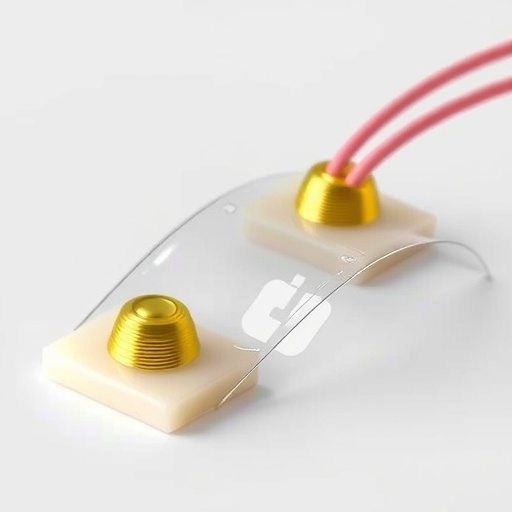
New Carbon Nanotube Strategy Could Make Wearable Strain Sensors Last for Years
Wearable strain sensors are rapidly moving from laboratory prototypes into health monitoring, rehabilitation and industrial safety applications. These flexible devices can detect minute mechanical changes associated with a heartbeat or pulse, while also tracking larger movements such as bending an elbow, walking or lifting an object. Yet many sensors lose accuracy after repeated stretching or when exposed to moisture, chemicals and salt. Researchers in China have now developed a chemically reinforced rubber-based sensor designed to preserve its performance under demanding conditions.
The new material combines styrene–butadiene rubber, commonly known as SBR, with carbon nanotubes, or CNTs. SBR is an elastic polymer widely used in products that must withstand repeated deformation, while CNTs provide electrical conductivity and respond sensitively when their internal network is stretched or compressed. In a strain sensor, this conductive network acts as the signal-generating element: as the material deforms, the distances and connections between nanotubes change, producing a measurable variation in electrical resistance.
The central challenge is keeping the nanotubes evenly distributed inside the rubber. CNTs naturally attract one another through van der Waals forces, causing them to cluster into microscopic agglomerates. These clusters can make a sensor less sensitive, less uniform and more likely to develop permanent defects during repeated stretching. Under long-term mechanical cycling, the conductive pathways may reorganize or break apart, leading to signal drift and declining reliability.
To overcome this problem, the research team introduced a synergistic strategy based on both filler hybridisation and interfacial chemical bonding. First, silica was grown directly onto the surfaces of the carbon nanotubes through an in-situ process using tetraethyl orthosilicate, or TEOS. The silica coating changes the surface chemistry of the nanotubes and helps control their dispersion within the rubber. It also creates a hybrid filler in which the conductive CNT core is combined with a chemically active inorganic shell.
The researchers then used KH590, a silane coupling agent, to graft thiol groups onto the modified filler surface. During the vulcanisation of the SBR matrix, these thiol groups participate in chemical reactions that connect the filler to the rubber’s crosslinked molecular network. Instead of allowing the nanotubes to remain held mainly by weak physical interactions, the treatment creates covalent links between the modified CNT–silica hybrid and the elastomer.
This chemically integrated architecture is important because it stabilises the conductive pathways at multiple length scales. At the nanoscale, the silica and functional groups reduce the tendency of CNTs to form large clusters. At the interface between the filler and rubber, covalent bonding limits slippage and detachment. Across the wider composite, the reinforced network helps distribute mechanical stress more evenly, reducing the likelihood that repeated stretching will permanently disrupt the sensor’s electrical response.
The approach also affected the material’s rheological behaviour, particularly its Payne effect. The Payne effect describes the reduction in dynamic stiffness that occurs when a rubber composite is subjected to increasing strain. It is commonly associated with the breakdown of filler–filler networks formed by agglomerated particles. By improving dispersion and strengthening the filler–rubber interface, the two-step TEOS and KH590 treatment lowered this effect, indicating that the conductive filler network became less dominated by weak, reversible particle associations.
In performance tests, the resulting sensors maintained stable sensing behaviour through more than 15,000 tensile cycles. Such durability is essential for wearable electronics because a device used to monitor movement or physiological signals may be stretched thousands of times in a single day. A sensor that performs well only during initial testing can produce misleading health data or require frequent replacement. The researchers also reported that the composite continued to function after exposure to strong acidic and alkaline solutions and highly saline environments, conditions that can rapidly damage or destabilise less-protected materials.
The findings point to a route for designing wearable sensors that combine high sensitivity with mechanical and environmental resilience. The chemically bonded SBR–CNT network could be useful in flexible health-monitoring systems, motion-tracking devices and industrial equipment designed for harsh or high-risk settings. The work does not eliminate the broader challenges of manufacturing, calibration and long-term biocompatibility, but it demonstrates how controlling the chemistry of a filler–elastomer interface can address one of the most persistent weaknesses in flexible strain sensors. By replacing fragile physical contacts with a covalently connected network, the researchers aim to make wearable electronics more dependable when they must operate continuously rather than merely survive short laboratory demonstrations.
Web References: https://doi.org/10.1016/j.wees.2026.04.00
References: Liu, Kai, and colleagues, “Ultra-durable wearable strain sensors via synergistic filler hybridization and interfacial bonding,” Wearable Electronics. DOI: 10.1016/j.wees.2026.04.00
Keywords
Wearable electronics, strain sensors, carbon nanotubes, styrene–butadiene rubber, SBR, silica, TEOS, KH590, thiol functionalisation, interfacial bonding, conductive composites, flexible sensors, polymer chemistry, health monitoring, durable materials
Cite Scienmag News
Bethany Barker. (August 12, 2026). Multiscale Hybridization and Chemical Bonding Create Ultra-Durable Flexible Strain Sensors. Scienmag. https://scienmag.com/multiscale-hybridization-and-chemical-bonding-create-ultra-durable-flexible-strain-sensors/
Bethany Barker. "Multiscale Hybridization and Chemical Bonding Create Ultra-Durable Flexible Strain Sensors." Scienmag, 12 August 2026, https://scienmag.com/multiscale-hybridization-and-chemical-bonding-create-ultra-durable-flexible-strain-sensors/. Accessed 4 September 2026.
Bethany Barker. "Multiscale Hybridization and Chemical Bonding Create Ultra-Durable Flexible Strain Sensors." Scienmag. August 12, 2026. https://scienmag.com/multiscale-hybridization-and-chemical-bonding-create-ultra-durable-flexible-strain-sensors/


